
Kitchen Myth-Busting
Wood You Believe It? The Spoon Trick Has a Timer
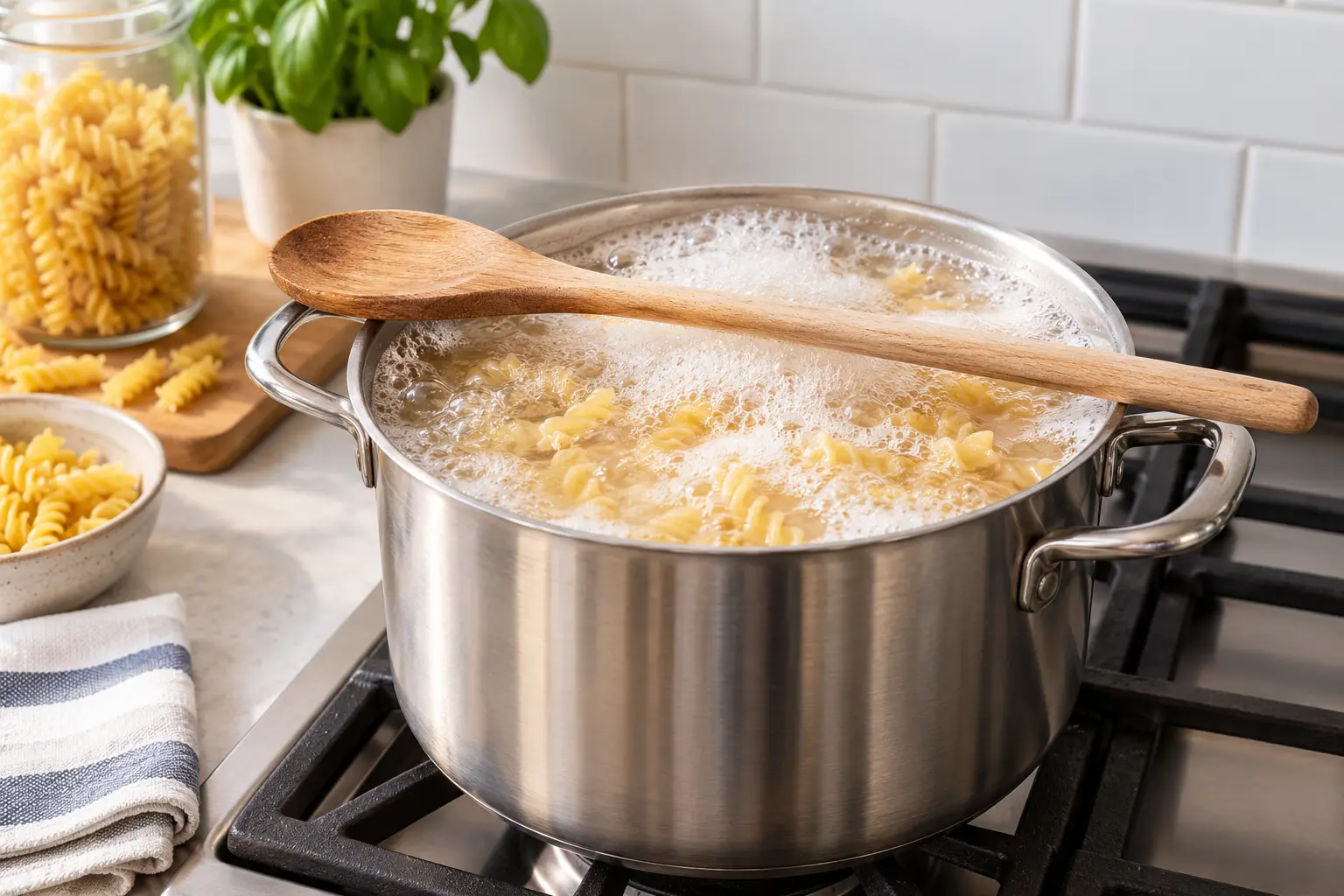
A dry wooden spoon can knock down starchy foam, but it is a temporary speed bump, not a force field. Here is when it helps and what works better.
You turn away from the pasta for one innocent minute. Behind you, a white foam mountain rises over the rim and heads for the stovetop. The internet’s answer is charmingly simple: park a wooden spoon across the pot. Is that utensil really guarding dinner, or just supervising the mess?
The short verdict is: it can help, briefly. Food-science experts at CQUniversity explain that a dry wooden spoon interrupts rising bubbles, cools the surface where it touches them and offers a porous surface that helps bubbles break. The important word is dry. Once the spoon becomes hot and wet, its special moment begins to fade.
Start with what is inside the foam. Purdue University’s chemistry guide notes that boiling produces vapour bubbles throughout a liquid; they rise and normally burst at the surface. Plain boiling water usually does not build a lasting foam cap. Pasta, rice and porridge change the scene because they release starches and other food solids into the water.
Those materials make the bubble walls harder to pop immediately. Instead of vanishing one by one, bubbles can pile into a sticky raft. More heat creates vapour faster, the raft climbs, and suddenly the pot is wearing a foamy hat that is far too ambitious.
Now give the spoon trick three acts. In act one, the cool, dry wood meets the hot foam and many bubbles collapse. In act two, the spoon physically divides the rising blanket, buying you a little time. In act three, steam, water and starch warm and wet the wood. The foam can then persist longer and travel around the spoon, especially if the burner is still pushing a vigorous boil.
The USDA Forest Service’s Wood Handbook documents how wood’s thermal and moisture behaviour changes with temperature and water content. That supports the general idea that a dry piece of wood will not behave exactly like the same piece after it has heated and absorbed moisture. It does not, by itself, prove a precise number of seconds for your spoon. Pot size, burner power, food and spoon shape all change the result.
A better anti-volcano plan is wonderfully unglamorous. Choose a pot with generous headroom. Once the water returns to a boil, lower the heat to the gentlest level that keeps the food cooking steadily. Stir during the early starchy minutes, and keep the lid off or well ajar when foaming is likely. If the surface starts climbing, stir, reduce the heat or briefly move the pot off the burner.
So keep the wooden spoon if you enjoy the trick. Think of it as a temporary speed bump and a visible reminder to check the pot, not a force field you can leave on duty. The most reliable kitchen gadget here is still the cook who turns down the heat before the foam turns up.