Kitchen Myth-Busting
Foiled Again: Which Side Faces the Food?
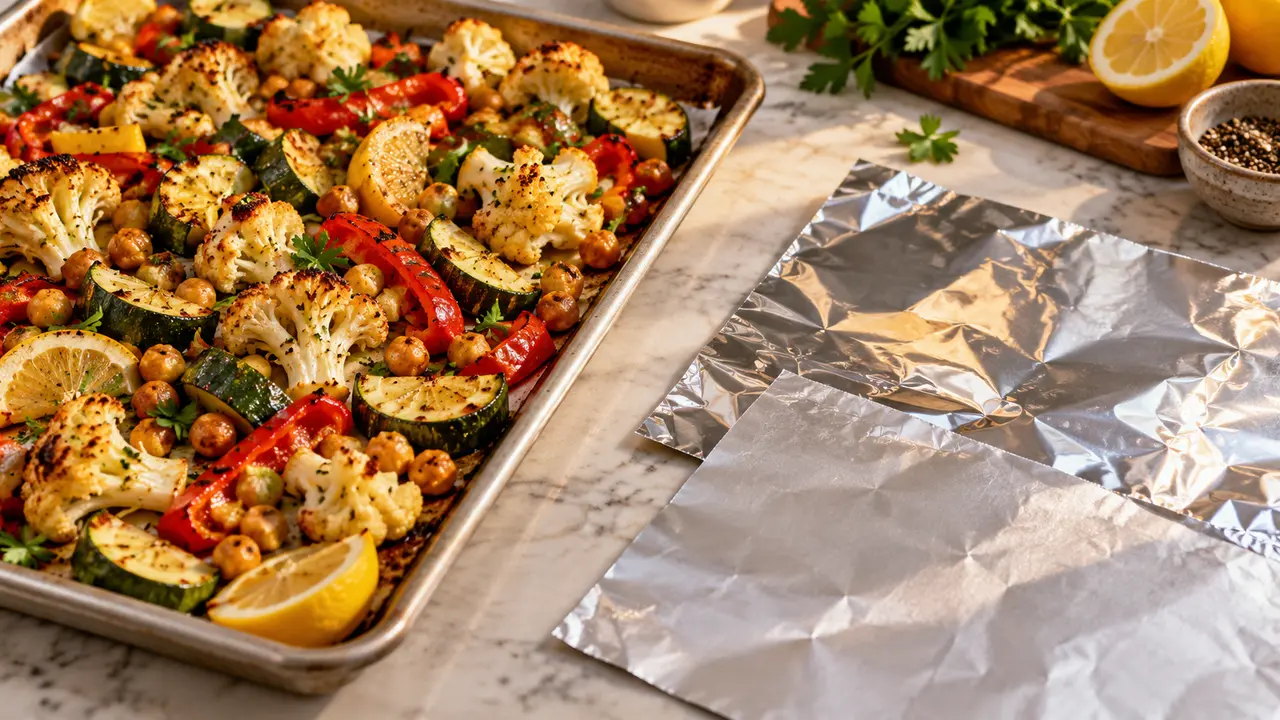
Ordinary aluminum foil has one shiny side and one dull side, but your dinner does not care which one faces the food. The reason is hiding in the rolling mill.
Unroll a sheet of aluminum foil and it seems to present a choice: one face is glossy, the other softly matte. Kitchen lore assigns them different jobs, often claiming that one side reflects heat while the other absorbs it. For ordinary household foil, you can stop holding the roll up to the light. Either side may face the food.
The two finishes come from manufacturing, not from two different materials. The U.S. Department of Agriculture explains that, during the final rolling step, two layers of foil pass through the mill together. The faces touching the polished steel rollers emerge shiny, while the faces pressed against each other emerge dull. Peel the pair apart and every sheet has one of each.
That production detail is the whole plot twist. USDA guidance says it makes no difference which side touches food. Reynolds, a foil manufacturer, likewise says the two sides of its ordinary foils are interchangeable and heat foods at virtually identical rates. In a home oven, pan colour, food thickness, air circulation, temperature and cooking time are far more useful things to watch than the direction of the foil.
There is one label-reading exception: specialty non-stick foil. A non-stick product has a coating applied to a designated face, so its package instructions really do matter. Reynolds identifies the dull side of its non-stick foil as the food-contact side and prints words on that face. That is a feature of the added coating, not a hidden power shared by every dull sheet. If your box says non-stick, follow the box; if it is ordinary foil, choose either side.
This also explains why swapping from everyday foil to heavy-duty foil does not create a new shiny-side rule. Thickness changes how easily a sheet tears or holds a packet, but the ordinary shiny and dull surfaces still come from the paired rolling step. Pick the grade that suits the job, then spend your attention on sealing the packet or covering the pan securely.
Microwave use is a separate safety question. Metal reflects microwaves and can arc when used incorrectly. USDA guidance allows only limited foil shielding in some microwave situations, with small, smooth pieces kept away from the oven walls, and says never to put completely foil-wrapped food in a microwave. Follow the appliance manual and food-package directions rather than treating the either-side answer as general permission to microwave foil.
So the next time a recipe says “shiny side up” for ordinary foil, you may treat that instruction as choreography rather than chemistry. The gleam records a meeting with a polished roller, not a special cooking assignment. Your vegetables will roast just as happily whichever face wins the coin toss.
Sources
You may also like these