Sensory Science
Weight, What? How Cutlery Can Nudge a Meal’s Appeal
A fork does more than ferry dinner. Research suggests that its weight and feel can quietly shape how diners judge the very same food, although context keeps the effect from being a simple heavier-is-better rule.
A fork may look like a supporting actor, but your hand meets it before your mouth meets dinner. Weight, balance, temperature and texture all join the stream of information your brain uses to size up a meal. The food has not changed, yet the route from plate to palate can influence the verdict.
A 2015 study tested this idea during a real hotel lunch rather than in a sensory booth. Diners received the same main course, but one group used substantial banquet cutlery while the other used much lighter canteen cutlery. The group with the heavier set rated the food as more artistic, liked it more and said they would pay more for it. The banquet fork weighed 84 grams versus 26 grams for the canteen fork, while the knives weighed 132 and 38 grams.
That result does not prove that weight alone did all the work. The two sets also differed in appearance and perceived quality, and diners could choose where they sat. The researchers noted those limits. Their useful finding is narrower: the visual and tactile character of cutlery can become part of a diner’s appraisal, even when everyone receives the same food.
Laboratory work makes the story even less tidy. In a 2013 series of yoghurt experiments, researchers changed the size, weight, colour and shape of eating utensils. Yoghurt sampled with an unusually heavy plastic teaspoon was rated sweeter but also less dense, less expensive and less liked than samples eaten with some lighter spoons. A mismatch may be important here. A plastic teaspoon that weighs nearly three times what people expect can feel odd rather than luxurious.
Researchers use the word haptic for information gathered through touch and body position, including a utensil’s weight, texture and balance. One proposed explanation is sensation transference: qualities attached to the tool, such as solidity or refinement, may spill into judgments about the food. Another possibility is attention. A noticeably weighty utensil may make the diner attend more closely to the meal. These are plausible explanations, not a settled recipe for changing flavour.
For a vegan table, the lesson is pleasantly practical. If you are serving a celebratory mushroom pie, silky soup or glossy chocolate pudding, choose cutlery that feels comfortable, balanced and suited to the setting. Do not expect a heavy spoon to rescue bland seasoning, and do not replace easy-to-grip utensils when lighter ones serve a guest better. The food remains the main event; the utensil helps frame it.
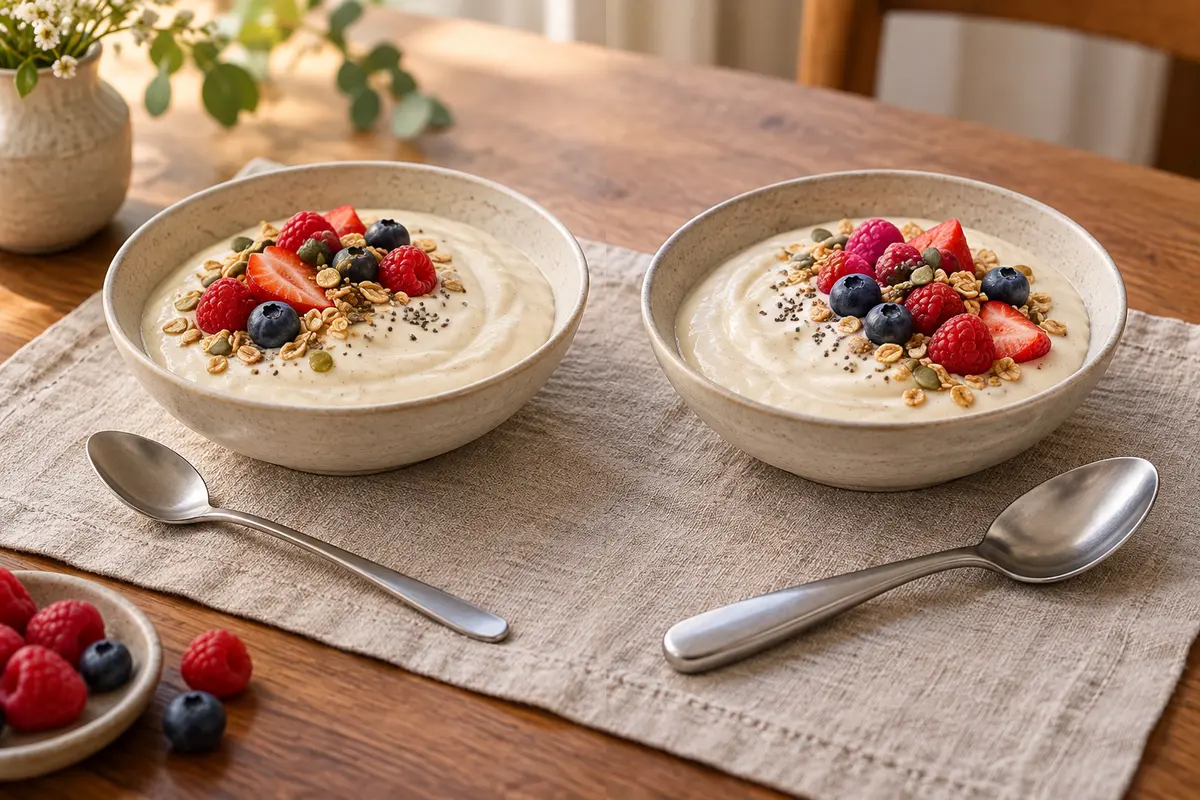
Curious cooks can compare two spoons at home without turning supper into a sales pitch. Serve the same plant-based yoghurt or pudding at the same temperature in identical bowls, alternate which spoon is tried first and notice sweetness, thickness, comfort and liking separately. The interesting part is not finding one universal winner. It is catching the hand quietly contributing to what the tongue seems to say.
Sources
You may also like these