
Sensory Science
Hear, Hear: Why Crunch Is Part of the Bite
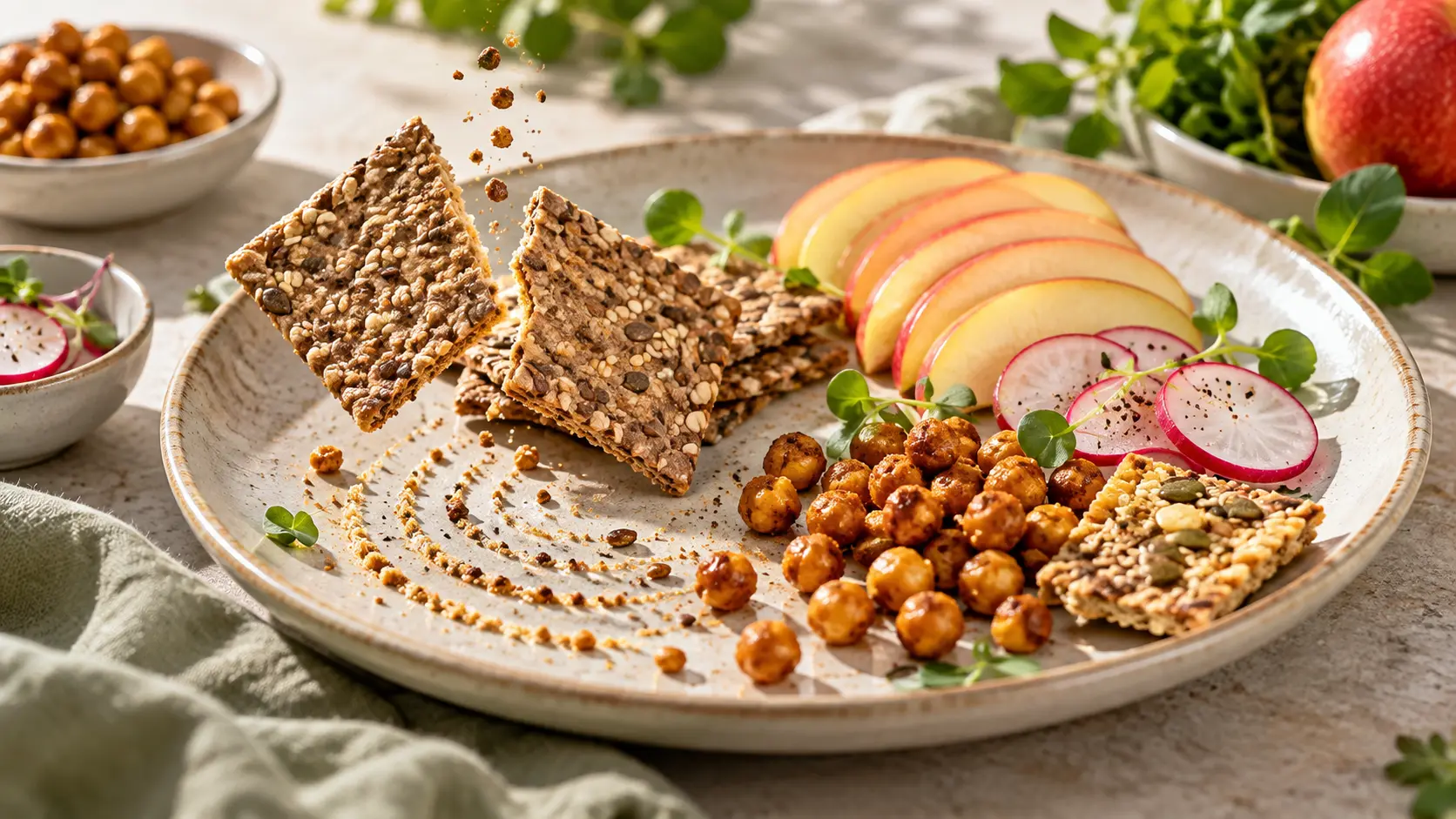
Your ears are at the table too. Controlled experiments show that the sound of a bite can change how crisp and fresh the very same food seems.
A cracker snaps. An apple gives a bright little crack. A roasted chickpea answers with a tiny pop. We usually call those sounds texture, but they are also information. Long before you finish chewing, your ears are helping your brain decide whether a food feels crisp, crunchy and fresh.
One wonderfully direct experiment put that idea to the test. In a 2004 study, Massimiliano Zampini and Charles Spence had participants bite potato chips while the chewing sounds were sent through headphones. The researchers changed either the overall volume or the amount of high-frequency sound. The food itself stayed the same, yet louder or brighter-sounding bites were rated as crisper and fresher.
That result does not mean sound replaces touch. A crisp food fractures into many small breaks, and those breaks create vibrations that reach us through the air and through the bones and tissues of the head. At the same moment, pressure receptors in the mouth and jaw are reporting resistance and breakage. The brain combines those signals into one seamless impression of texture.
Food scientists can measure some of this concert. A 2020 study tested nine commercial crisp foods with a texture analyser and an acoustic detector. Under suitable settings, features of the sound and force recordings correlated strongly with trained sensory ratings. In other words, the crackle is not merely decoration. It carries clues about how a food breaks, although no single sound measurement explains every kind of crispness.
The room can join in as well. A separate controlled study asked participants to taste foods while hearing quiet or loud background white noise. Under the louder condition, they rated sweetness and saltiness lower, while crunchiness was judged more intense. The authors proposed that attention and interactions among the senses may be involved. This was a laboratory result, not a rule that every noisy cafe changes every meal in exactly the same way.
You can notice the effect at home without pretending to run a laboratory. Try the same batch of a crisp food in a quiet room, then again with ordinary background music or kitchen noise. Pay attention to the first bite rather than trying to prove a result. The comparison may make you aware of how much of crunch arrives through your ears, and it may also show that people differ.
Sound cannot rescue genuinely stale food. Moisture still softens many dry, brittle structures, and storage still matters. Seal crackers, toasted nuts and roasted chickpeas away from humid air. Add crisp toppings to soup, noodles or salad just before serving. Keeping wet and crunchy components apart until the last moment protects both the physical fracture and the sound it produces.
There is no need to make a meal louder for everyone. Hearing varies, and chewing sounds can be distracting or uncomfortable for some people. The useful lesson is gentler: flavour and texture are multisensory experiences. A satisfying crunch is partly something you feel, partly something you hear and entirely more interesting once you notice the duet.
So when a fresh apple cracks or a seed cracker shatters neatly, your snack is sending a small acoustic report. Your ears read it, your mouth confirms it, and your brain files the whole lively event under one excellent word: crunch.