Sensory Science
Dry Humour: Astringency Is Not Sourness
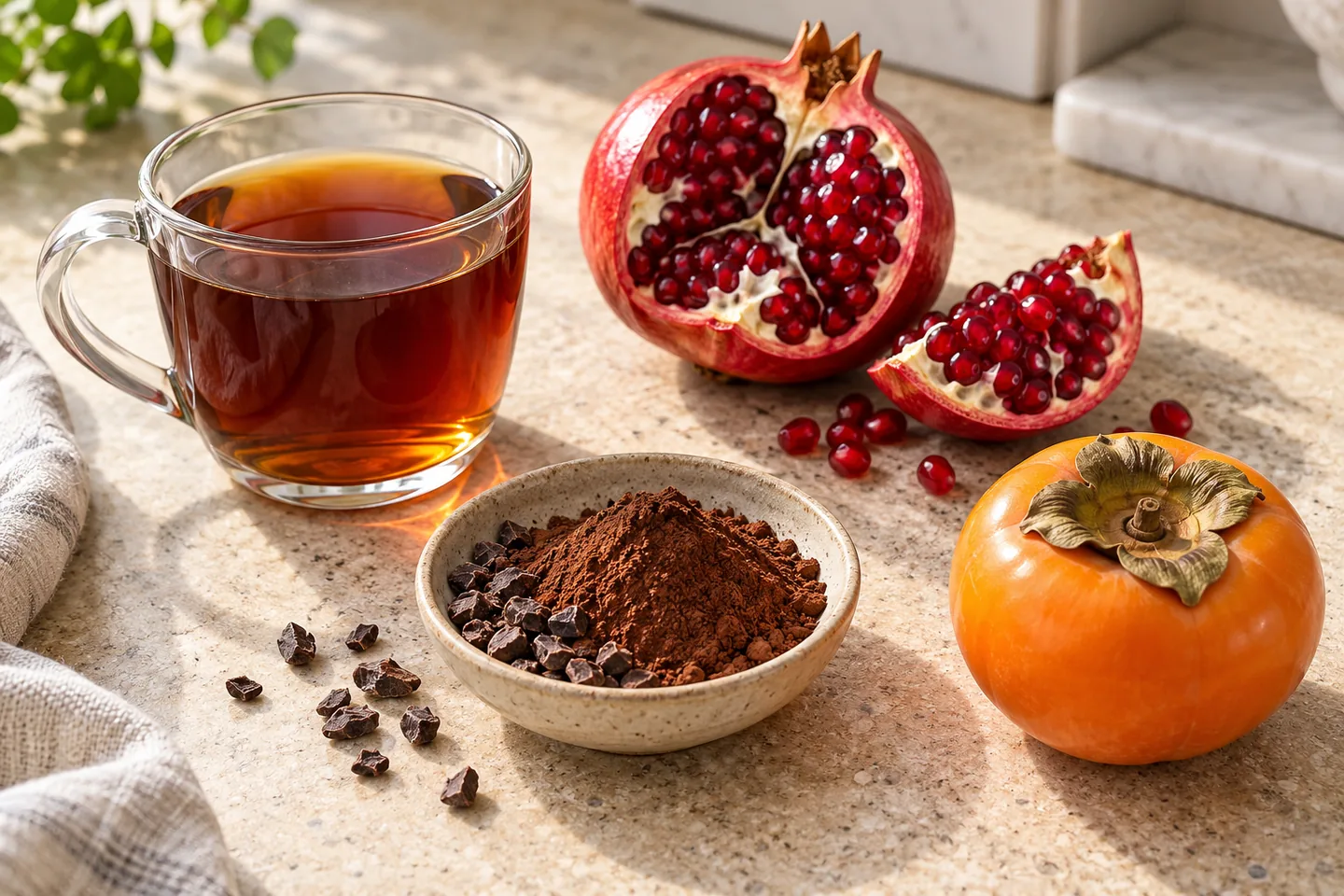
Tea, cocoa, unripe fruit and some plant-protein foods can leave the mouth feeling dry or rough. That sensation has a name—and it is not simply bitterness or sourness.
Take a sip of over-steeped tea and the mouth can seem to tighten. Unsweetened cocoa may feel rough. A bite of unripe persimmon can leave the tongue and cheeks oddly dry. These foods may also taste bitter or sour, but the drying, puckering part has its own name: astringency.
Astringency is generally treated as a mouthfeel rather than one of the basic tastes. Sourness comes from acids interacting with the taste system, while bitterness has its own family of taste receptors. Astringency is described with touch-like words—drying, roughing, drawing and puckering—and often builds for several seconds after the food enters the mouth. Because the sensations can arrive together, everyday language tends to bundle them into one word such as sharp or tart.
Saliva helps explain the difference. It does more than wet food; proteins and mucins in the salivary film help oral surfaces slide comfortably. Many astringent plant compounds, especially polyphenols known as tannins, can interact with those proteins and with the mouth's protective film. That interaction can reduce lubrication and increase friction, which the brain reads as dryness or roughness.
The old shorthand said tannins simply precipitate salivary proteins. Modern reviews describe a busier picture involving protein binding, changes to the salivary film, friction at oral surfaces and possibly several sensory pathways. The exact mix depends on the compound, concentration, food structure and the person tasting it. Astringency is therefore a family of related sensations, not one microscopic switch.
That broader view matters in vegan food. A 2025 Scientific Reports study examined model plant-protein drinks using sensory ratings, brain-imaging measurements and saliva- or mucin-coated cell models. The researchers found that plant-protein astringency was associated with mucin binding and a distinct neural response. The study used controlled formulations, not every pea burger or protein shake on the shelf, but it shows that a dry finish does not require tea tannins to be real.
A useful tasting question is: where is the sensation? Sourness feels like a bright taste signal. Bitterness reads as a taste that can linger. Astringency makes surfaces feel less slippery—perhaps furry on the tongue, tight in the cheeks or rough when the tongue moves against the palate. Naming that physical clue makes troubleshooting easier because extra sugar may soften bitterness while leaving the friction largely intact.
For tea, begin with the maker's time, dose and water-temperature guidance. If the cup becomes progressively drier as it steeps, shorten the next infusion or use less leaf before reaching for more sweetener. With cocoa or a strongly astringent plant-protein mixture, dilution and a creamy component can change concentration and lubrication; oat cream, seed butter or a well-emulsified sauce may make the result feel rounder. That is a practical adjustment, not a guarantee, because formulations and palates differ.
Astringency is not automatically a defect. A little grip can give tea, dark chocolate, berries or pomegranate structure and a clean finish. The goal is proportion: enough to feel lively, not so much that the mouth seems upholstered in felt. Taste the food at its serving temperature, wait a few seconds, and notice whether the issue is a taste, an aroma or a texture-like drying sensation before changing the recipe.
Once astringency has a name, it becomes less mysterious. Sourness can stay sour, bitterness can stay bitter, and that dry little handshake from tea or cocoa can finally introduce itself properly.
Sources
You may also like these