Kitchen Troubleshooting
Splatter Matter: Why Wet Food Makes Hot Oil Spit
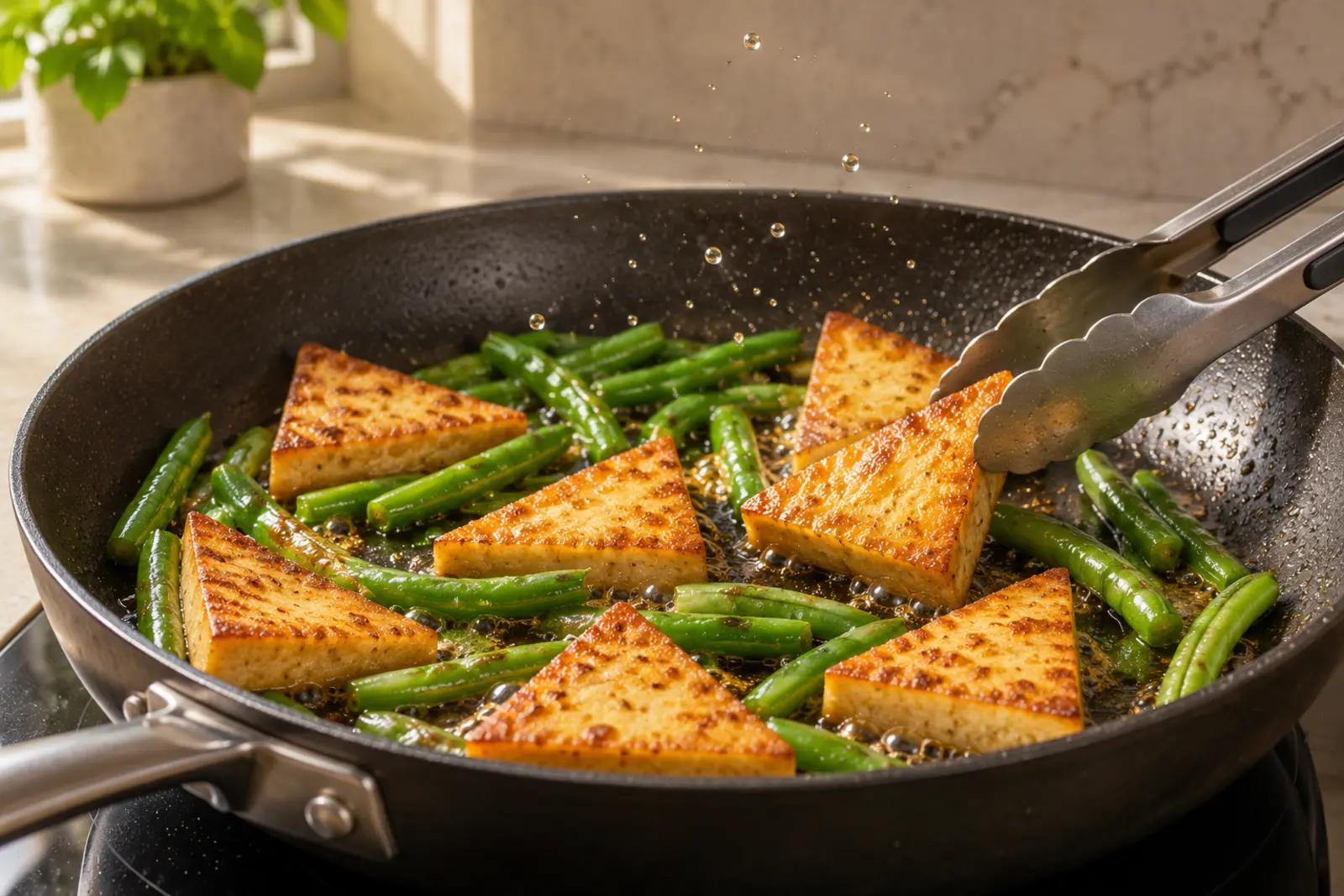
That sharp crackle is a tiny phase-change drama: water becomes steam, bubbles push through the oil and droplets take flight. Here is how to keep the sizzle useful—and recognize the separate rules for a pan fire.
A lively sizzle can be part of good pan-frying. A sharp pop that sends oil beyond the pan is a different clue: water has met oil hot enough to turn that water into vapour very quickly. The food may be tofu, green beans or a veggie fritter; the physics starts with moisture, not the menu.
Oil and liquid water do not mix into one calm layer. Water is also denser, so a loose droplet can move below the oil’s surface. Once it gets hot enough, it forms water vapour. That growing bubble must rise through the oil, and its movement can launch a thin jet or a spray of droplets above the pan.
NIST researchers filmed this drama at 1,000 frames per second. In their experiment, a room-temperature water droplet struck hot peanut oil, broke into smaller droplets and eventually produced a rapid vapour explosion. A later Physics of Fluids study placed millimetre-size water droplets at different depths in hot canola oil. High-speed images showed expanding cavities, vertical jets and expelled oil; the droplet’s position below the surface strongly influenced the shape of the event.
A frying pan is messier than a laboratory dish, but the practical connection is straightforward. Moisture clinging to a food’s surface is available to become steam almost immediately. Moisture inside the food usually escapes more gradually, which is why steady bubbling around tofu or vegetables can be normal while one hidden bead of water produces a sudden crack.
Before pan-frying, pat visible surface water from washed vegetables and pressed tofu. Use a pan with enough depth that the oil sits well below the rim. Lower food gently with tongs or a slotted utensil, moving it away from you rather than dropping it. Keep the heat within the recipe’s range, stay beside the pan and turn the burner down or off if the oil begins to smoke.
A splatter screen can catch flying droplets, but it does not remove water or correct overheated oil. Think of it as a small shield, not permission to crowd the pan, pour recklessly or walk away. Long sleeves, dry tools and a clear area around the burner add sensible distance without changing dinner.
There is an important boundary between ordinary splatter and a pan fire. If oil ignites, do not add water and do not carry the pan. The U.S. Fire Administration advises turning off the heat if it is safe and covering the pan with a lid or baking sheet to smother the flames. If the fire cannot be controlled immediately, get out and call emergency services.
So the crackle has two lessons. In ordinary cooking, less loose water means less dramatic oil flight. In a fire, water is never the remedy. Dry the surface, lower food gently, keep a lid nearby and let the sizzling stay where it belongs: inside the pan.
Sources
You may also like these