
Kitchen Troubleshooting
Whirl, Interrupted: When a Blender Spins Without Blending
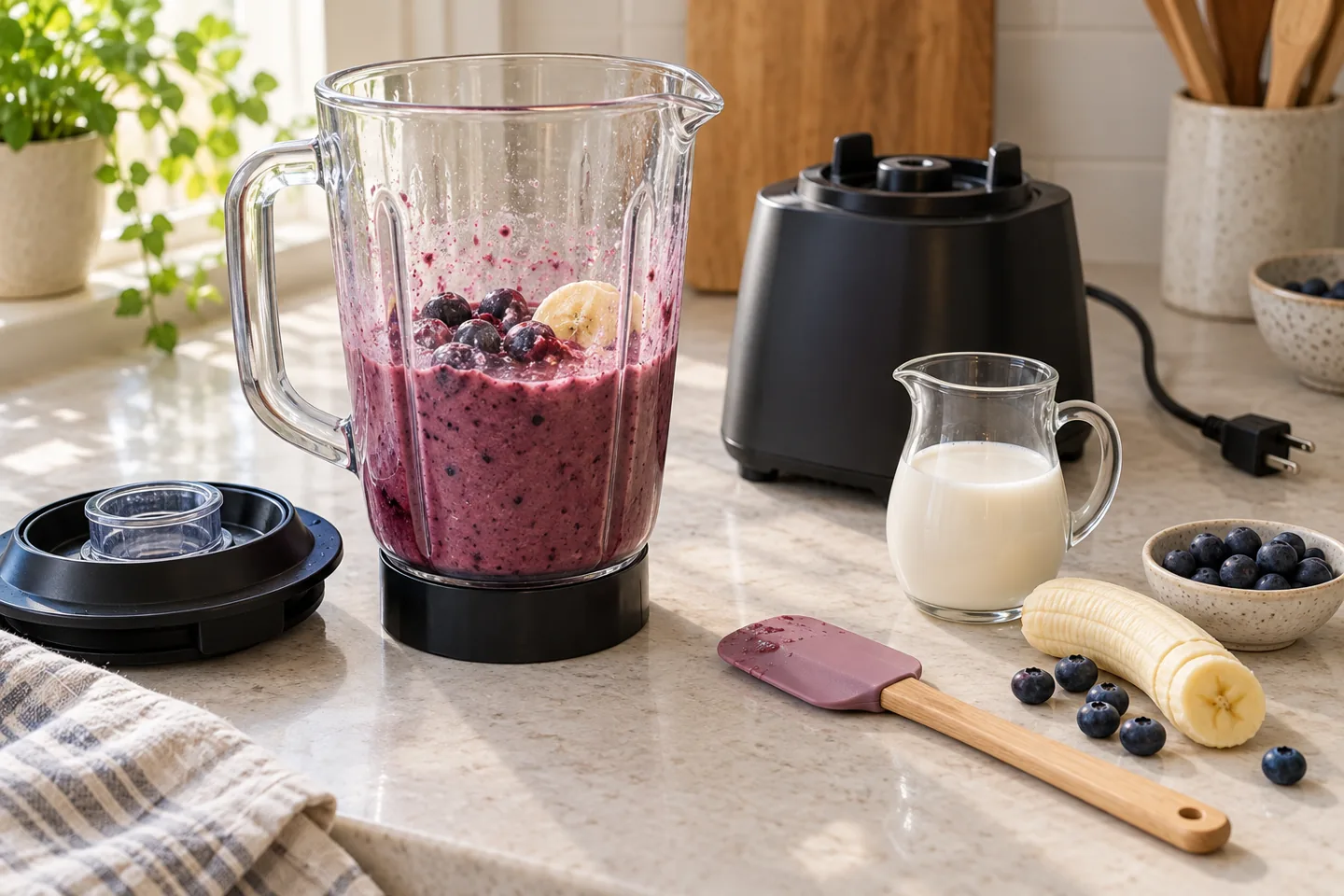
A whirring motor, motionless smoothie and suddenly silent blender are not the same problem. A little symptom-reading can save your texture without asking the machine to keep struggling.
Listen first. A blender that suddenly goes quiet needs a different response from one that keeps whirring beneath a motionless smoothie. Before pouring in more oat milk, stop and identify which problem you have. These three familiar symptoms point toward different next steps, and none calls for a spoon in a running jug.
Begin with the safety reset. Switch off, wait for the blades to stop, unplug the machine and remove the jug from its base before taking off the main lid to rearrange food. Keep fingers away from the blades. Vitamix's owner instructions specifically warn against putting hands or ordinary utensils into a container during operation or while it remains on the base.
Symptom one: the motor keeps whirring, but the food stops travelling. A thick mixture can leave an air pocket around the blades, so they spin without drawing fresh ingredients into their path. Blendtec's loading guidance identifies enough liquid and suitable ingredient placement as important safeguards against these pockets. The practical target is circulation, not simply another minute of noise. A stiff berry mixture perched above the working area cannot become smooth until food reaches it.
For a pourable smoothie, a small measured splash of the recipe's liquid is a sensible kitchen adjustment, followed by reassembly and another brief attempt according to the manual. Add gradually: rescuing circulation should not accidentally turn a spoonable breakfast into a large purple drink.
Some machines offer a different route for deliberately thick blends: their own fitted tamper. Vitamix explains that its tamper and secured main lid work together to keep the tool away from the blades while guiding ingredients downward. Use only the correct manufacturer-approved tool, through the designated opening, exactly as your model directs. Fill limits and maximum tamping times matter. This is a designed exception, not permission to substitute a wooden spoon, use a mismatched tamper or remove the main lid while blending.
Symptom two: the machine stops altogether. That may be overload protection rather than an air pocket alone. Vitamix says its thermal protection can shut the motor down when it overheats; its support guidance also flags dense cooked beans, rice and potatoes as heavy loads. Switch off and follow your model's cooling and reset instructions instead of repeatedly trying to restart it. Smaller batches may help with the next attempt, but an automatic shutdown is a reason to pause, not a challenge to win.
Symptom three: grinding, unusual squeaking or a motor that no longer drives the blades. Stop using the machine and contact the manufacturer. Vitamix identifies abnormal grinding or squeaking as possible bearing trouble and directs owners with drive problems to customer support. Adding water is not a repair for a damaged drive or blade assembly.
For the next batch, start with the loading order specified for your particular jar. Blendtec recommends liquids and softer ingredients before hard or frozen pieces, and cutting larger ingredients into smaller pieces. Do not turn that into a universal rule for every upside-down personal cup or specialist container. Keep to the appliance's quantity, speed and running-time instructions. The useful kitchen habit is simple: restore food movement when movement is the problem, allow cooling when protection intervenes, and seek service when the hardware is unhappy.
Sources
You may also like these