Food Research
Brix and Match: When a Pocket Meter Meets Real Fruit
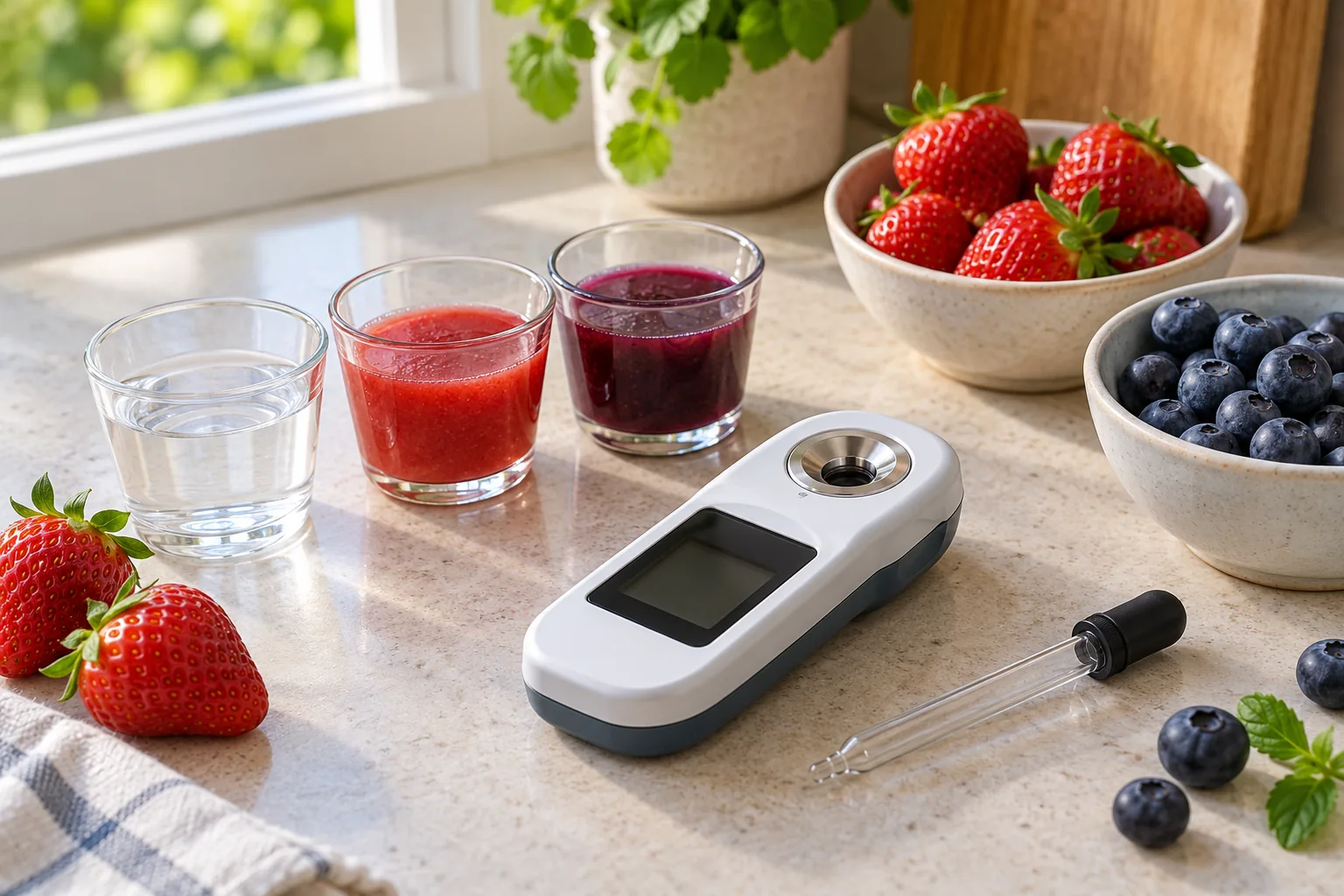
A September university equipment check found that fruit purées gave pocket refractometers a trickier assignment than sugar solutions. The useful lesson begins with the sample, not the price tag.
A few drops of berry juice, a button press and a number: a pocket refractometer makes fruit testing look delightfully simple. A new university equipment check offers a useful reminder, though. The number depends on both the instrument and what lands on its tiny glass window. A neat-looking display is the beginning of a measurement, not the end of the questions.
In an outreach report published on September 23, 2026, North Carolina State University postharvest physiologist Penelope Perkins-Veazie compared several digital refractometers using prepared table-sugar solutions and fruit purées. The sugar preparations were made three times and measured three times per instrument. The fruit tests used purées made from ten strawberries or thirty blueberries, each measured repeatedly.
The interesting turn came with actual fruit. The report describes greater-than-expected variation in the purée readings, with some units reading lower than others. It was cautiously encouraging about inexpensive equipment while recommending performance checks. This was an outreach comparison of particular units, not a universal meter ranking or a full independent validation.
The optical principle helps explain the job. Light changes direction when it crosses between materials with different refractive properties. A refractometer uses that behaviour at a prism and sample boundary, then translates the optical result onto a calibrated scale. It is examining a property of the whole liquid, not recognizing individual sugar molecules. The screen may look like a miniature taste verdict, but the instrument has never taken a sip.
Fruit juice is more complicated than table sugar dissolved in water. University of Maryland Extension notes that sugars make up much of fruit's soluble solids, alongside organic acids, amino acids, phenolic compounds and soluble pectins. A Brix-scale reading can therefore be a useful estimate of concentration without becoming an exact inventory of sugars. Nor can that one reading describe aroma, texture or the balance between sweetness and acidity.
Sample preparation deserves equal billing. Maryland's peach guidance calls for representative fruit portions, expressed juice and a consistent measurement temperature. It also notes that soluble solids can vary within a single peach. One drop taken from one convenient spot is not automatically a fair portrait of an entire fruit, much less a whole basket. Automatic temperature compensation is useful, but it does not choose a representative sample for you.
For a curious vegan cook already using a meter for fruit drinks or recipe development, the practical inference is to keep a short measurement log. Record the fruit batch, how the sample was prepared and its temperature; repeat readings using fresh drops prepared the same way. Follow the instrument's calibration and cleaning instructions. A comparison becomes more informative when the method stays steady rather than changing with every berry.
There is no need to turn a fruit bowl into a laboratory or buy a gadget to enjoy good produce. The small September test simply makes a useful distinction visible: an instrument can behave differently when a tidy reference liquid becomes a complicated food. Give the sample as much care as the screen, and those few drops can tell a more honest story. That is a better kind of Brix and match.
Sources
You may also like these