
Food Research
Loaf and Behold: Wheat Designed to Make Less Acrylamide
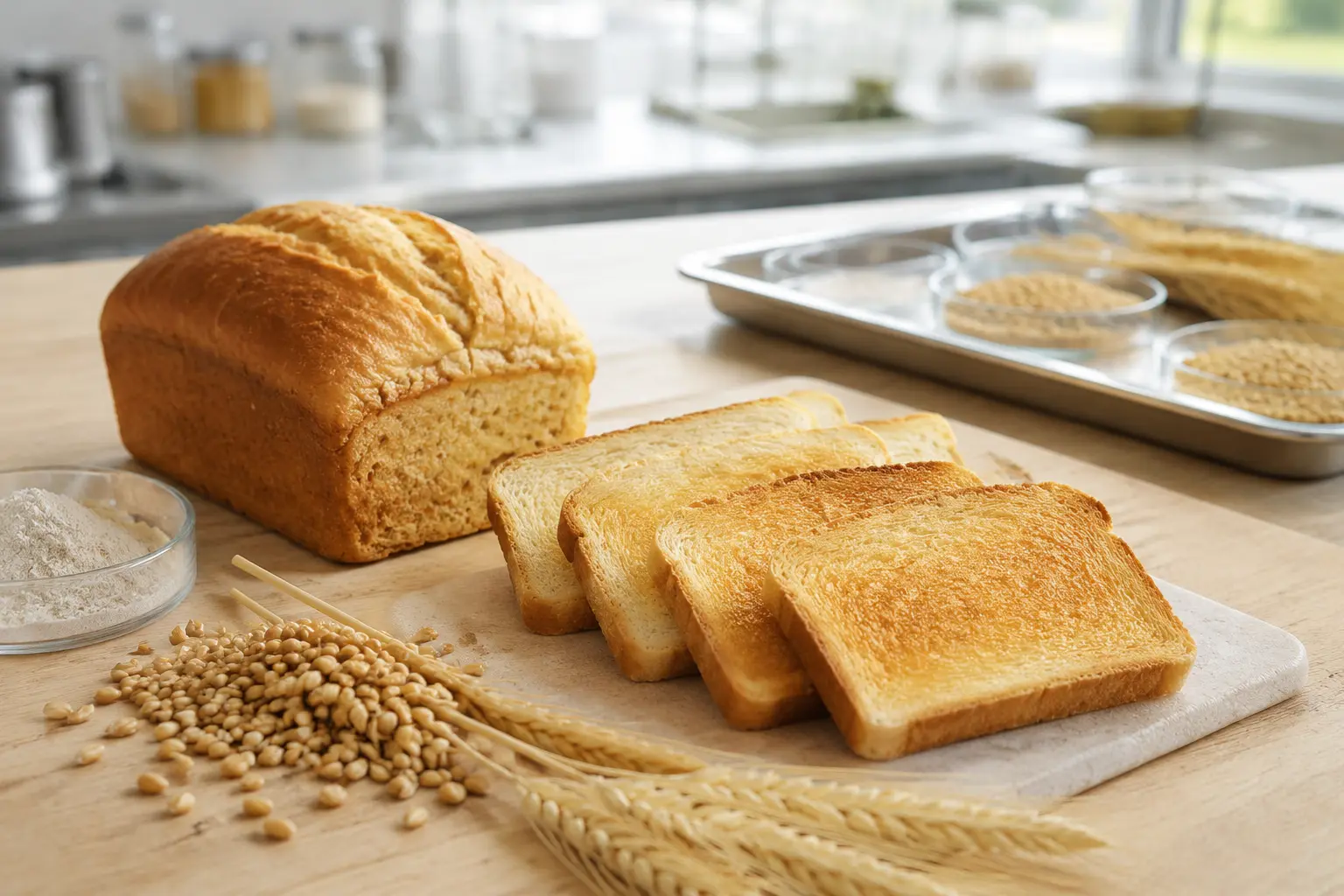
A 2026 field and baking study started with the wheat itself, lowering a natural acrylamide precursor before the flour ever reached the oven.
Toast earns its golden colour and warm aroma from the Maillard reaction, a busy set of reactions between amino acids and sugars. Most of that chemistry is delicious. One less welcome result can be acrylamide, a processing contaminant that forms in some carbohydrate-rich foods during high-temperature cooking.
For wheat products, an important starting ingredient is already inside the grain: free asparagine, a naturally occurring amino acid. When asparagine meets certain sugars at baking or toasting temperatures, some can become acrylamide. That gave a research team an unusual question. Could changing the grain’s starting chemistry reduce acrylamide without taking the browning out of bread?
A study published in April 2026 followed experimental bread-wheat lines through two years of field trials and then into small-scale bread, toast and biscuit tests. Researchers used CRISPR to knock out a seed-active asparagine synthetase gene called TaASN2. One line also carried partial changes to the related TaASN1 gene. Conventional chemical-mutagenesis lines and unedited wheat varieties served as comparisons.
Across the two field trials, removing TaASN2 reduced free asparagine in the grain by 59 percent. Combining that change with the partial TaASN1 knockout produced a 93 percent reduction. The paper reported no clear yield penalty tied to the edited lines, while the chemically mutated comparison lines had lower yields. Total grain nitrogen, used as a broad indicator of protein content, was not meaningfully reduced by the gene changes.
The difference followed the flour into the oven. Acrylamide in bread from the dual-edited line was below the study’s detection limit before toasting. After four minutes of toasting, it measured 8 percent of the unedited control. Bread from the TaASN2-only line measured 23 percent of its control after the same toast time, and biscuits made from the dual-edited line contained 93 percent less acrylamide than control biscuits.
Here is the especially toast-worthy detail: the relationship between colour and acrylamide changed. The experimental breads and biscuits could reach a similar shade while forming less acrylamide. In ordinary food, browning is often used as a practical clue because darker cooking can mean more acrylamide. This study suggests that the flour’s chemistry can change what that colour predicts.
It is still research, not a new supermarket loaf. The baking work was small-scale, and the authors noted that some flour produced higher Hagberg Falling Number readings, a measure linked to starch-enzyme activity that can affect loaf volume. More breeding, quality testing, production work and review would be needed before this wheat could become an everyday ingredient.
For today’s toast, the familiar advice still stands. Health Canada recommends toasting bread and baked goods to the lightest colour you enjoy and avoiding overcooked or burnt pieces. The new study is not a permission slip for charcoal breakfast. It is evidence that future risk reduction might begin in the field as well as in the kitchen.
One separate vegan note belongs on the bread bag. Wheat flour is plant-based, but an enriched loaf can still contain milk, butter, eggs or honey. Lower-asparagine wheat would change one part of the grain’s chemistry; it would not decide whether the finished recipe is vegan. That remains a quick ingredient-list job.
So the clever part is not toast that refuses to brown. It is wheat that arrives at the toaster with much less of one reaction partner waiting in the wings. Same golden ambition, different chemical starting line.