Food Research
Piece of Cake, Pile of Fruit: The Dessert Flip Test
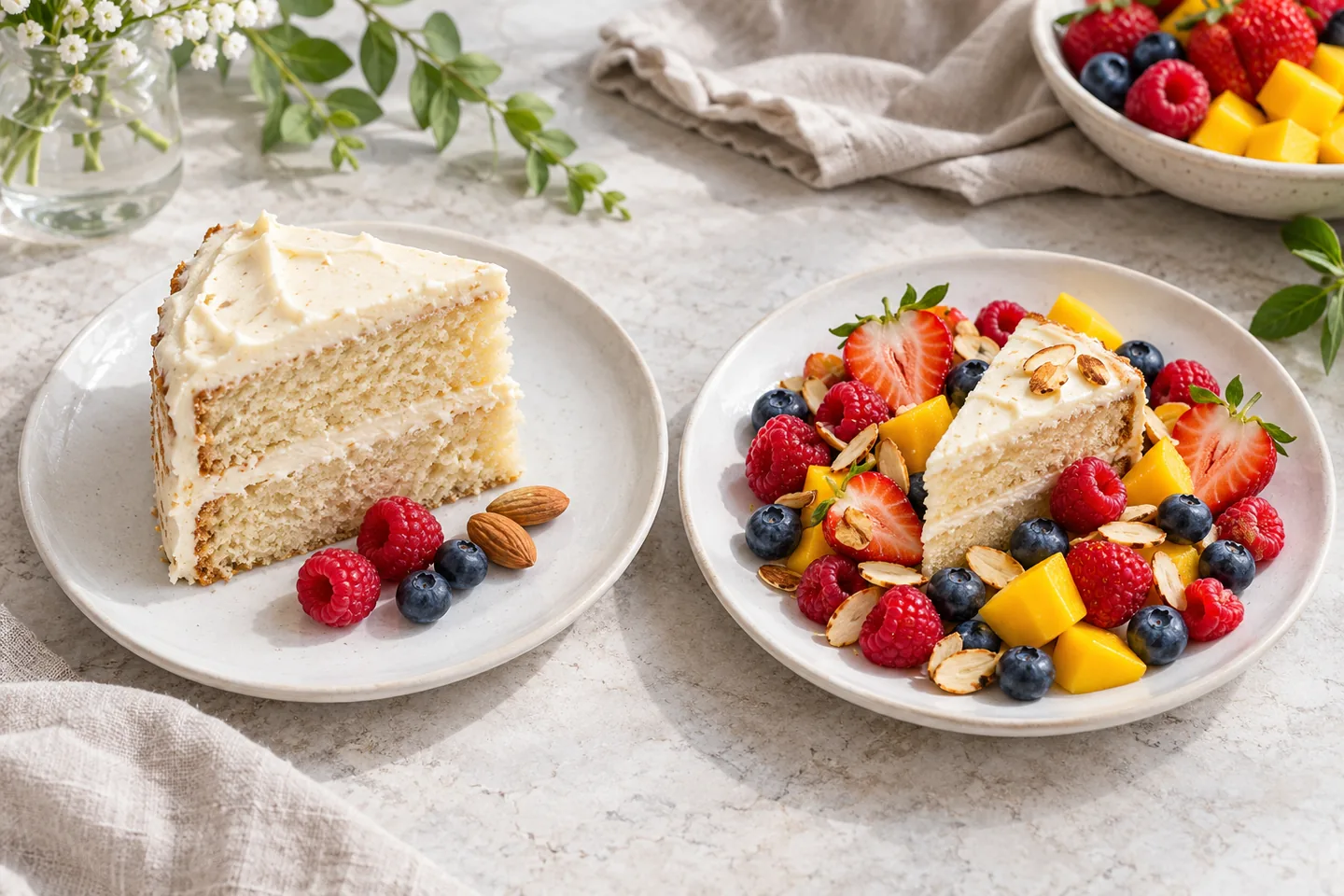
Researchers rearranged the dessert plate instead of reinventing it: less cake, much more fruit and nuts. The fruit-forward versions stayed appealing—and sometimes became the preferred choice.
Picture two dessert plates. One carries a generous slice of cake with a polite berry garnish. The other reverses the proportions: a modest piece of cake surrounded by colourful fruit and a scatter of nuts. The ingredients are familiar; the visual headline has changed. Researchers at the University of California, Davis call that second arrangement the “Dessert Flip.”
The idea was tested, not merely styled for a photograph. In a Journal of Food Science study, 118 college-aged participants evaluated plated desserts. The conventional plates were 80% cake and 20% fruit and nuts by weight; the flipped plates were 20% cake and 80% fruit and nuts. Participants preferred the flipped presentation, while overall-liking scores were not significantly different. Those measures sound similar, but they ask slightly different questions: one compares choices, while the other scores each dessert on its own.
A second part of that study gave 150 participants pictures of dessert options after an entrée. They selected 60%-fruit, 40%-cake versions more often than conventional 80%-cake versions. The researchers also estimated that, using average U.S. fruit prices at the time, a flipped dessert could cost the same as or less than a standard ungarnished portion of cake.
A related dining-hall study compared three plates: a conventional dessert with 20% fruit, a visible flip with 60% fruit, and a “stealth” version that blended peach purée into the cake. The visible fruit-forward plate performed well; hiding fruit inside the cake was not necessary to preserve acceptance. That distinction is useful because it treats fruit as part of the pleasure of dessert, not a vegetable-in-disguise assignment.
Why might the arrangement work? The researchers point to variety: berries or mango can add colour, tartness and juiciness, while nuts contribute crunch beside soft cake. That is a plausible interpretation of the sensory result, not proof that one combination will delight everyone. Preference depends on the fruit, the cake, the diner and the occasion.
The studies also have clear limits. Most participants were university students, the tests used specific cakes and fruit, and a dining-hall choice is not every dessert decision. The results do not establish a universal ideal ratio, and they do not turn cake into a health product. They show that changing proportions can keep a dessert appealing without asking fruit to remain a token garnish.
At home, borrow the composition rather than chasing a laboratory percentage. Start with a smaller piece of vegan cake, tart or brownie. Add a generous pile of ripe fruit, then one contrasting element such as toasted almonds, pistachios, pumpkin seeds or cacao nibs. Match the parts deliberately: citrus with chocolate, berries with vanilla, grilled stone fruit with spice cake, or pear with gingerbread.
The clever part of the Dessert Flip is that nothing needs to impersonate anything else. Cake stays cake. Fruit gets more room. Crunch gets a proper role. The plate simply changes who receives top billing—and dessert may become more interesting because of it.
Sources
- https://pubmed.ncbi.nlm.nih.gov/33021336/
- https://doi.org/10.1016/j.foodqual.2020.103917
- https://news.bftv.ucdavis.edu/food-science-and-technology/guinard-lab-paper-cover-journal-food-science-november-2020
- https://www.washingtonpost.com/wellness/2026/10/22/science-dessert-flipping-how-it-can-help-you-eat-healthier/
You may also like these