
Sauce Science
Tahini Houdini: Why Water Makes It Thicker Before It Turns Silky
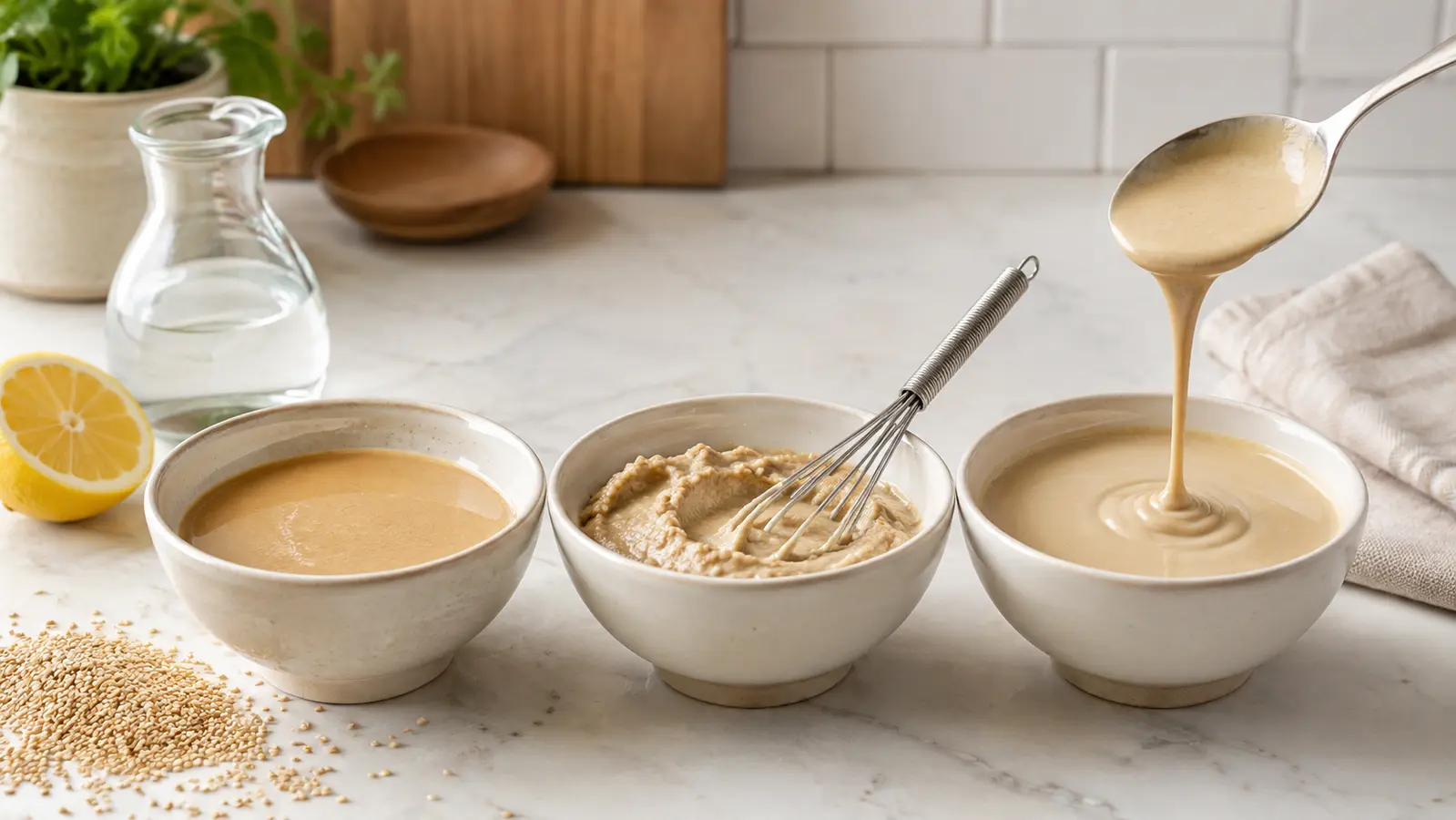
A splash of water can turn flowing tahini into a stubborn paste—then a little more transforms it into silky sauce. The disappearing act is really a change in structure.
You add water to tahini, expecting a thinner sauce. Instead, the spoon suddenly meets a pale, stiff mass that looks as though dinner has taken a wrong turn. Keep whisking: the tahini is not ruined. It is passing through a surprisingly dramatic rearrangement.
Tahini is more than sesame oil in a jar. Researchers describe sesame paste as tiny water-attracting sesame solids suspended in a mostly oily environment. One study measured its sample at nearly 60 percent fat, with proteins, fibre and other seed material making up much of the rest.
When only a little water arrives, those water-loving solids begin to hydrate, swell and gather together. In a detailed study of tehina hydration, small water additions produced a sharp rise in viscosity; at intermediate water levels, the mixture became highly viscous and semi-solid. That is the famous “seized” stage your whisk can feel.
Add enough water and the arrangement changes again. The same research found that, once water became abundant, the paste shifted into an oil-in-water emulsion: water became the continuous phase, while sesame oil and swollen solids dispersed through it. The mixture could then flow as a sauce rather than behaving like a dense paste.
Water quantity still matters after the great escape. A 2017 study compared several diluted sesame pastes and found that a one-to-one ratio of paste to added water performed well as a dressing in its sensory testing. The samples were also shear-thinning, meaning they flowed more readily while being stirred. Different brands and recipes vary, so that ratio is a useful reference rather than a universal commandment.
The practical method is simple: whisk in water or lemon juice a spoonful at a time. When the tahini tightens, keep whisking and add another measured splash. Based on the observed phase changes, continuing through the thick stage is more useful than trying to rescue it with extra oil. Once smooth, adjust with water for drizzling or leave it thicker for dipping.
One final switch happens after dilution: the sauce now contains much more available water than tahini straight from the jar. A 2026 food-microbiology study found that water-based tahini sauces can support microbial growth if contamination is present and the sauce is left unrefrigerated. The sensible kitchen move is to refrigerate diluted tahini promptly and make an amount you will use reasonably soon.
So the next time tahini appears to seize, consider it a brief intermission. The sesame solids are hydrating, the mixture is reorganizing, and your smooth sauce is likely just another splash and whisk away.