Food Data
Count on It-ish: Why Recipe Nutrition Estimates Disagree
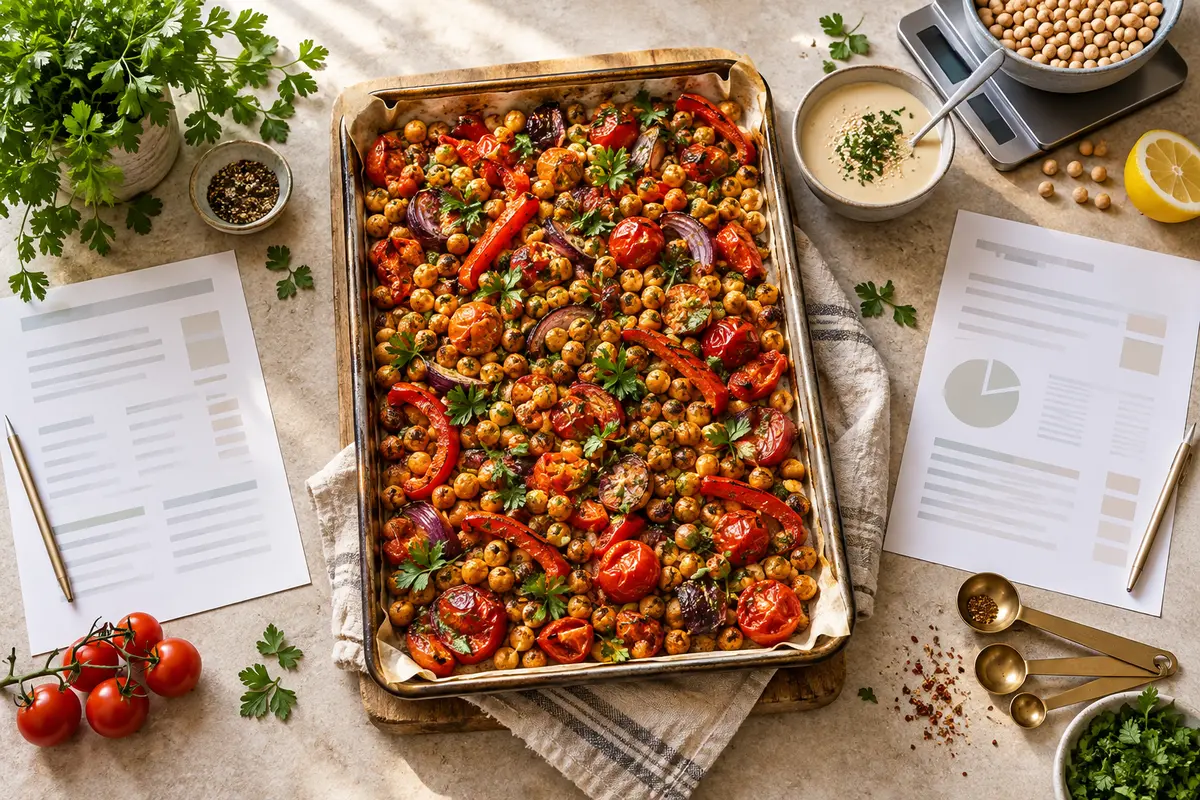
Put the same chickpea traybake into two nutrition calculators and the numbers may split. A friendly head-to-head shows how ingredient matches, cooking yield and serving size move the total.
Imagine a friendly calculator cook-off. The test recipe is one chickpea traybake with tahini sauce. Calculator A and Calculator B receive the same ingredient list, yet their per-serving results do not match. Neither has necessarily dropped a decimal. Recipe nutrition is assembled from data choices, cooking assumptions and division—not read by a tiny calorie speedometer inside the baking dish.
Round one is the ingredient draft. Calculator A chooses a generic cooked-chickpea record. Calculator B finds a branded canned product whose figures came from its package label. USDA FoodData Central contains several data types: Foundation Foods use analytical data from food samples, survey-food records are compiled for dietary studies, and branded-food records largely use manufacturer-supplied label information. Those records answer slightly different questions. ‘Chickpeas, cooked,’ ‘chickpeas, canned,’ and ‘one can, drained’ are not interchangeable descriptions.
Round two is tahini math. Food energy is often calculated from protein, fat and carbohydrate rather than measured in every finished recipe. General Atwater factors assign roughly 4 kilocalories per gram to protein, 9 to fat and 4 to carbohydrate; food-specific factors can also be used. FAO guidance shows that fibre treatment can depend on the calculation system. If our two tools select different nutrient records or energy factors, their totals can part company even when both arithmetic engines work perfectly.
Round three begins when the tray enters the oven. Calculator A keeps the raw ingredient weights and applies a standard cooking yield. Calculator B asks for the finished weight. Water leaving peppers and tomatoes does not create extra energy, but it does change how much food remains and therefore the value per 100 grams. FAO’s recipe-calculation guidance recommends accounting for edible portions, cooked yield, water or fat changes, and nutrient-retention factors where appropriate. Ten extra minutes of roasting can make the same ingredients finish at a different weight.
Calculator B now inherits another wrinkle from its branded records: label rounding. Canada’s food-labelling guidance specifies how declared nutrient amounts are rounded. USDA’s branded-food documentation notes that permitted label rounding can add variability when figures are converted back to a 100-gram basis, particularly for foods with small serving sizes. Several individually sensible roundings can travel into one recipe total.
The final round is portioning. Calculator A divides the tray into four servings. Calculator B divides the very same total into five. A ‘serving’ is part of the input, not a fixed property of chickpeas. Even tools that both display that word may mean the recipe author’s portion count, a standard weight or a volume estimate. This single choice can create the largest gap in the whole cook-off.
So which calculator wins? The one whose inputs best describe the food in front of you. Exact brands are useful when a packaged product is distinctive. Generic analytical records can be useful for basic ingredients. A drained ingredient should be matched to a drained or appropriately weighted entry, and a cooked recipe is described more faithfully when its actual yield is known. Precision on the screen cannot rescue a mismatched food record.
For a fair rematch, give both tools the same brands or the same database entries, the same drained and cooked states, the same finished yield and the same portion count. Then keep that method when comparing two versions of a recipe. The result is still an estimate, but it becomes a consistent one—and Calculator A and Calculator B can finally stop throwing virtual measuring spoons at each other.
Sources
- https://fdc.nal.usda.gov/data-documentation/
- https://fdc.nal.usda.gov/Foundation_Foods_Documentation/
- https://fdc.nal.usda.gov/GBFPD_Documentation/
- https://inspection.canada.ca/en/food-labels/labelling/industry/nutrition-labelling/nutrition-facts-table
- https://www.fao.org/4/y4705e/y4705e23.htm
- https://www.fao.org/fileadmin/templates/food_composition/documents/1nutrition/Conversion_Guidelines-V1.0.pdf
You may also like these