
Cooking Technique
Grain of Pause: Why Rice Likes Ten Minutes Off the Heat
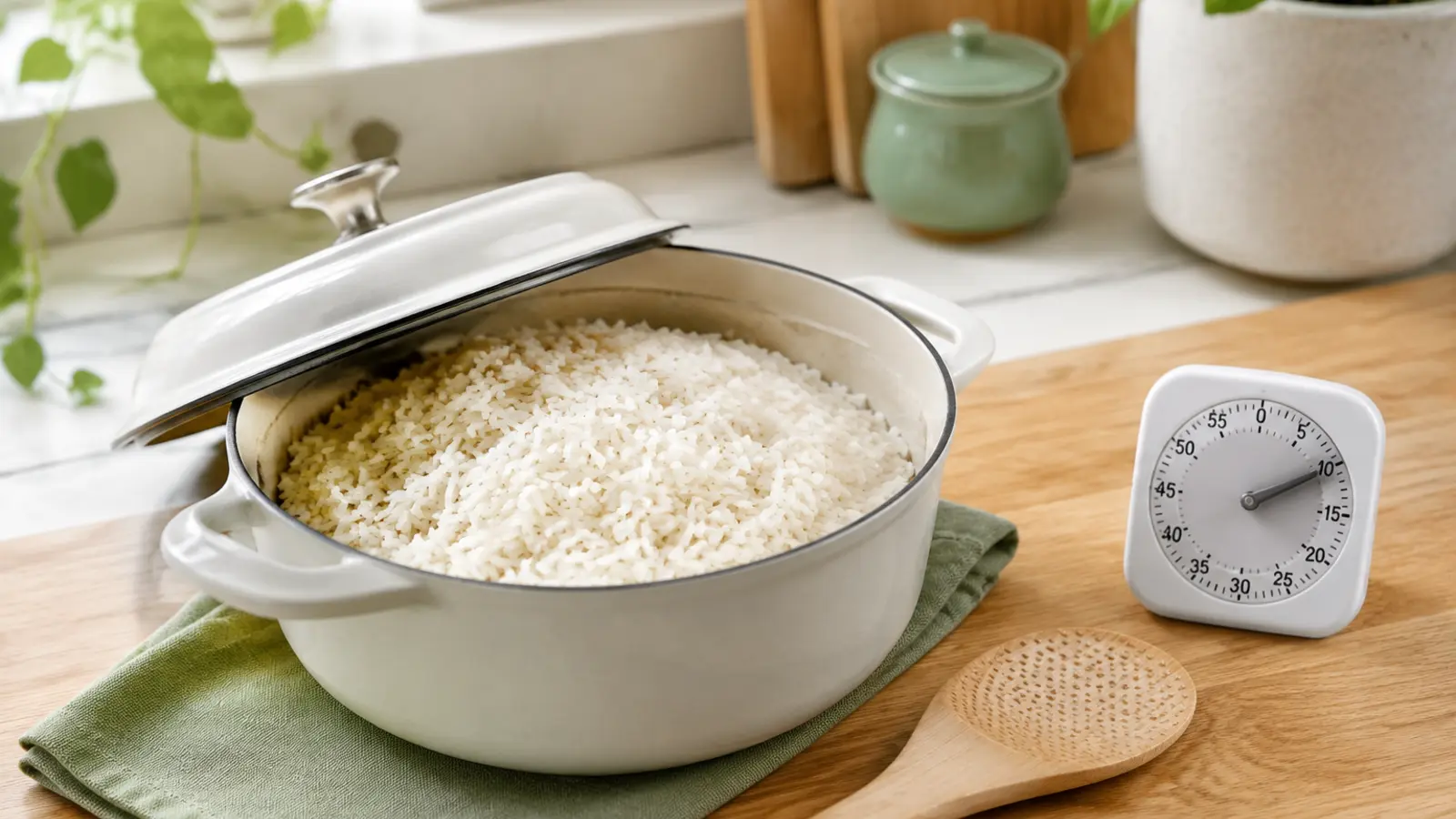
The burner may be off, but rice is not quite finished. A short covered rest lets steam and moisture settle into a fluffier, more even pot.
The timer rings, the water is gone and dinner smells ready. Before lifting the lid, give the rice one last ingredient: patience. Five to ten quiet minutes off the heat can help an absorption-cooked pot finish more evenly and fluff with less fuss.
Rice cooks by taking in water and heat. As moisture moves into each grain, starch granules hydrate, swell and lose their tightly ordered structure in a process called gelatinization. A scientific review of rice processing notes that insufficient water absorption can leave the centre of a grain incompletely gelatinized and hard. The final texture therefore depends on more than the moment the burner is switched off.
A covered pot still holds plenty of heat and steam. During a short rest, that trapped warmth continues the gentle steaming phase while moisture has time to spread more evenly through the grains and across the pot. In 2026 food-service guidance, USA Rice recommended resting cooked rice covered for five to ten minutes, saying the pause helps reduce overly wet and dry spots and makes a batch easier to fluff and portion.
That practical advice fits earlier peer-reviewed sensory research comparing two common rice-cooking methods. In the calculated-water, or pilaf, method, all the cooking liquid is absorbed and a steaming period allows moisture to distribute further through the grain. The study found that cooking method and rice variety both changed firmness, stickiness, dryness and overall preference. In other words, the pause matters, but the rice you started with still gets a vote.
For the simplest version, cook rice according to its package directions, then move the covered pot away from the hot burner. Leave the lid closed for five to ten minutes. A heavy pot may retain enough heat to keep browning the bottom if it stays on the same electric element, so the physical move is useful as well as ceremonial.
After the rest, uncover the pot and fluff gently with a fork or rice paddle. The goal is to separate and lift, not vigorously stir. Hard stirring can smear loosened surface starch through the rice and encourage the very clumping you were trying to avoid. If a little moisture remains on top, a gentle fluff also releases steam without turning the grains into paste.
This is not a universal order to make every rice fluffy and separate. Short-grain rice is naturally stickier than many long-grain varieties. Brown rice generally needs more water and a longer cooking time. Risotto is deliberately stirred to release starch, while sushi rice is handled for a cohesive texture. Follow the method that suits the dish, then use the covered pause when separate absorption-cooked grains are the goal.
Rice cookers often build a settling period into their change from cook to warm. Even so, it is worth checking the manufacturer's directions before opening immediately at the click. On the stovetop, the rest is especially handy because it costs no extra heat and gives you enough time to finish the vegetables, locate the serving bowl or wonder why every cupboard contains three lids that fit nothing.
Keep the pause short and purposeful. Resting rice for ten minutes is a texture step, not permission to leave a pot at room temperature all afternoon. Health Canada advises refrigerating leftovers promptly in shallow containers so they cool quickly, once very hot food has stopped steaming.
So when the timer ends, resist the lid-lifting reflex. Turn off the heat, move the pot, keep it covered and let the grains enjoy a brief spa treatment. Dinner is already cooked; it is simply getting itself together.
Sources
- https://www.usarice.com/thinkrice/detail-pages/blog/tips-for-using-u.s.-grown-rice-in-k-12-kitchens
- https://pmc.ncbi.nlm.nih.gov/articles/PMC3138007/
- https://doi.org/10.1046/j.1471-5740.2001.00019.x
- https://www.canada.ca/en/health-canada/services/general-food-safety-tips/food-safety-tips-leftovers.html