Cooking Technique
Sauce of the Matter: Pasta Water Is a Dial, Not a Spell
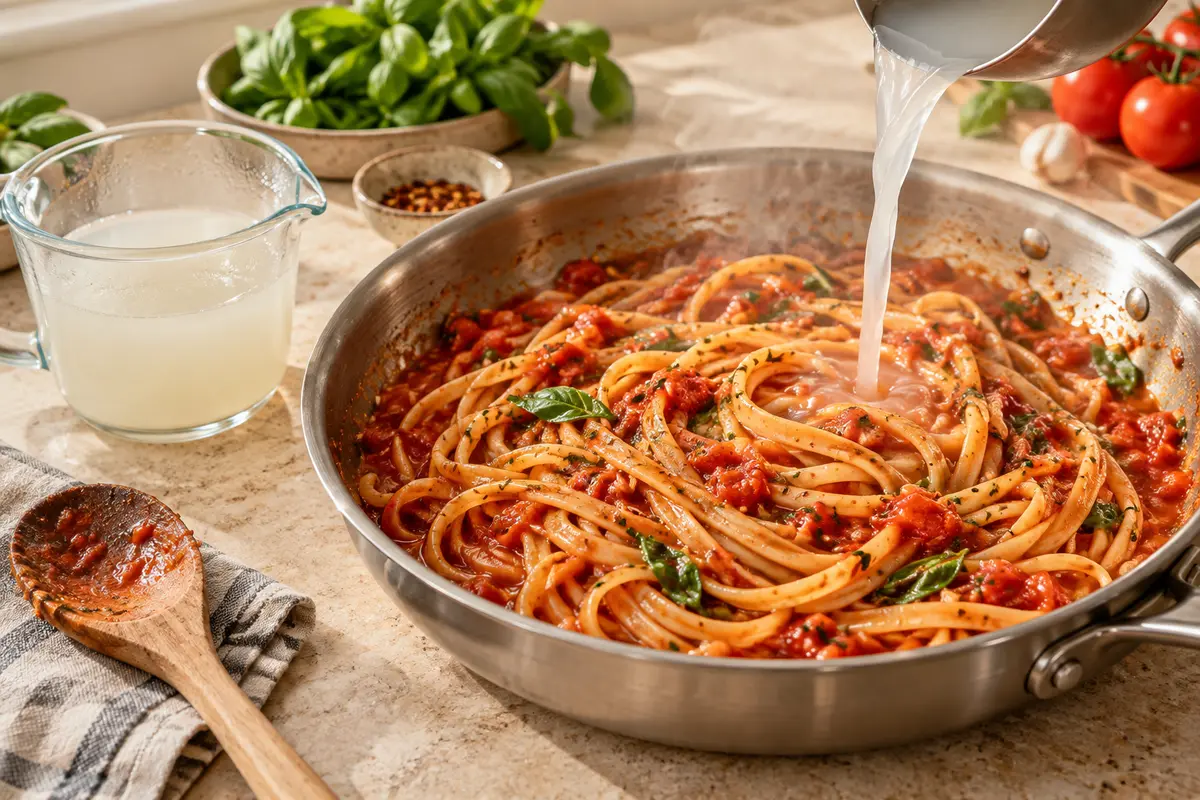
Cloudy pasta water can help a sauce cling, but the useful part is not mystical: starch concentration, heat and agitation all matter. Here is how to turn the dial without making dinner salty or soupy.
A recipe says to add a splash of pasta water. You obey, toss the noodles and wait for restaurant silkiness. Sometimes the sauce turns glossy. Sometimes it becomes the same sauce, only wetter. The missing detail is that pasta water is not one standard ingredient. It is a variable batch of hot, salty water carrying whatever starch the pasta released that day.
As dry pasta cooks, water moves into the noodle while some solids move out. Pasta shape, surface roughness, cooking time, the amount of water in the pot and even whether that water has already cooked another batch can change the result. Cloudiness is a useful clue, but it is not a laboratory measurement. A giant pot may produce relatively dilute cooking water; a smaller volume usually concentrates what escapes from the pasta.
A Journal of the Science of Food and Agriculture study published online in 2018 followed cooking water through 12 consecutive industrial-style batches. The water reached about 37 grams of solids per kilogram and became noticeably more viscous and shear-thinning. That setup is not a home saucepan, but it demonstrates the basic point: reuse and concentration can change cooking water from nearly plain water into a thicker, starch-rich liquid.
A 2025 Physics of Fluids paper brought even more measurement to cacio e pepe. The researchers mapped how starch, water, cheese and temperature affected clumping, finding that starch concentration was a major control on sauce stability. Cacio e pepe contains dairy cheese, so the paper does not prove a formula for cashew cream, olive oil or vegan parmesan. Its useful general lesson is narrower: saying “pasta water” without knowing its concentration leaves an important variable unspecified.
In a vegan pasta sauce, reserved cooking water can still do three practical jobs. It loosens a sauce without cooling it, brings dissolved and suspended starch, and creates a hot water phase that can be worked into fat by vigorous stirring or tossing. Starch can increase viscosity, and research on gelatinized food starches shows that some starch systems can also help stabilize oil-in-water emulsions. That does not make every ladle an instant emulsifier; the sauce’s fat, protein, starch level, temperature and mixing all share the work.
The reliable move is to finish rather than flood. Scoop out at least 250 millilitres of cooking water just before draining, when it is likely to be at its starchiest. Move the pasta to a wide pan one or two minutes before it reaches your preferred texture. Add the sauce and two tablespoons of pasta water, then toss or stir energetically over medium-low heat. Add more water a tablespoon or two at a time only when the pan looks tight or oily. The pasta finishes cooking while the sauce reduces around it.
Read the pan instead of chasing an exact ladle count. If oil beads on the surface, add a small splash of hot cooking water and agitate before adding more fat. If the sauce pools thinly, keep tossing over gentle heat so water can evaporate. If it becomes sticky or gluey, loosen it with plain hot water; adding even starchier water may push it farther in the wrong direction.
Salt is the quiet catch. Cooking water becomes more concentrated as it reduces, and so does its salt. Season the original pot modestly when you expect to use several additions, then taste the finished sauce before adding more. If the sauce is already salty but the pasta still needs liquid, switch to unsalted hot water.
Pasta water earns its place beside the stove, but it works best as an adjustable tool rather than a magic charm. Reserve it late, add it gradually, keep the pasta and sauce moving together, and watch the texture change. The goal is not the cloudiest cup; it is the right amount of water, starch, heat and motion for the sauce in front of you.
Sources
You may also like these