Cooking Technique
Bloom Service: Give Spices a Moment in Oil
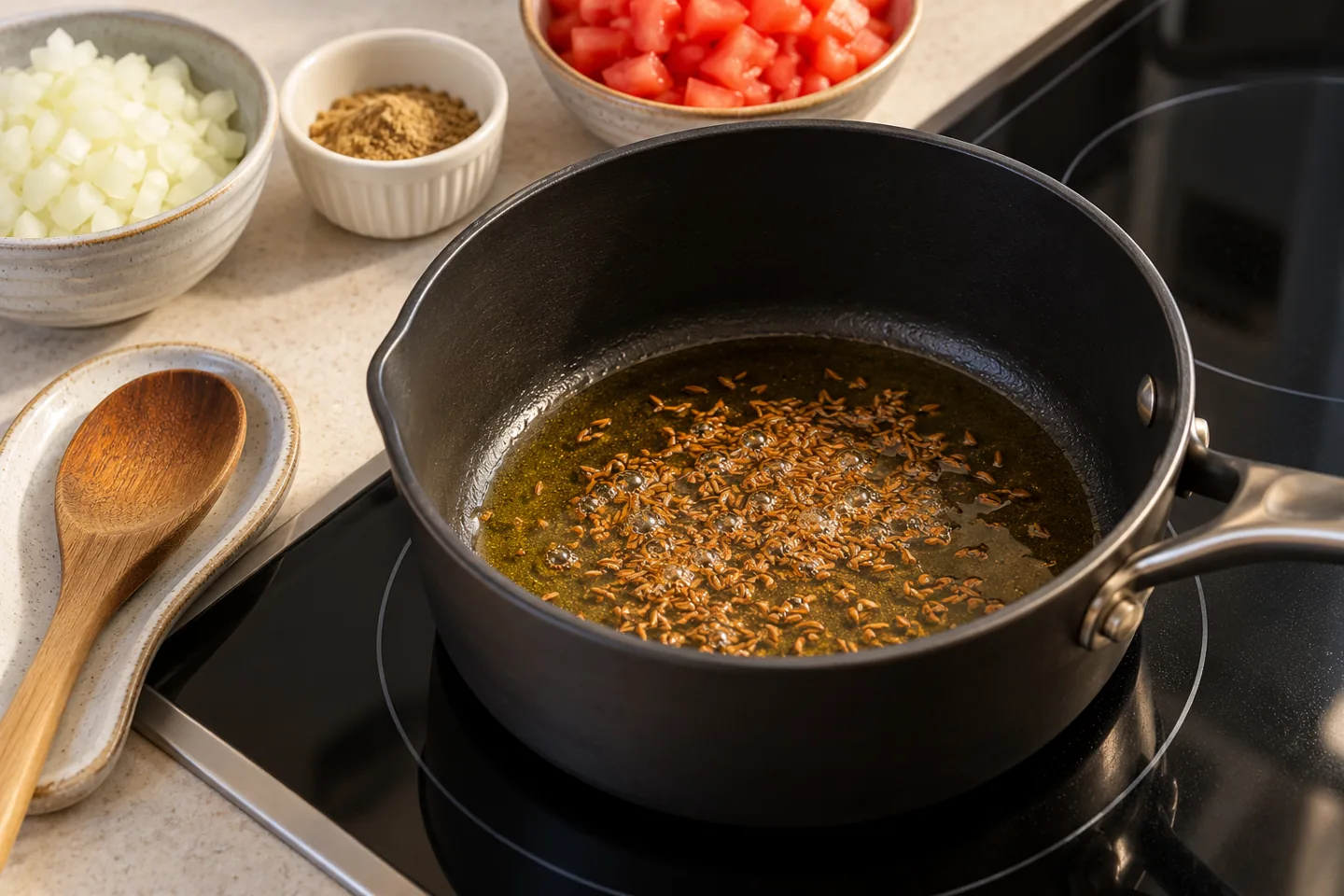
Before the tomatoes or broth go in, a brief spell in oil can give spices another job: seasoning the cooking fat itself. The useful skill is knowing when to move on.
Before opening the cumin jar, finish chopping the onion and set the tomatoes beside the stove. This is one cooking technique where preparation comes before spectacle. Blooming means briefly heating spices in cooking fat, then continuing with the dish while that fat carries their character along. The short pause belongs in the cooking sequence, not in an unattended pan.
Why oil? Some aromatic compounds in spices dissolve more readily in fat than in water. Cooking writers at Serious Eats describe two useful effects: releasing fat-soluble flavour compounds and distributing the seasoning through the finished food. That does not mean water extracts nothing, or that every spice molecule prefers oil. It explains why the same spoonful can behave differently before and after the broth arrives.
Start by finding the right place in your recipe. Oregon State University Extension's Spices of India teaching guide puts ground spices before the liquid. When onions or other aromatics are part of the base, it advises adding the spices when those vegetables are nearly cooked. You are using the oil already involved in the dish, not automatically adding an extra puddle.
Keep that moment controlled. The Institute of Child Nutrition's flavour-development manual recommends low to medium heat, continuous stirring and watching for fragrance before removing the pan from the heat or adding the next ingredients. The target is an aromatic cooking fat, not a cloud of smoke. Stay at the stove, and use the recipe's quantities rather than assuming more spice needs more heat.
Whole and ground spices do not share an exact timer. Savory Spice's test kitchen gives rough windows of 30 to 90 seconds for whole spices and 20 to 40 seconds for ground ones, while emphasizing close attention. Finely ground powders have little tolerance for excessive heat. These are guides, not guarantees: pan temperature, spice and batch size change the pace. With cumin seeds, notice a gentle sizzle and rising aroma; do not wait for them to turn black.
Have the next ingredient ready before the spices meet the oil. For a tomato-based chickpea dish, for example, the prepared tomatoes can follow the brief spice stage as the recipe directs. Lower the heat if necessary and add wet ingredients carefully to limit splashing. If the spices scorch, stop and restart that small base rather than hoping a larger pot will hide the bitterness. Those practical precautions are our kitchen application of the sources' repeated warning against burning.
Blooming is not compulsory for every seasoning. The Institute of Child Nutrition specifically notes that some spices belong later and that the recipe should decide the method. A finishing sprinkle can supply a different character from a cooked base. Use the technique deliberately, not as a new rule requiring every jar to visit hot oil.
For a vegan version, a suitable vegetable oil does the job without butter or ghee. Begin with one familiar recipe that already sautés aromatics, and give its cumin or coriander a brief, watchful turn before the liquid. Keep the ingredient amounts steady and notice the result. Sometimes dinner needs a better running order, not another spoonful from the cupboard.
Sources
- https://extension.oregonstate.edu/sites/default/files/documents/8836/fch1404leaderguidespicesofindia.pdf
- https://theicn.org/cicn/resources/173/cicn-training-series-flavor-development/110009/cicn-training-series-flavor-development.pdf
- https://www.savoryspiceshop.com/blogs/news/spices-101-how-to-bloom-spices-in-oil
- https://www.seriouseats.com/blooming-frying-ground-spices-in-oil
You may also like these