
Food Physics
Kernel Panic: The Tiny Steam Engine Inside Popcorn
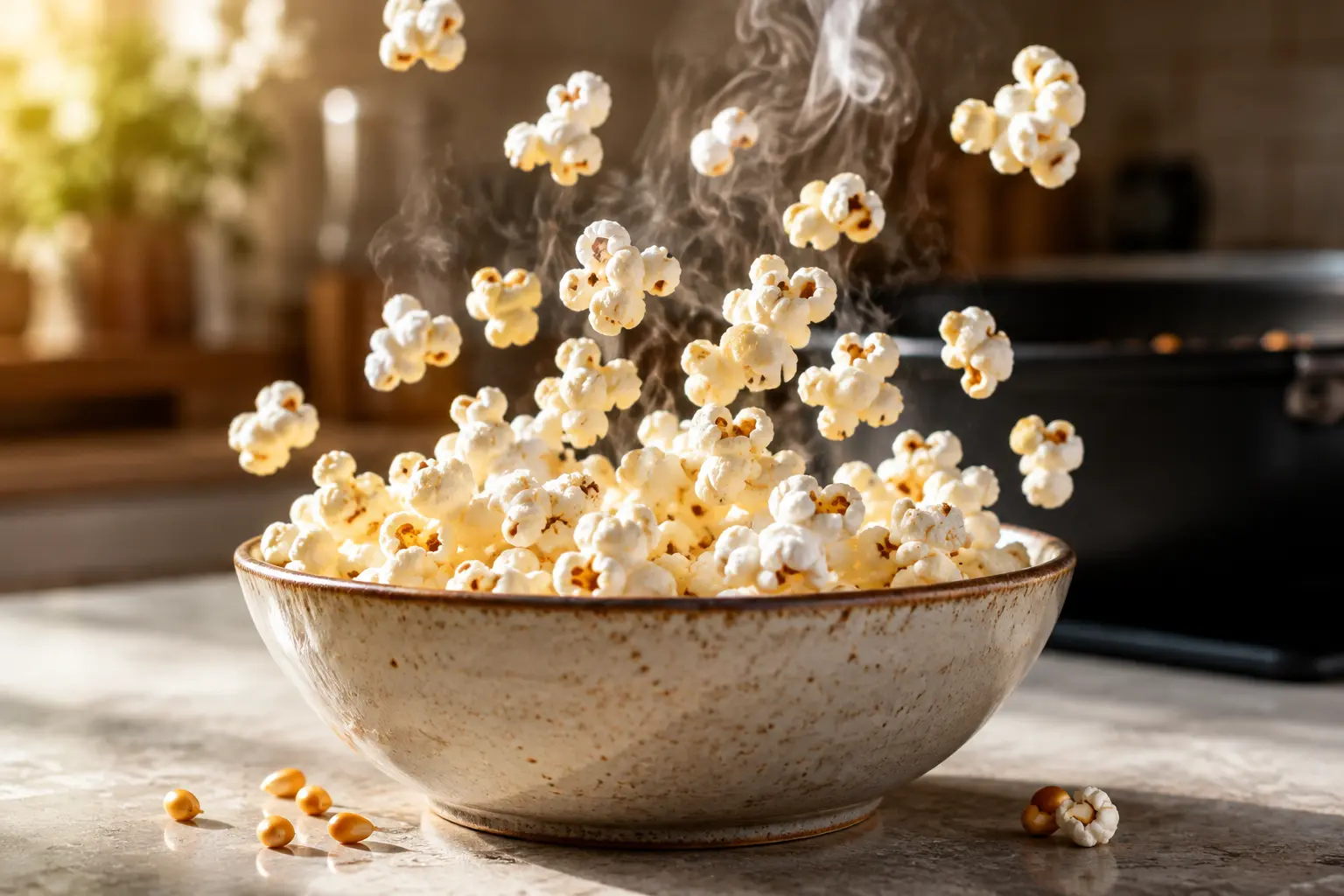
A popcorn kernel is a pressure cooker, starch balloon and snack-in-waiting all at once. Heat one properly and a little trapped water turns the whole kernel inside out.
Popcorn looks like kitchen magic because the important action is hidden. Every unpopped kernel carries a small amount of water inside a hard outer shell, along with a tightly packed store of soft starch. Together, those parts form a remarkably effective miniature pressure vessel.
As the kernel heats, its internal water turns toward steam and expands. The hard shell, called the pericarp, holds that pressure in for a while. According to the U.S. Department of Agriculture’s National Agricultural Library, pressure builds against the kernel’s hard outer surface until the shell finally gives way.
The “pop” is only the beginning. When the shell ruptures, the sudden pressure drop lets the hot, softened starch expand rapidly. It inflates, bursts outward and cools into the familiar white foam. The kernel has essentially turned itself inside out in a fraction of a second.
That also explains the stubborn kernels left at the bottom of the pot. A cracked shell may leak steam before enough pressure develops, while an overly dry kernel may not contain enough water to power a full expansion. Popcorn needs both an intact hull and a useful amount of internal moisture.
Popcorn is not simply regular sweet corn caught on a dramatic day. It is a type of maize selected for small, hard kernels that can contain the pressure needed for popping. Smithsonian notes that this hard-walled, starchy structure is what gives popcorn its special talent.
People have enjoyed that talent for a very long time. Archaeologists found ancient maize remains at sites on Peru’s coast dating from roughly 6,700 to 3,000 years ago, and some of the specimens showed that the maize had been popped. The arid conditions helped preserve cobs and other plant remains that rarely survive elsewhere.
One last surprise: plain popcorn counts as a whole grain. The USDA allows three cups of popped popcorn to count as a one-ounce whole-grain equivalent in certain child nutrition programs. The toppings can change the nutritional picture quickly, of course, but the fluffy kernel itself started as a whole grain with a very good party trick.
For better popping at home, use a pot with a lid, give the kernels room to move and remove the pot from heat when the popping slows to several seconds between bursts. The tiny steam engines have done their work.
Sources
- https://www.nal.usda.gov/exhibits/speccoll/exhibits/show/popcorn/how-does-popcorn-pop-
- https://www.smithsonianmag.com/arts-culture/why-do-we-eat-popcorn-at-the-movies-475063/
- https://www.smithsonianmag.com/smithsonian-institution/ancient-popcorn-unearthed-in-peru-81304339/
- https://www.fns.usda.gov/cn/crediting-popcorn-child-nutrition-programs