
Ingredient Know-How
Mush Room for More: Why Fungi Bring the Flavour
Mushrooms have a clever flavour toolkit hiding under those little caps. Here’s what the latest food science says, plus three easy ways to put it to work.
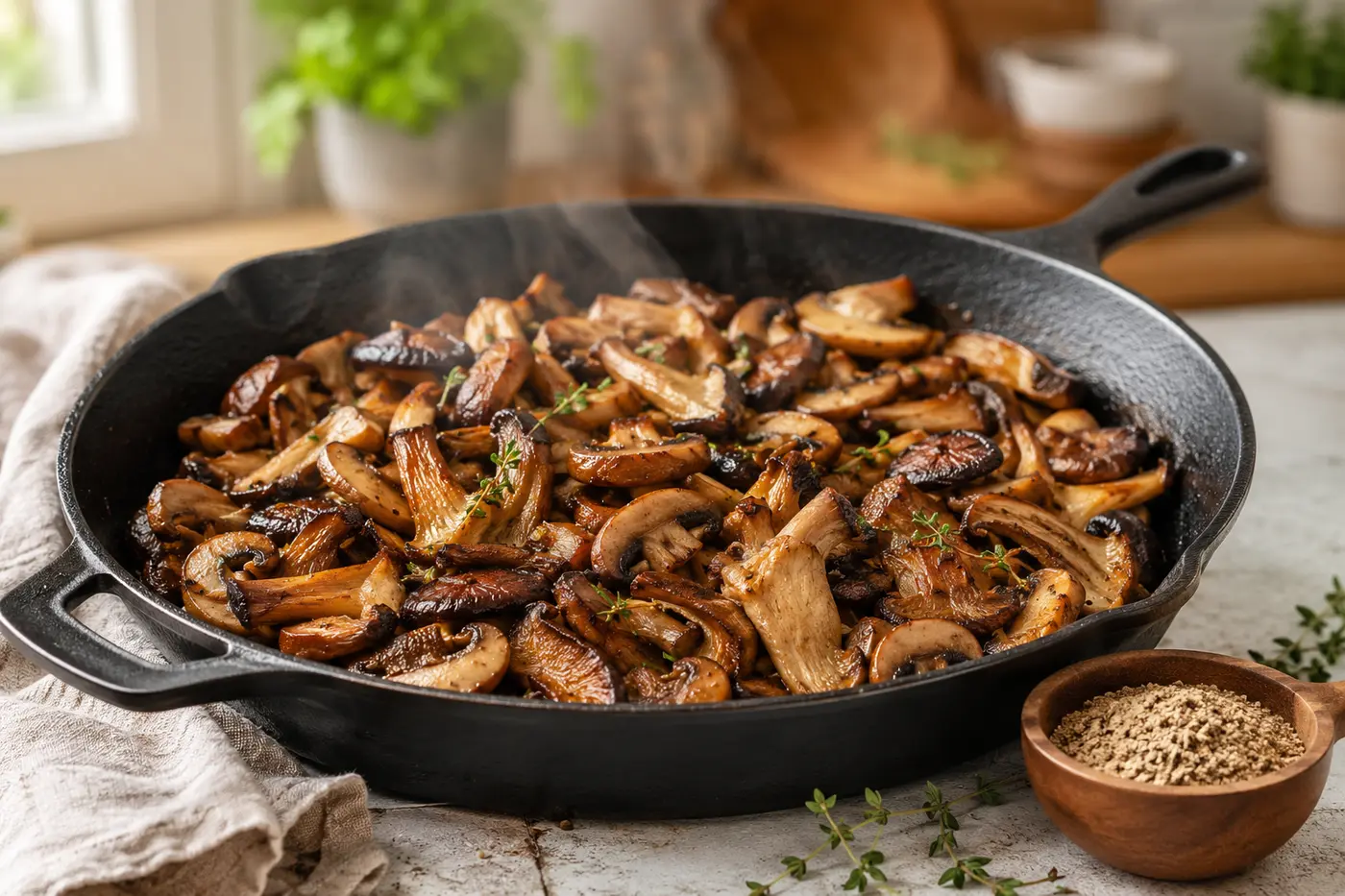
A skillet of well-browned mushrooms can make a simple bowl of noodles taste as though someone spent all afternoon fussing over it. That deep, rounded savouriness is not kitchen magic, although it is perfectly acceptable to take the credit. It comes from a surprisingly busy mix of taste compounds inside the mushrooms themselves.
A 2025 review in Current Research in Food Science pulled together recent work on mushroom umami. The researchers describe several contributors, including free amino acids such as glutamate, flavour-active nucleotides such as guanylate, organic acids, soluble sugars and small peptides. In plain language, mushrooms are not relying on one secret ingredient. They arrive with a whole flavour committee.
Umami is recognized as a basic taste, distinct from sweet, sour, salty and bitter. Glutamate can trigger that savoury sensation on its own, while certain nucleotides can make it feel stronger when the two appear together. This interaction is established food science, not a claim that mushrooms magically improve every dish.
Not every mushroom carries the same flavour balance. Earlier laboratory work comparing cultivated varieties found meaningful differences in their amino acids, nucleotides and other non-volatile taste components. That helps explain why mild white buttons, earthy creminis and deeply savoury shiitakes do not taste interchangeable, even before the pan gets involved.
Processing matters too. Research on king oyster mushrooms found that different drying methods preserved taste compounds differently. Drying also concentrates an ingredient by removing water, which is one reason a small amount of dried mushroom or mushroom powder can have an outsized presence in a sauce or broth.
Here is the practical kitchen inference: if a vegan dish tastes perfectly fine but somehow unfinished, mushrooms can help fill in the middle. The studies measure compounds and taste responses; they do not prescribe dinner. Still, their findings give home cooks a sensible reason to keep fresh mushrooms, dried shiitakes or mushroom powder nearby.
Try three low-effort moves. First, give fresh mushrooms room in a hot pan so they brown instead of steaming in a crowded pile. Second, stir a teaspoon of finely ground dried shiitake into gravy, tomato sauce or soup, then taste before adding more. Third, combine mushrooms with a glutamate-rich ingredient such as tomato or soy sauce. Based on the documented glutamate-nucleotide interaction, that pairing may taste fuller than either ingredient alone.
The takeaway is delightfully simple: mushrooms are not pretending to be anything else. They are bringing their own texture, aroma and a well-stocked umami toolbox. Let them brown, use the dried versions sparingly and taste as you go. Your Tuesday-night dinner may suddenly start acting like it has reservations.