Ingredient Know-How
Couscous, You Tiny Impasta! The Grain That Isn’t a Grain
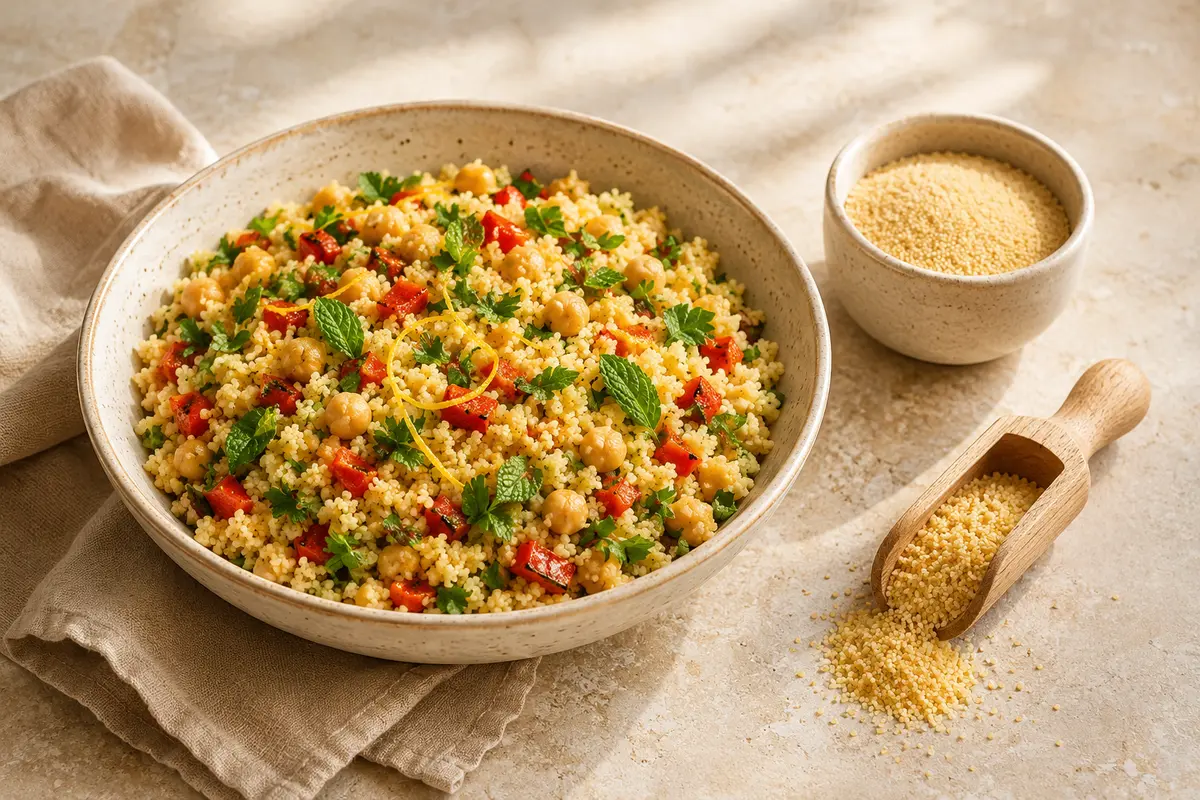
Couscous sits beside the rice and looks like a grain, but those fluffy golden specks are traditionally rolled from durum wheat semolina. Tiny pasta has been hiding in plain sight.
Couscous has pulled off one of the pantry’s best disguises. It is sold beside rice, served like a grain and arrives as a pile of tiny golden dots. Yet traditional couscous is made from durum wheat semolina and water, placing it firmly in the pasta family.
The traditional process is more hands-on than its small size suggests. Semolina is lightly moistened, rolled into granules and sifted so the pieces become fairly even. Food-science research describes durum wheat semolina as the customary raw material for couscous across the Maghreb and Mediterranean region. The granules are then steamed, creating the light, separate texture that makes couscous so good at catching sauces and broth.
So why can a supermarket box be ready in about five minutes? Much of the couscous sold in North America has already been steamed and dried. Adding boiling water mostly rehydrates it. Covering the bowl gives the granules time to swell, while fluffing with a fork separates them before they settle into one enthusiastic clump.
Size changes the cooking plan. Fine couscous can often be covered with boiling liquid and left off the heat. Larger pearl-style couscous generally needs a longer simmer and behaves more like other small pasta. Package directions matter here because products carrying the couscous name do not all have the same granule size or preparation.
There is also much more behind couscous than convenience. In 2020, UNESCO added the knowledge, know-how and practices surrounding couscous production and consumption to its Representative List of the Intangible Cultural Heritage of Humanity through a joint nomination from Algeria, Mauritania, Morocco and Tunisia. The recognition centres on living culinary knowledge and the social traditions connected to making and sharing the dish.
For an easy vegan bowl, prepare plain couscous with vegetable broth, then fold in roasted vegetables, chickpeas, chopped herbs, lemon juice and a little olive oil. The mild granules happily carry bright dressings, warm spices and savoury sauces without demanding the spotlight.
One practical label check remains: traditional couscous is made from wheat, so it contains gluten. Seasoned packets can also include dairy ingredients or animal-based stock. Plain couscous gives you the simplest starting point and lets your vegetables and seasonings do the talking.
The next time couscous appears beside the grains, give it a knowing nod. That speedy little side dish is pasta wearing its smallest possible outfit.
Sources
- https://extension.illinois.edu/blogs/simply-nutritious-quick-and-delicious/2021-03-05-does-couscous-belong-grain-or-pasta-family
- https://pmc.ncbi.nlm.nih.gov/articles/PMC8998045/
- https://ich.unesco.org/en/RL/knowledge-know-how-and-practices-pertaining-to-the-production-and-consumption-of-couscous-01602
You may also like these