
Ingredient Know-How
Freeze the Day: What Actually Happens to Frozen Vegetables
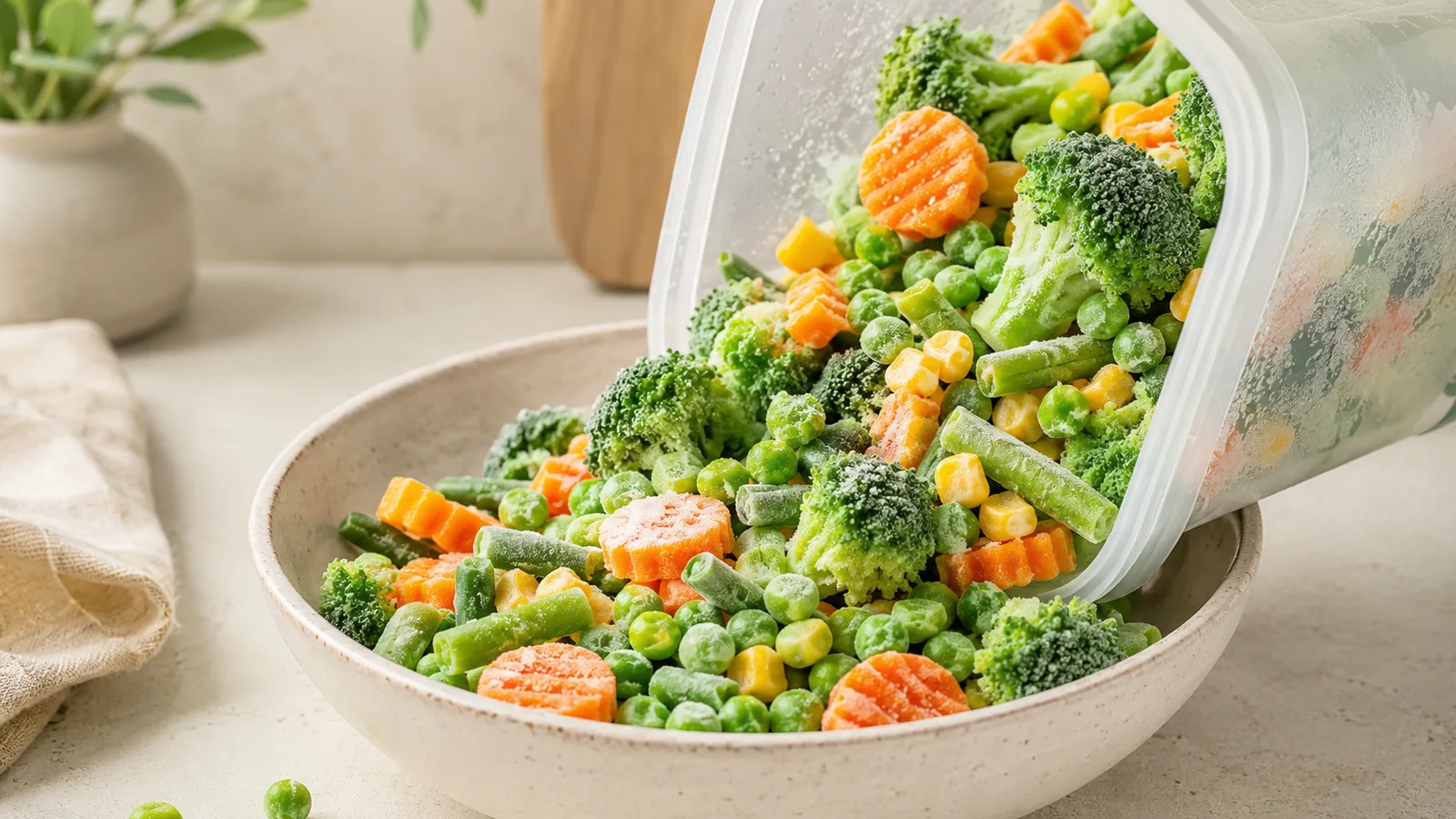
Frozen vegetables are not fresh produce's sad understudy. Here is what blanching, freezing and storage really do, plus a few easy ways to cook them well.
A bag of frozen broccoli may not have the glamour of a market basket, but it has some clever food science behind it. Commercial frozen vegetables are generally processed soon after harvest, then prepared so their colour, flavour and texture can hold up during storage.
The important step is often blanching. Vegetables are briefly exposed to boiling water or steam before freezing. The United States Department of Agriculture explains that this partial cooking helps inactivate natural enzymes that would otherwise keep changing the vegetable's flavour, colour and texture, even at freezer temperatures. Blanching is mainly about quality, not making the food sterile.
Freezing also does not kill every microorganism. It puts microbial growth largely on pause while the food remains properly frozen. Once thawed, surviving microbes can become active again, so frozen vegetables should still be stored, handled and cooked according to the package directions.
Nutritionally, there is no single winner in a fresh-versus-frozen showdown. A University of California, Davis study comparing refrigerated and frozen forms of eight fruits and vegetables found that vitamin retention depended on the food and the nutrient being measured. Many results were comparable, while some nutrients held up better and others declined during storage. That is more accurate than claiming frozen produce is always better or always worse.
Texture is where the freezer makes its presence known. Water expands into ice crystals, which can damage some plant cells and make vegetables softer after thawing. That softness is useful in soups, curries, sauces and blended dishes. For roasting or stir-frying, cooking straight from frozen often works better than thawing first because it limits the time vegetables sit in released water.
For better results, give frozen vegetables room on a hot baking sheet instead of crowding them, and add them directly to a well-heated pan. In soups, toss them in near the end so they heat through without becoming tired and mushy. If a bag has frozen into one solid block, that usually signals temperature fluctuation or moisture exposure, so check its condition and package instructions before using it.
There is a practical bonus, too. Because frozen vegetables are already washed, cut and easy to portion, some households may find them helpful for reducing spoilage and getting dinner started quickly. That is not automatic, but a half-used bag waiting safely in the freezer can be easier to rescue than a forgotten bunch of spinach at the back of the fridge.
Sources
- https://www.fsis.usda.gov/food-safety/safe-food-handling-and-preparation/food-safety-basics/freezing-and-food-safety
- https://postharvest.ucdavis.edu/publication/vitamin-retention-eight-fruits-and-vegetables-comparison-refrigerated-and-frozen
- https://pubmed.ncbi.nlm.nih.gov/25526594/
- https://postharvest.ucdavis.edu/publication/review-nutritional-comparison-fresh-frozen-and-canned-fruits-and-vegetables-part-i