
Ingredient Know-How
Grade Expectations: Why Maple Syrup Comes in Four Shades
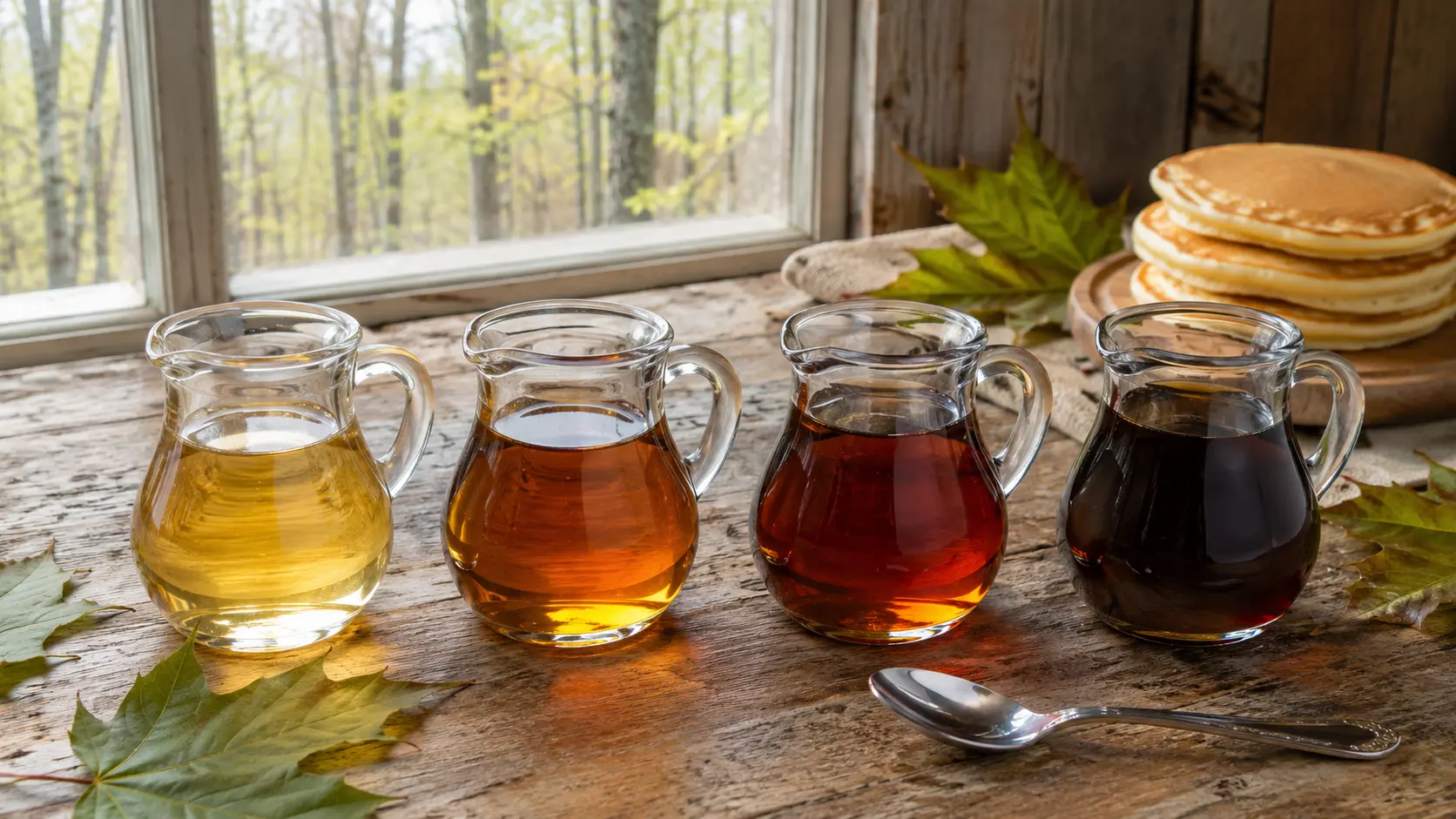
Golden, amber, dark and very dark maple syrup are not rungs on a quality ladder. They are a remarkably useful flavour map hiding in plain sight on the bottle.
A maple syrup shelf can look like someone adjusted the same bottle four times with a dimmer switch. One is pale gold, another glows amber, and the darkest looks almost mahogany. In Canada, those shades are not decorative marketing names: they are official colour classes tied to characteristic flavour.
The Canadian Food Inspection Agency lists four classes within Canada Grade A: Golden, Delicate Taste; Amber, Rich Taste; Dark, Robust Taste; and Very Dark, Strong Taste. The useful surprise is that darker does not mean lower grade. A bottle can be very dark and still be Canada Grade A, provided it meets the same grade requirements for composition, clarity, freedom from fermentation and characteristic maple flavour.
The colour call is more precise than holding a bottle near a window. Canada’s grade standard measures how much light passes through filtered syrup at a wavelength of 560 nanometres. Golden syrup transmits at least 75 percent of that light. Amber falls from 50 to under 75 percent, Dark from 25 to under 50 percent, and Very Dark below 25 percent. Less transmitted light means a darker class.
Grade A syrup must also contain 66 to 68.9 percent soluble solids. That narrow range helps explain why all four classes still pour and sweeten like maple syrup even though their colours and flavour intensity vary. Colour is doing a different job from the grade itself: it helps describe the syrup rather than rank it from best to worst.
Season can be part of the story. A peer-reviewed study of North American maple syrup, including samples followed through a Nova Scotia season, found that syrup became darker later in the season while measured phenolics and minerals increased; sugar concentration and Brix did not change significantly across those seasonal samples. That is an observation from the study, not a promise that every producer’s season follows an identical script.
In the kitchen, the official flavour words make a handy starting point. Golden syrup can slip gently into fruit, oatmeal or a vinaigrette. Amber is the familiar all-rounder for pancakes and everyday drizzling. Dark can hold its own in baking, barbecue sauce and glazes, while Very Dark suits dishes where maple needs to speak above strong spices or roasted flavours. Those pairings are culinary suggestions, not grading rules—and tasting is still the fun part.
So the next time four shades are lined up on the shelf, there is no need to hunt for the ‘better’ one. Pick the volume of maple flavour you want. The bottle has already turned on the light and given you a clue.
Sources
- https://inspection.canada.ca/en/food-labels/labelling/industry/maple-products
- https://inspection.canada.ca/en/about-cfia/acts-and-regulations/list-acts-and-regulations/documents-incorporated-reference/canadian-grade-compendium-volume-7
- https://www.sciencedirect.com/science/article/abs/pii/S0889157520302180