Food Quality
Bounce Back: The Tiny Test Cranberries Have to Pass
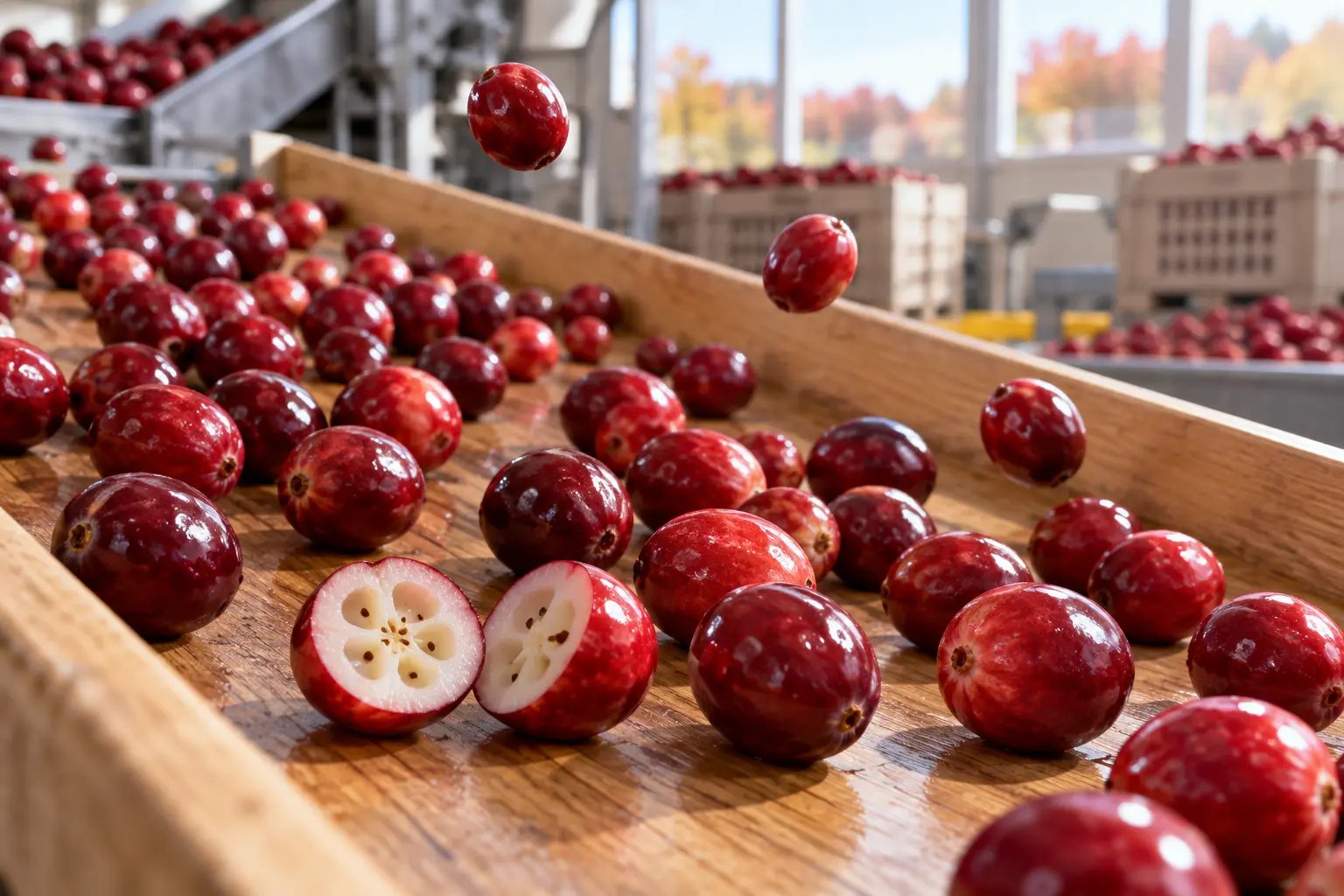
A cranberry's little hop is more than a party trick. Growers use bounce as a quick clue that a berry is firm enough for the fresh-fruit aisle.
Drop a fresh cranberry onto a clean tray and it may answer with a neat little hop. That bounce sounds like kitchen trivia, but it has a practical job: Massachusetts cranberry growers say dry-harvested fruit for the fresh market is screened by colour and by its ability to bounce. Soft berries do not make the cut.
The berry has helpful architecture. The Massachusetts Cranberries association explains that a cranberry contains four air pockets. Those pockets also let the fruit float, which is why ripe berries rise after a grower floods a bed for wet harvest. Cranberries grow on low vines in normally dry beds; the water is brought in to help collect the crop, not because the plants spend the year underwater.
Air pockets are only part of the bounce story. A good fresh-market cranberry also needs enough firmness to keep its shape when it lands. The practical explanation is a partnership: the berry's internal spaces make it light and buoyant, while sound, firm tissue lets it rebound instead of squashing and absorbing the impact. That is why bounce is a useful sorting clue rather than a mysterious power hidden in every red berry.
The official U.S. grade standard backs up the qualities behind the test. USDA's top fresh-cranberry grade requires fruit to be mature, firm, clean and free from softness or decay, with limits on damage such as bruising, freezing and disease. Bounce is not listed as a home safety test, and a high-flying berry is not automatically perfect. It is simply a fast physical signal that lines up with firmness.
Harvest method helps explain where that signal matters most. Dry-harvested cranberries are combed from the vines and sent to receiving stations for the fresh-fruit market. Wet-harvested berries are loosened in flooded beds, corralled as they float and generally head for juice, sauce, dried fruit and other processed products. The same pockets that help one berry bob in water help another put on a tiny audition for the produce aisle.
At home, use the bounce idea gently. Look first for plump, firm berries with intact skins, then discard any that are soft, shrivelled, split or leaking. If curiosity wins, test one over a clean, rimmed tray rather than launching the whole bag across the kitchen. Colour can vary by variety and ripeness, so firmness and condition are more useful than chasing one exact shade of red.
Fresh cranberry harvest typically runs from mid-September into early November, which makes this a timely trick to notice as bags return to shops. The next time a runaway berry skips across the counter, it is not merely making an escape. It is demonstrating the same simple quality clue that helps send firm fruit toward pies, relishes and sauces: a small bounce with a surprisingly useful job.
Sources
You may also like these