Food Trends
Second Serving: When Food-Making Leftovers Become Ingredients
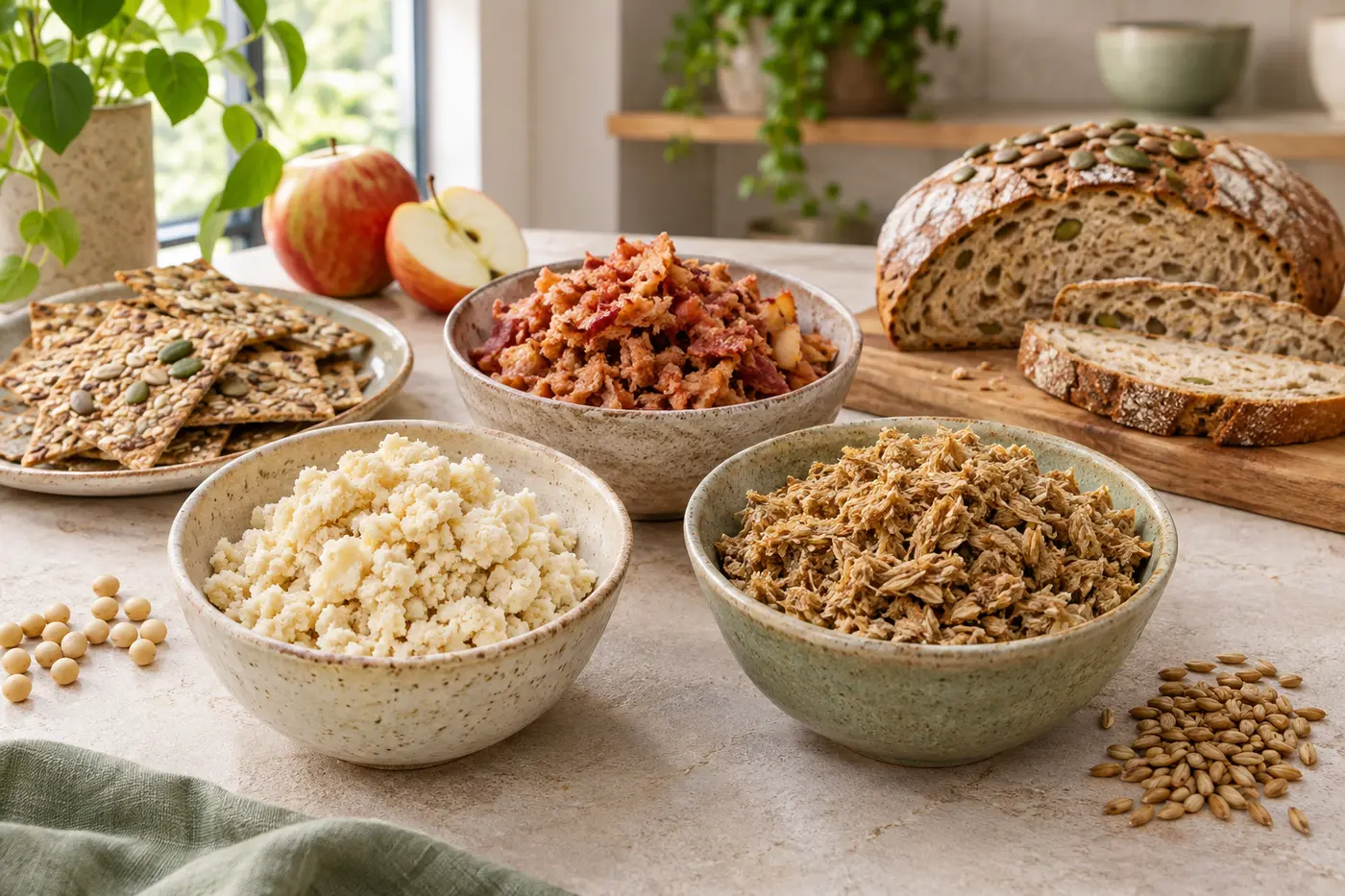
Okara, fruit pomace and brewer’s spent grain can still carry useful nutrients and flavour. The real trick is turning wet, fast-spoiling side streams into safe, workable ingredients.
Make soy drink and you are left with okara, the soft pulp separated from the liquid. Press apples and pomace remains. Brew beer and wet spent grain piles up. These side streams are not automatically rubbish, but they are not automatically ready for a cracker bag either. A growing corner of food research is asking how to give them a safe, useful second serving.
The Upcycled Food Association uses a 2020 expert definition: upcycled foods use ingredients that otherwise would not have gone to human consumption, come through verifiable supply chains and have a positive environmental impact. That is mainly a description of origin and handling. It is not a magic nutrition halo, and it does not mean that anything once headed for disposal can simply be stirred into lunch.
Moisture is the plot twist. A 2024 paper in the journal Chimia explains that pomaces, pulps, grains, skins and seeds can remain nutritionally rich after processing, yet wet residues are highly vulnerable to microbial degradation. Before they can become ingredients, producers may need to stabilize them quickly, evaluate safety and digestibility, and create a material that performs consistently from batch to batch.
The paper follows two very different routes. In one case, researchers fermented okara into an edible, tempeh-like cake. In the other, a company dried brewer’s spent grain so it could last longer and move toward ingredient use. Fermentation changes the material through microbial activity; drying removes the water that makes spoilage easier. Same rescue mission, different engineering.
Fruit and vegetable leftovers open still more paths. A 2024 review indexed by the UN Food and Agriculture Organization describes enzyme-assisted and fermentation-assisted methods for recovering useful components from common crop and cereal by-products. The authors also stress that the work is at an early stage: commercial enzymes add cost, while fermentation depends on suitable food for the microorganisms and reliable growth. A promising laboratory route is not yet a guaranteed factory line.
That question of scale is now receiving very practical attention. A U.S. Department of Agriculture research project running from April 2026 to July 2028 is testing processes that turn food-processing by-products into human-food ingredients. Its plan includes measuring how the ingredients behave in food, checking safety and nutritional properties, and modelling material, energy and production costs. In other words, the challenge is not only ‘Can we make a powder?’ but ‘Will it work in a recipe, at scale, at a sensible cost?’
For shoppers, an upcycled claim is best read as one useful piece of the product’s story. The ordinary label questions still apply: What are the ingredients? What does the nutrition panel say? Are any allergens present? If environmental impact is claimed, is there a clear method or certification behind it? Those checks separate a verifiable supply-chain idea from a vague green flourish.
Yesterday’s side stream may become tomorrow’s crisp, loaf or savoury filling—but only after preservation, food-safety work and honest accounting. The most interesting part of upcycling is not that leftovers are secretly finished foods. It is that food makers are learning to treat them as raw materials with both potential and homework.
Sources
You may also like these