
Food Craft
Bean to Bar None: Why Cocoa Needs a Fermentation Vacation
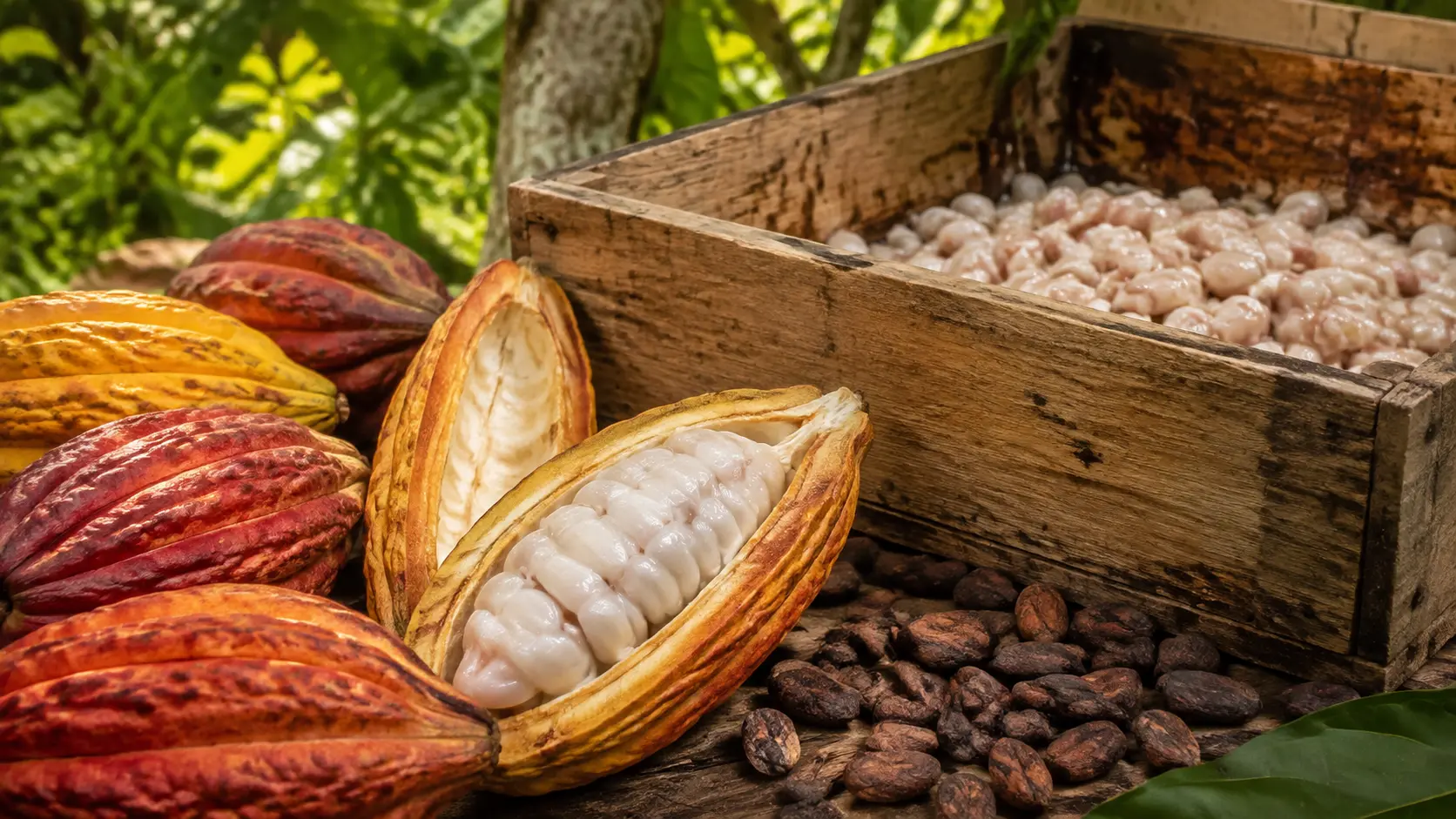
Fresh cocoa beans do not begin with the familiar aroma of a chocolate bar. A warm, lively fermentation inside their fruity pulp helps build the flavour potential that roasting later unlocks.
Crack open a ripe cacao pod and you will not find neat brown chocolate beans. The seeds sit inside a sweet, sticky white pulp, and their early flavour is a long way from the cocoa we recognize. The transformation begins before the beans ever reach a chocolate factory.
After harvest, growers heap the pulp-covered beans or place them in boxes and cover them. Yeasts begin using sugars in the pulp, followed by bacteria that transform fermentation products and generate heat. The International Cocoa Organization notes that temperatures can rise to roughly 40–45°C during the first 48 hours as the pulp breaks down and drains away.
That warm, acidic environment changes the interior of the seed. Cell structures break down and enzymes begin forming flavour precursors. These compounds are not a finished chocolate flavour by themselves, but they give roasting useful raw material for the reactions that create familiar cocoa, nutty and caramel-like aromas.
Fermentation and roasting therefore work as a relay team. The International Cocoa Organization explains that flavour development happens first on the farm through fermentation and later during roasting. Excellent roasting cannot fully replace a weak fermentation, just as careful fermentation still needs skilled drying and roasting afterward.
Microbes matter too. Research indexed by FAO AGRIS found that cocoa fermented without active yeasts developed poorer colour and a more acidic, less characteristic chocolate flavour than beans fermented with yeast activity. The exact microbial mix, cacao variety, temperature and timing can all influence the final flavour profile.
After fermentation, the beans are dried so they can be stored and transported safely. Only later are they roasted, cracked and processed into cocoa ingredients. So the next time chocolate tastes fruity, floral, nutty or deeply roasty, part of that personality may trace back to a warm box of sticky beans and a carefully managed community of microscopic helpers.