
Food Packaging
Bag of Tricks: Why Salad Greens Travel in Special Air
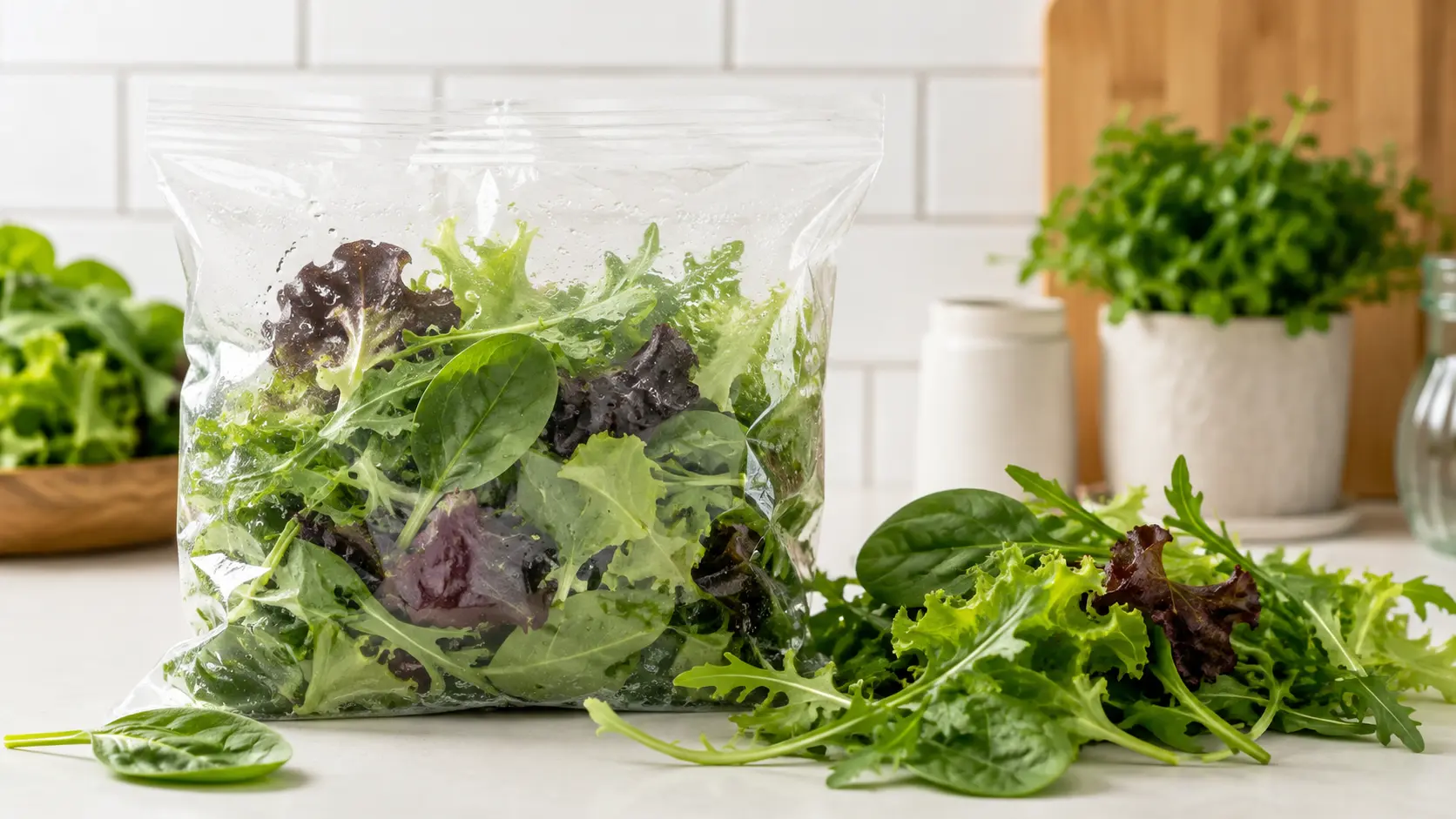
A sealed salad bag is not simply holding greens and ordinary room air. Its film and gas balance quietly slow the leaves’ race from crisp to tired.
A bag of salad may look like the least dramatic item in the fridge, but the space around those leaves is doing a surprisingly technical job. Many fresh-cut greens travel in modified-atmosphere packaging, often shortened to MAP. The package is designed to give living plant tissue a slower, calmer trip from processor to plate.
The key word is living. Lettuce does not stop respiring when it is harvested. Its cells continue to use oxygen and release carbon dioxide, water and heat. Cutting the leaves adds stress and exposes more surface area, which can speed browning and quality loss. Refrigeration slows those reactions, while the atmosphere inside the package adds another layer of control.
In some systems, a processor flushes the package with a selected gas mixture before sealing it. In others, the greens themselves gradually change the atmosphere as they respire. The plastic film is not an absolute wall: it lets gases pass through at a controlled rate. Produce respiration, temperature, the amount of product and the film’s permeability eventually settle into a moving balance.
That balance is specific to the food. UC Davis notes that cut romaine is commonly packed with very little oxygen and elevated carbon dioxide because those conditions can help control browning at cut surfaces. A package designed for lettuce would not automatically suit broccoli, herbs or another salad blend. Too little oxygen or too much carbon dioxide can produce off-odours and damaged tissue, so this is closer to tailoring a tiny climate than simply squeezing out the air.
Modified atmosphere can slow respiration and delay some visible quality losses, but it does not sterilize the greens. A sealed bag is still a refrigerated fresh food. The U.S. Food and Drug Administration advises keeping cut leafy greens at 5°C or colder, and its fresh-cut produce guidance treats temperature control and sanitation as separate safeguards from packaging.
For the home fridge, the practical lesson is pleasingly simple: keep an unopened bag properly cold and follow its label. Do not leave it on the counter because the package works best within the temperature range it was designed for. Once opened, the carefully balanced atmosphere is gone. Close the bag loosely or move the greens to a clean container, keep them refrigerated and use them promptly.
A dry paper towel in the opened container can absorb surface moisture, but it cannot reverse wilted or spoiled leaves. Discard greens that are slimy, badly discoloured or unpleasant-smelling. Washing directions also matter: if the package says the greens are ready to eat or pre-washed, follow the label rather than assuming another rinse will restore freshness.
So the next time a salad bag gives a soft puff when you pick it up, remember that the empty-looking space is part of the product. The leaves are still breathing, the film is still exchanging gases and a carefully arranged pocket of air is buying dinner a little more time to stay crisp.
Sources
- https://postharvest.ucdavis.edu/produce-facts-sheets/lettuce-romaine
- https://pmc.ncbi.nlm.nih.gov/articles/PMC9239990/
- https://www.fda.gov/food/retail-food-industryregulatory-assistance-training/program-information-manual-retail-food-protection-recommendations-temperature-control-cut-leafy
- https://www.fda.gov/media/117526/download