Food History
Roll Call: Why a Baker’s Dozen Counts to 13
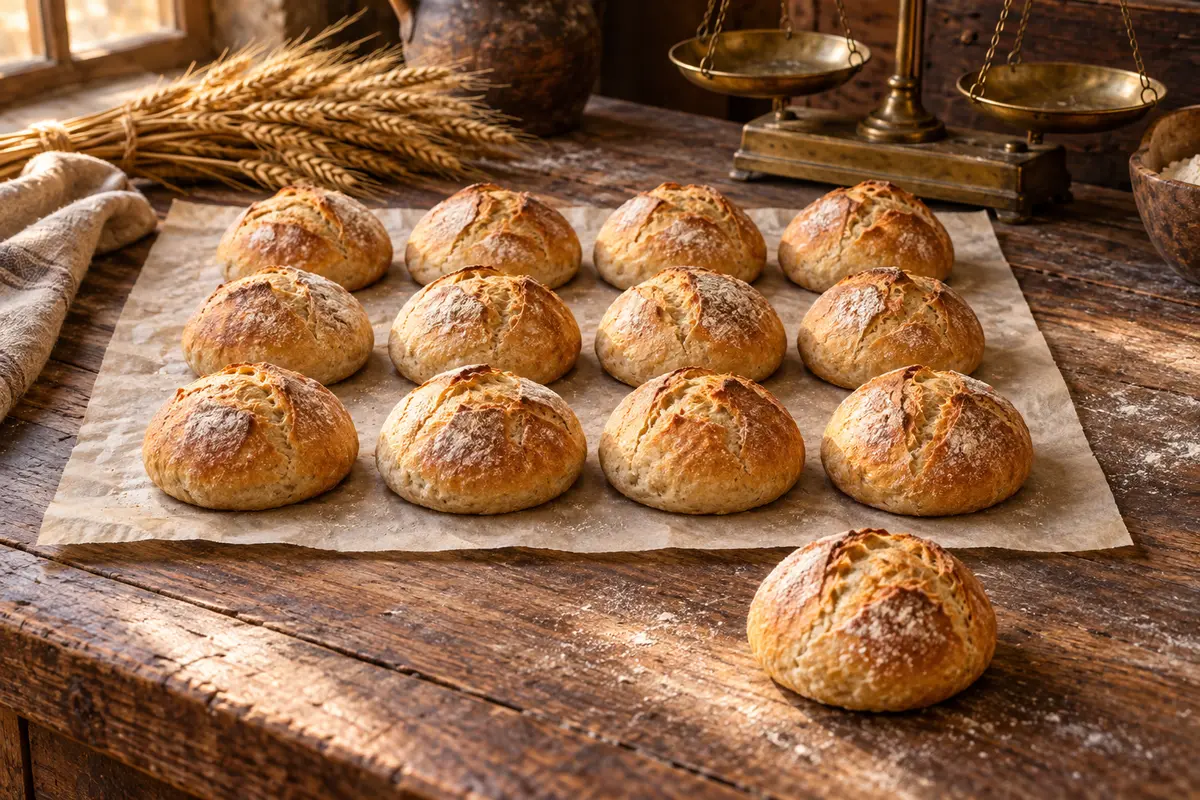
A baker’s dozen is thirteen, but the extra item was not simply a baker’s snack. Bread rules, retail margins and a much later phrase all left crumbs in the story.
Order a dozen rolls and arithmetic says twelve. Order a baker’s dozen and a thirteenth arrives, looking like the friend who heard there was food and invited itself. The phrase now means exactly thirteen, but its history is less tidy than the familiar tale suggests.
The backdrop is medieval bread regulation. Bread was a daily staple, so its price and weight mattered enormously. English rules commonly grouped under the Assize of Bread linked the required weight of different loaves to the market price of grain. A surviving text reproduced by Fordham University reads almost like a spreadsheet written in prose, setting out how much several kinds of bread should weigh as wheat prices changed.
The rules did not merely tell bakers what to make. They also described the baker’s permitted gain and penalties for selling bread below the required weight. The same source mentions fines for offences and, for repeated or serious short-weight violations, punishment at the pillory. That is firm evidence that loaf weight was regulated. It is not evidence for the more dramatic internet claim that careless bakers routinely lost a hand.
The British Library preserves later assize records and tables showing that this was not a one-day medieval curiosity. One fifteenth-century roll calculated the legal weights of seven kinds of loaf across changing wheat prices. Other records from seventeenth-century Oxford tracked grain prices and the resulting bread assize. Bread pricing was an ongoing piece of market administration.
So where does number thirteen enter? One long-standing trade practice gave a retailer an extra loaf when buying twelve from a baker. The bonus was sometimes called a vantage loaf because it gave the reseller a margin: sell twelve loaves at the controlled price and the extra loaf could represent the seller’s return. Lexicographical sources connect this practice with the later expression ‘baker’s dozen.’
The timeline deserves a little breathing room. The bread assizes are centuries older than the phrase, which Etymonline dates to the 1590s. That gap makes the popular explanation plausible without turning it into a perfectly documented invention scene. Strict weight rules certainly encouraged bakers to avoid coming up short, while the extra-loaf trade custom gave thirteen an ordinary commercial job. History often leaves us a working kitchen rather than a single light-bulb moment.
This also explains why the extra item was not necessarily a quality-control snack for the baker. That version makes a charming story, but the historical trail points more strongly toward regulated weight and the economics between baker and reseller. Generosity may have been good customer service; it was also practical bookkeeping.
Today the phrase has escaped the bakery. A baker’s dozen can describe thirteen books, thirteen seedlings or thirteen people around a table. It does not mean ‘a little extra’ in general, and it does not change the ordinary dozen. Twelve remains twelve. The baker simply gets a special counting rule.
The next time thirteen bagels land in a box, the bonus carries a faint trace of grain prices, weighing scales and retail margins from another era. One extra roll turned a regulated trade habit into an expression sturdy enough to outlast the rules that helped shape it.
Sources
You may also like these