Food History
Measure Twice, Cook Once: How Recipes Learned to Repeat Themselves
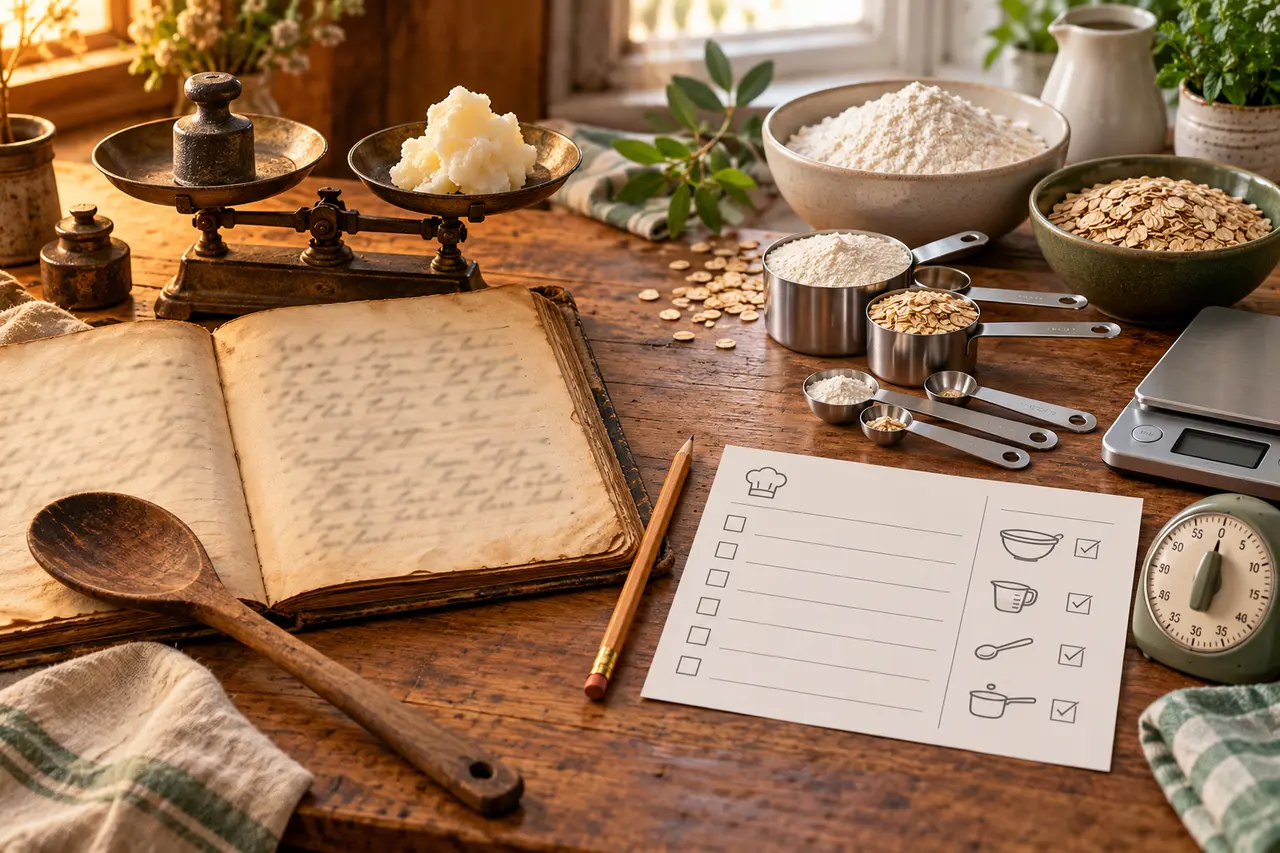
A tidy ingredient list and level spoonfuls feel obvious now. In late nineteenth-century America, they were part of a quiet information-design revolution that made dinner easier to repeat.
A modern recipe looks so ordinary that its cleverness is easy to miss. Ingredients sit in one place, quantities use familiar units, steps appear in order, and the cook gets clues about time, heat, yield and doneness. Put together, those features turn a meal into something remarkable: instructions that can travel to a kitchen the writer has never seen.
For much of cooking history, that kind of self-contained document was not the main way people learned. A cook could watch someone knead dough, feel the right texture and ask what “enough” meant. Written recipes often worked more like memory prompts for readers who already knew the dance. When that shared experience disappeared, a few brisk lines could leave a great deal unsaid.
The Smithsonian’s history of the modern American recipe highlights a wonderfully vague example from an 1864 cookbook. Its directions for rusks name ingredients but compare the amount of butter to the size of an egg, then expect the cook to supply much of the method. That sort of shorthand could succeed in a familiar household. It was less reliable when the reader had different spoons, a different stove or no practiced cook nearby.
During the nineteenth century, rising literacy, greater mobility and the growth of cooking schools changed the job a recipe had to do. Instructions increasingly needed to stand on their own. At the same time, household tools became more consistent, so a cup or teaspoon could be treated as a repeatable measure instead of whatever vessel happened to be in the drawer.
Fannie Merritt Farmer helped make that new approach familiar. As a teacher and later principal at the Boston Cooking School, she brought a systematic style to the 1896 Boston Cooking-School Cook Book. Her recipes emphasized standardized cups, tablespoons and teaspoons, measured level. She did not invent every part of the modern recipe, but her influential book helped popularize precision and clear structure for American home cooks. Smithsonian reports that 360,000 copies were sold during her lifetime.
Viewed as information design, the familiar recipe card is a compact set of answers. The ingredient list says what to gather. Quantities establish scale. Ordered steps show dependencies. Times help with planning, while sensory cues such as “golden at the edges” tell the cook what the food should actually look like. Yield explains how far the result needs to stretch. Remove any one of those pieces and the reader has to guess.
Precision does not squeeze intuition out of cooking. It gives intuition a shared starting point. That matters in vegan recipes, where details such as tofu firmness, plant milk type, pan size and whether beans are drained can noticeably change the result. A useful recipe names those variables, then leaves room for the cook to adjust seasoning, texture or timing in their own kitchen.
You can borrow this history the next time you record a favourite dish. Try the handoff test: could a friend who never watched you cook identify each ingredient, its amount and preparation, the heat level, the finish line and the number of portions? If not, add the missing clue. “Cook until done” becomes much more useful when it becomes “simmer until the lentils are tender but still hold their shape, about 18 minutes.”
A good recipe is part map, part lab note and part conversation across time. The tidy format we now scroll past without a thought was built to make knowledge portable. Every level spoonful and well-placed doneness cue carries the same friendly promise: you can make this too.
Sources
You may also like these