
Fermentation Know-How
Mother Knows Zest: What Vinegar’s Cloudy ‘Mother’ Really Is
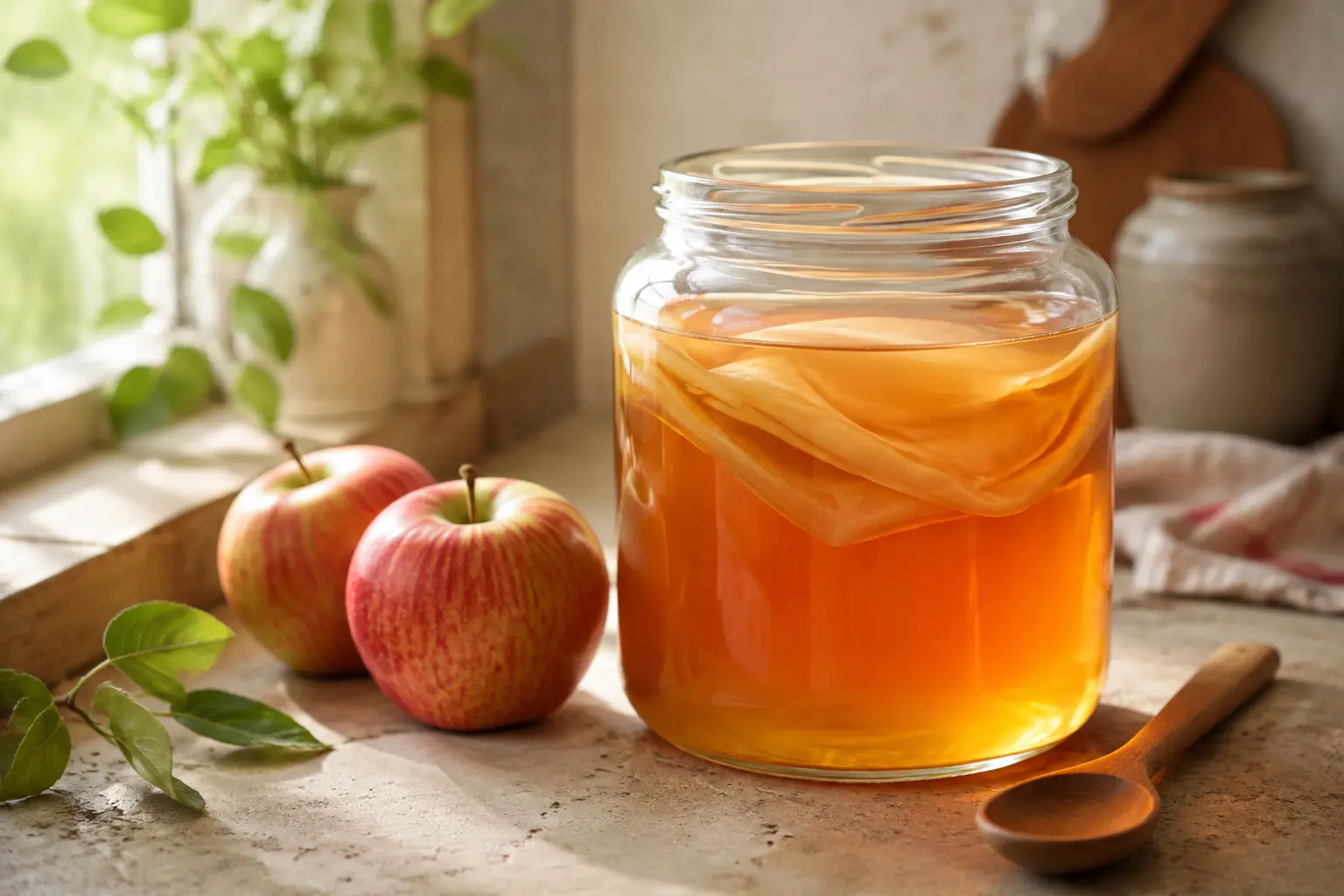
That cloudy ribbon in raw vinegar is not a tiny jellyfish or a kitchen mystery. It is a cellulose-rich biofilm built by the bacteria that help make vinegar.
Open a bottle of raw vinegar and you may find a cloudy veil, soft strand or wobbly disc drifting inside. It has a wonderfully dramatic name—mother of vinegar—but its ingredients are surprisingly ordinary: acetic acid bacteria, bacterial cellulose and the liquid trapped between those fibres.
Vinegar begins with ethanol. In the presence of oxygen, acetic acid bacteria convert that ethanol into acetic acid, the molecule responsible for vinegar’s familiar tang. A 2024 study of date vinegar, for example, isolated several Acetobacter species and showed that a mixed starter culture could drive acetic-acid production. The cast varies by fermentation, but bacteria are doing the souring work.
Some of these bacteria are also tiny fibre factories. Research on Komagataeibacter hansenii found that its cellulose-making machinery produces crystalline cellulose fibres. At the surface of a liquid, those fibres knit together into a floating biofilm—the structure researchers explicitly describe as mother of vinegar.
Cellulose may sound plant-only, but it describes a carbohydrate structure rather than an exclusive club. Plants use cellulose in their cell walls; certain bacteria manufacture it too. In a static rice-vinegar fermentation, researchers identified Acetobacter pasteurianus in the surface film and saw bacterial cells woven through fine, threadlike material. Their analysis attributed the film to bacterial cellulose rather than outside contamination.
Why does the mother favour the top? The bacteria involved in vinegar fermentation need oxygen, so the air–liquid boundary is valuable real estate. A cellulose raft gives the community a stable place to gather where oxygen is easiest to reach. That tidy explanation is an inference from the film’s surface location and the organisms’ biology—not evidence that the mother is thinking strategically, charming though that would be.
For cooks, the practical takeaway is simple: cloudy strands do not prevent vinegar from bringing acidity to a dressing, marinade or sauce. Shake the bottle if a rustic pour suits the recipe, or strain the vinegar through a fine sieve when you want a crystal-clear finish. The mother is fascinating fermentation architecture, not a required garnish.
It is also best enjoyed as a food-science fact rather than a wellness promise. The studies explain how acetic acid bacteria build cellulose and make acid; they do not establish that a visible mother gives vinegar special health powers. Its real party trick is impressive enough: microbes can spin a floating fabric while transforming a liquid’s flavour. Mother really does know zest.