Fermentation Know-How
Miso Behaving: How Koji Turns Beans Into Umami
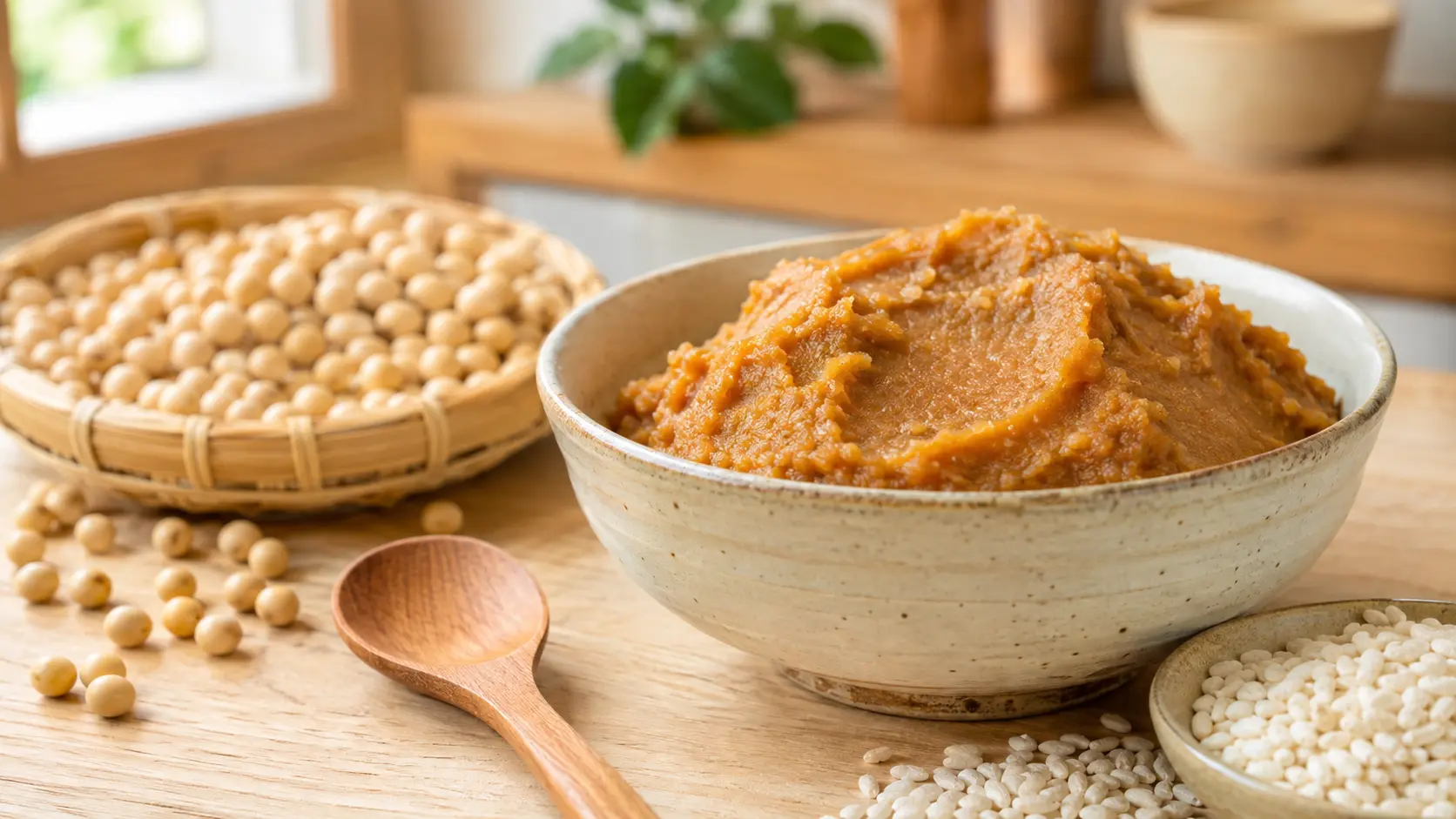
Miso starts with humble beans and grains, but koji brings the enzymes that unlock sweetness, savouriness and a whole lot of personality.
Miso may look like a simple brown paste, but it is really a carefully managed fermentation team project. Most versions begin with cooked soybeans, salt and koji, which is usually rice or barley cultivated with the mould Aspergillus oryzae.
Koji is the quiet overachiever. As it grows on the grain, it produces enzymes that break large food molecules into smaller ones. Proteases help split soybean proteins into peptides and amino acids, while amylases turn grain starches into simpler sugars.
Those smaller molecules change both flavour and texture. Amino acids, including glutamate, contribute savoury depth, while sugars soften the edges with gentle sweetness. This is why a spoonful of miso can make broth, dressing or sauce taste as though it has been simmering far longer than it has.
Time also changes the result. Miso can ferment for weeks, months or longer, depending on the style. Shorter-aged varieties are often lighter and milder. Longer aging generally brings deeper colour and a stronger, more complex flavour, although ingredients and production methods matter too.
In everyday cooking, miso behaves best when it is treated as a concentrated seasoning. Stir a little into warm liquid before adding it to a pot, whisk it into a dressing, or blend it into a glaze. Because it is salty, taste before adding extra salt.
One small practical note: vigorous boiling is not needed to enjoy miso's flavour. For soup, many cooks stir it in near the end. The result is an easy bowl with more savoury character and fewer lonely vegetables wondering what happened.
Sources
You may also like these