Retail Food Science
Mist Opportunity: What the Produce-Aisle Sprinklers Actually Do
That little supermarket rain shower is not a freshness reset button. It is a carefully targeted way to help certain vegetables hold on to water, weight and crunch.
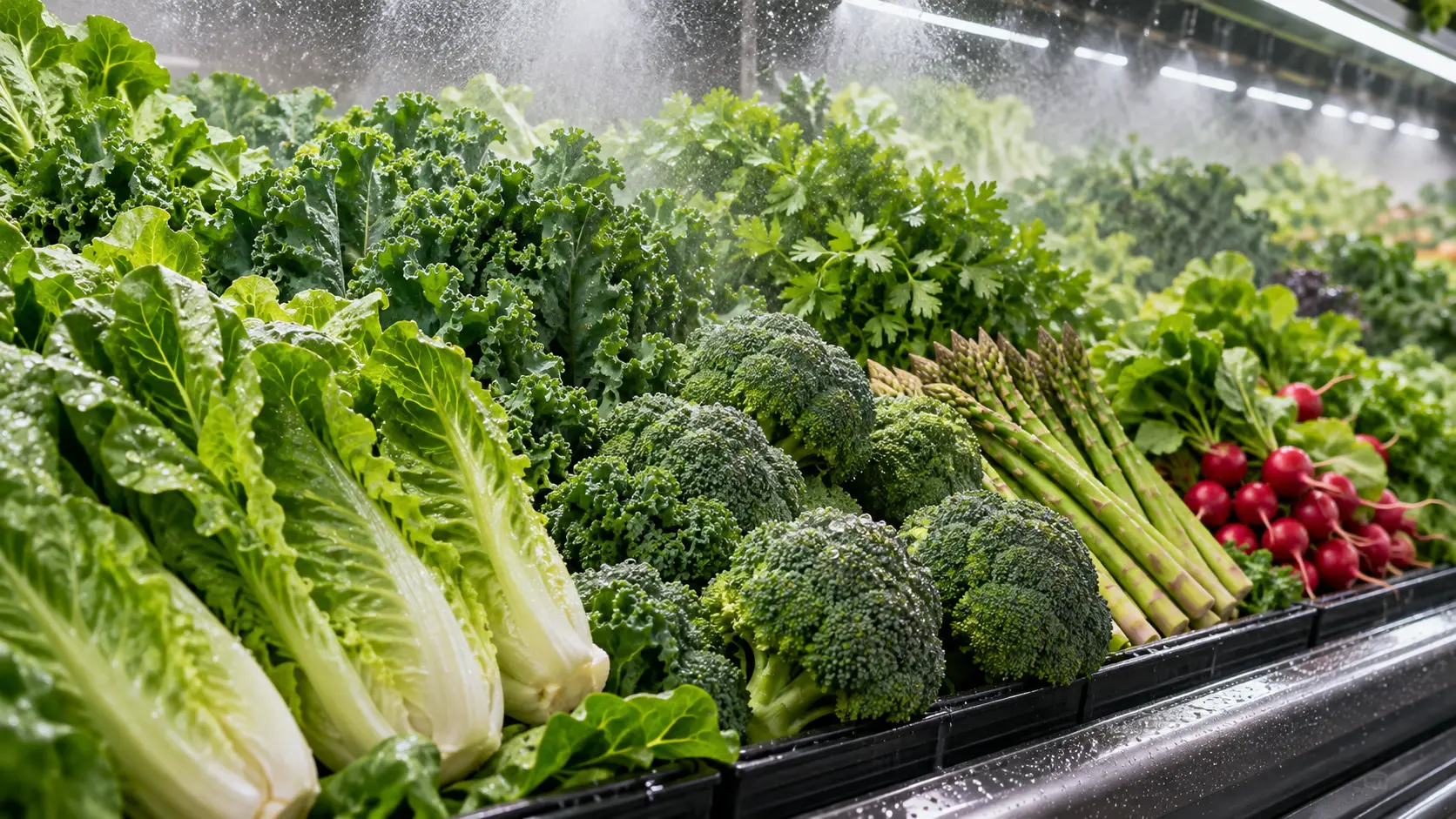
Psssst. A cloud rolls across the lettuce, the parsley gets a tiny rainstorm, and everyone near the broccoli suddenly remembers an umbrella they do not have. Produce-aisle misters can look like grocery-store theatre, but their main job is practical: slowing moisture loss from vegetables that wilt easily.
Harvest does not switch plant tissue off. A head of lettuce or bunch of herbs is still made of living cells, and water can keep leaving those cells after the produce is cut from its roots. Cornell Cooperative Extension explains that water inside a plant cell presses its membrane against the cell wall, creating turgor pressure. When more water leaves than enters, that pressure falls and the plant wilts.
A misted display changes the small climate around the produce. The added moisture raises local humidity, which reduces the difference between the water-rich vegetable and the drier surrounding air. That can slow water loss and help susceptible produce keep its firmness, appearance and saleable weight for longer.
USDA postharvest guidance treats misting as one tool among several. Stores can also reduce strong air movement, use moisture-retaining packaging or display suitable foods on ice. The same guidance is careful about a crucial detail: misting is useful only for commodities that tolerate being wet.
Leafy greens, fresh herbs, broccoli and asparagus are examples of produce that can benefit. The USDA also lists many other vegetables, from carrots and celery to radishes and sweet corn. But the system is not meant to shower the whole department. Some foods are better kept dry, and excess surface moisture can raise quality problems for produce that does not tolerate wetting.
The droplets are not a magic rinse, either. Proper retail systems use clean, sanitized water, but a mist does not erase handling, replace safe washing at home or turn older produce into newly harvested produce. It slows one route to quality loss. It cannot wind back the harvest clock.
That distinction matters when shopping. A sparkling leaf may simply have been misted seconds ago, so droplets alone are not evidence of freshness. Look for the qualities that matter for the item: crisp leaves, firm stems, lively colour, no slimy patches and no obvious decay. The best bunch should still look good after the tiny weather system moves on.
At home, give wet produce a chance to drain or dry before storage, especially if water is pooling in the bag. Then store each item according to its needs rather than recreating a miniature supermarket cloud in the crisper drawer.
So the next time the produce aisle hisses, think humidity control, not a freshness performance. The mist helps the right vegetables hang on to the water they already have. The rest of the quality check is still yours.
Sources
You may also like these