Food Systems
Vaulting Ambition: How Seed Banks Keep Tomorrow’s Crops Alive
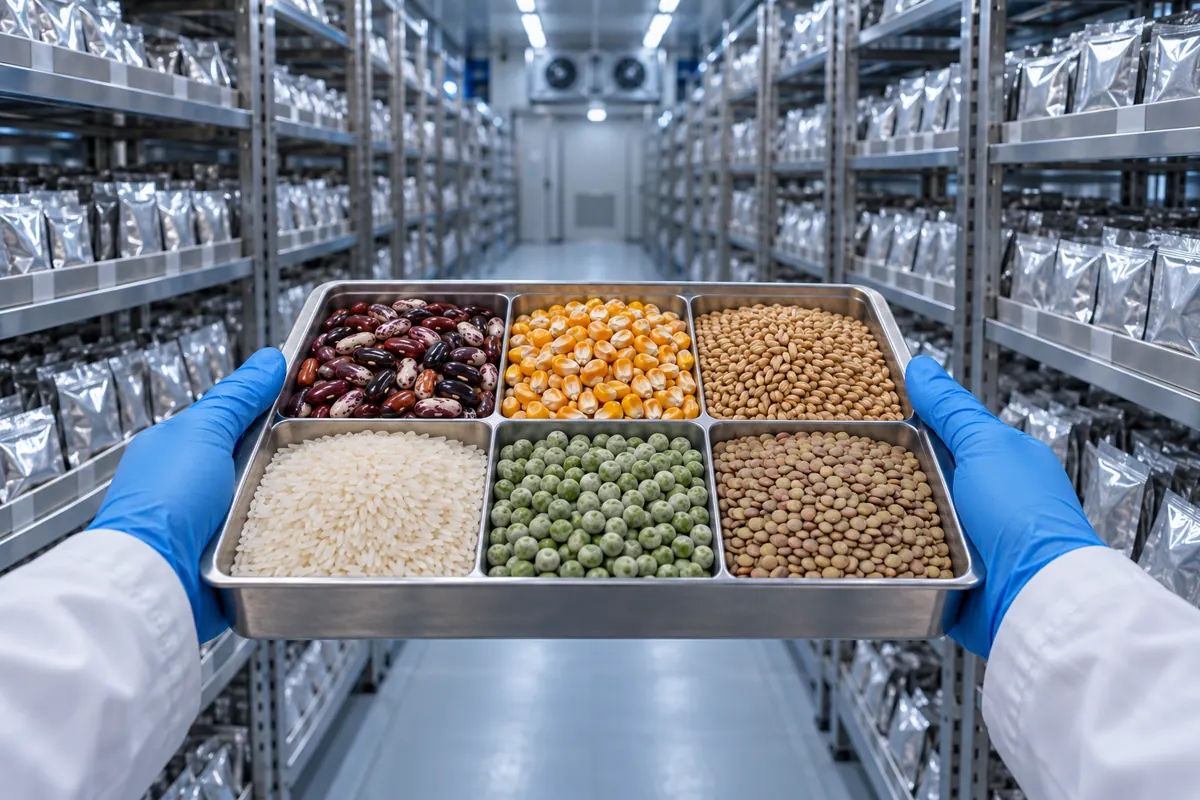
A seed vault is not a frozen museum where packets sleep forever. Crop seeds are dried, cooled, catalogued, tested and sometimes grown again, turning storage into an active backup system.
A seed bank sounds wonderfully simple: put seeds somewhere cold, close the door and let tomorrow sort itself out. In practice, it is closer to a living library with a very chilly reading room. The collection needs careful drying, packaging, records, germination checks and, eventually, fresh seed grown from the old.
The first job is to slow ageing. Many crop seeds are called orthodox seeds, meaning they can tolerate drying and freezing. Genebanks reduce their moisture under controlled conditions, seal them in moisture-proof containers and place them in long-term cold storage. The U.S. Department of Agriculture’s preservation laboratory uses conventional storage at minus 18°C, while the Svalbard Global Seed Vault also holds dried seed at a steady minus 18°C. Cold does not make a seed immortal; it slows the chemical reactions that gradually erode its ability to sprout.
Good records matter as much as good refrigeration. Each stored sample, called an accession, needs an identity and a history: what plant it is, where it came from, when it entered the collection and how it has performed in tests. Without that catalogue, a packet of perfectly preserved seeds would be an answer with no question attached.
Then comes the part that makes a genebank unmistakably active. Staff monitor viability by taking a small, carefully managed sample and testing whether the seeds germinate. If a collection falls below its working threshold or supplies run low, it may be regenerated. That means growing plants, guarding their identity and harvesting a fresh generation of seed. FAO’s genebank standards treat drying, storage, viability monitoring, regeneration, documentation and safety duplication as linked parts of the same conservation job.
Svalbard is the famous backup, not the world’s only working cupboard. Depositing genebanks send duplicate seeds in sealed packets under what the facility calls black-box conditions. The packets remain owned and controlled by the depositor, and only that institution can request their return. Svalbard does not open each packet to run germination tests; the original genebank monitors the matching seed lot and decides when regeneration is needed. It is less a public seed shop than a spare copy stored far from the original.
That duplication is deliberate. A single cold room can face equipment trouble, natural disaster, pests, administrative disruption or simple human error. Keeping related samples in more than one secure place avoids asking one building to carry the whole story. The same logic explains why backing up a laptop in the drawer beside it is not quite the victory it appears to be.
There is an important catch: not every useful crop fits neatly into a dry packet. Some seeds are recalcitrant, meaning they do not survive conventional drying and freezing. Other crops are commonly maintained as living plants or tissue because seed would not faithfully preserve the variety. FAO therefore sets separate standards for field genebanks, in-vitro culture and cryopreservation, while Kew notes that exceptional species may need methods beyond an ordinary minus 20°C freezer.
So the real marvel is not one Arctic vault door. It is the network behind it: collectors, growers, seed technicians, databases, germination rooms, field plots and duplicate stores all keeping plant diversity usable. A tiny packet may look asleep, but the system around it is wide awake. Tomorrow’s crops are not being left on ice; they are being checked out, checked up on and carefully checked in again.
Sources
- https://www.seedvault.no/about/purpose-operations-and-organisation/
- https://www.fao.org/agriculture/crops/thematic-sitemap/theme/seeds-pgr/gbs/en/
- https://www.ars.usda.gov/plains-area/fort-collins-co/center-for-agricultural-resources-research/paagrpru/docs/seed-program/seed-program/
- https://www.kew.org/science/collections-and-resources/collections/seed-collection
You may also like these