
Food History
Vanilla Has Flower Power: Your Favourite Flavour Is an Orchid
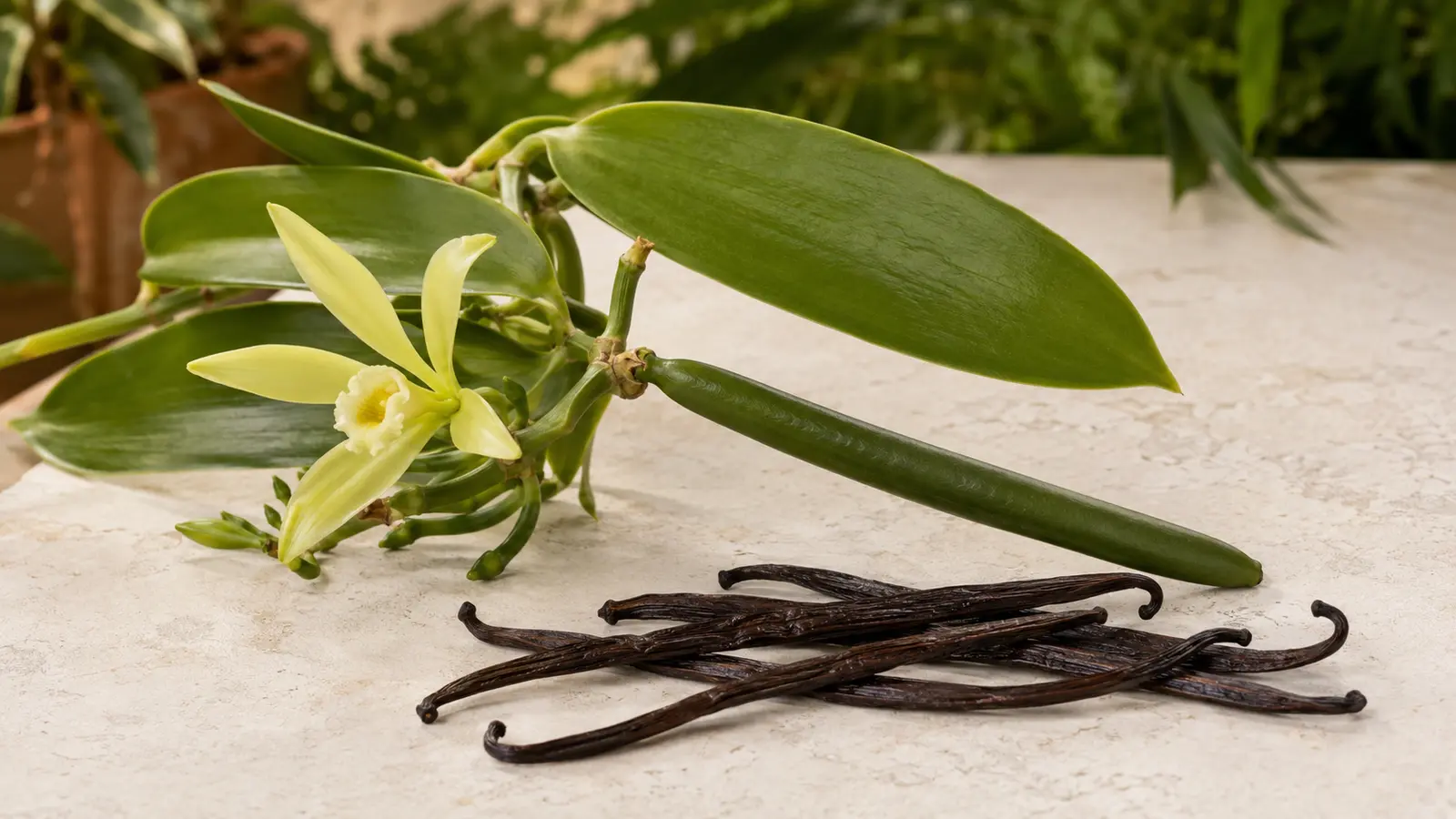
Vanilla may be shorthand for ordinary, but the real ingredient comes from a climbing orchid, a fleeting flower and months of careful work.
Vanilla has an unfair reputation for being plain. The plant behind it is anything but. Natural vanilla comes from the fruit of a tropical climbing orchid, most commonly Vanilla planifolia, with thick green leaves and pale green-yellow flowers.
Those flowers do not leave much room for procrastination. University of Florida researchers report that a vanilla flower is receptive to pollination for only six to seven hours. Natural pollination is uncommon even in the plant’s native environment, so commercial growers usually pollinate each flower by hand.
The method still used today has a remarkable history. In 1841, Edmond Albius developed an efficient technique on Réunion when he was 12 years old. Using a slender tool, the grower lifts a small flap inside the flower and presses its pollen-producing and pollen-receiving parts together. A new Smithsonian Gardens exhibit highlights how this deceptively simple discovery transformed vanilla cultivation.
Successful pollination is only the opening act. The green fruit, botanically called a capsule but commonly called a bean or pod, takes about eight to nine months to mature. Freshly harvested pods do not yet smell like the vanilla in your cupboard.
That familiar aroma develops during curing. The pods are heated, kept warm and humid, dried, then conditioned for weeks or months. University of Florida’s 2025 guide explains that curing helps convert glucovanillin stored in the green fruit into vanillin, the best-known flavour compound in vanilla. Many other aromatic compounds contribute to the finished flavour too.
All that hand pollination, waiting and curing helps explain why real vanilla costs more than its calm personality suggests. It is less like scooping up an ordinary pantry powder and more like bottling the result of a long botanical relay race.
In the kitchen, whole beans are best used where their dark specks and layered aroma can shine. Split the pod lengthwise, scrape out the seeds and steep the empty pod in a plant-based custard, syrup or warm oat milk instead of discarding it. Vanilla extract is the practical choice for cakes and batters, while paste offers visible flecks without requiring a whole bean.
So the next time someone uses “vanilla” to mean boring, feel free to picture an orchid flower with a one-day deadline, a hand-pollinated pod and months of curing. Plain has never worked this hard.