Kitchen Comparison
Thick of It: Cornstarch, Tapioca or Arrowroot?
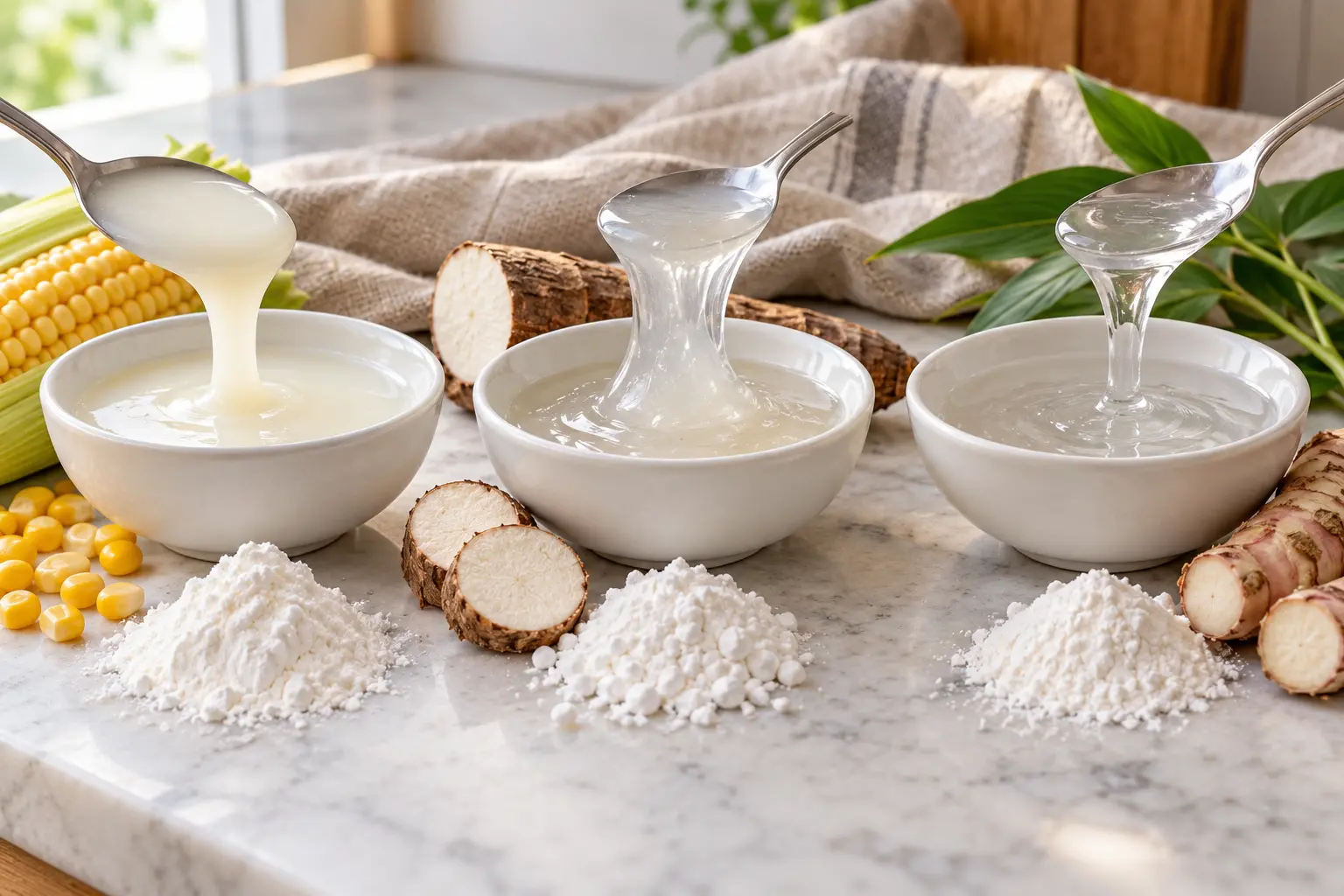
Three white powders can all thicken a sauce, but they do not leave the same finish. A tiny side-by-side test reveals when cornstarch, tapioca and arrowroot feel firm, glossy or delicate.
Three white powders sit in the pantry looking almost interchangeable. Stir any one of them into liquid, add heat and a thin sauce can suddenly coat a spoon. But cornstarch, tapioca starch and arrowroot do not leave the same finish, and the most useful difference is not which one is strongest. It is what kind of texture you want at the table.
All three work because starch is stored in tiny granules. Whisking the powder into cold liquid separates those granules before heat arrives. As the mixture warms, water moves in, the granules swell and their ordered structure loosens in a process called gelatinization. Research comparing starches from different plants shows that granule size, organization and the balance of amylose and amylopectin help decide how a paste swells, clears, firms and changes after cooling.
Cornstarch, made from maize, gives the familiar sturdy body found in many gravies, puddings and stir-fry sauces. Its finish is often a little more opaque and its cooled texture can feel firmer than a root-starch sauce. That makes it a calm choice when you want a sauce to stay put rather than stretch. A hard boil is not a shortcut, though: once a starch has thickened, aggressive cooking and stirring can change the texture.
Tapioca starch comes from cassava. In a laboratory comparison of starches from several plants, cassava showed much greater swelling power and solubility than corn. In a home saucepan, that difference often appears as a clearer, glossier and slightly more elastic sauce. Tapioca can be lovely in fruit fillings and shiny glazes, but the same bounce can feel stringy when too much is used.
Arrowroot comes from the rhizomes of Maranta arundinacea. It is often valued for a clear, delicate-looking sauce rather than a firm set. Studies measure its pasting and freeze-thaw behaviour separately because it is not simply cassava starch under another name. For a fragile glaze or a sauce where shine matters, arrowroot is worth testing, especially when the recipe was written for it.
The fastest way to understand the three is a tiny kitchen flight. Put 200 grams of water in each of three small saucepans. Whisk 10 grams of one starch into each while the water is cold. Heat them gently over the same burner, stirring at the same pace. Notice when each turns translucent, how cleanly the spoon leaves a trail, whether it stretches and what happens after 15 minutes of cooling.
That test is a comparison, not a universal substitution chart. Sugar, acid, salt, fat, total water, cooking time and even the starch brand can change the result. Follow the recipe or package amount first. If you must swap, make a small batch and judge the sauce at the temperature where it will actually be served.
The pantry rule is simple: reach for cornstarch when you want familiar, firm body; tapioca when gloss and flexibility suit the dish; and arrowroot when a clear, delicate finish is the goal. They may all begin as quiet white powder, but heat gives each one a different speaking part.
Sources
You may also like these