
Plant Anatomy
String Theory: What Celery’s Tough Threads Are Doing
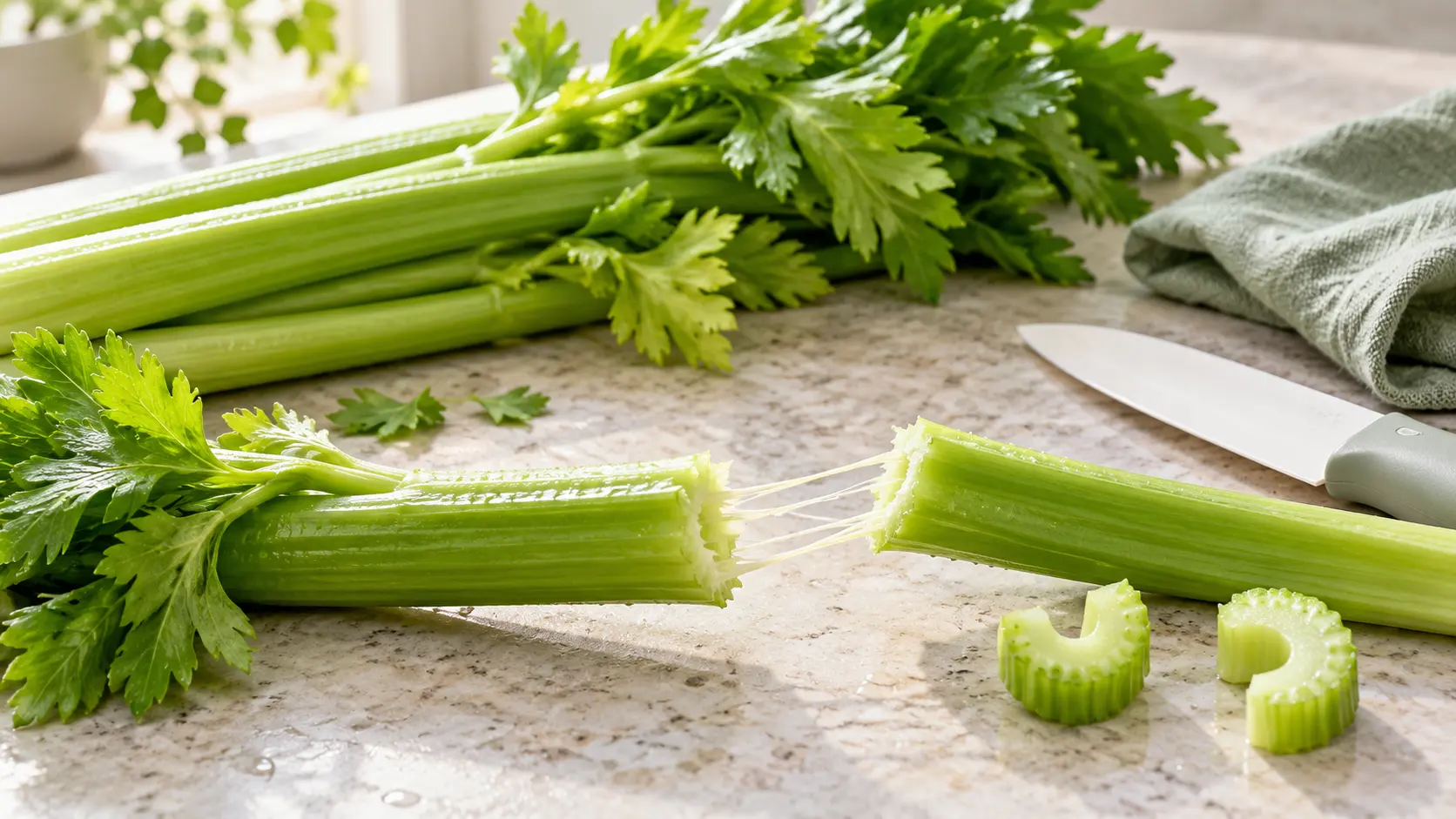
Those threads that follow a snapped celery rib are not random fibres. They are part of the plant’s support and transport system, and they explain the stalk’s famous snap.
Snap a celery rib in half and it may perform a tiny magic trick: pale threads stretch between the broken pieces, stubbornly refusing to let go. They can be annoying in a finely chopped salad, but to the plant they are clever working parts, not loose packing material.
The crunchy rib we eat is a leaf stalk, called a petiole, and its so-called strings are not all the same. A classic anatomical study of celery identified two main contributors: strands of collenchyma and the plant’s vascular bundles. They run lengthwise together, which is why a string can peel away in one remarkably long piece.
Collenchyma is living support tissue. Its cells have flexible, thickened walls that help hold up young plant parts without making them rigid. Think of it as bendable reinforcement. Celery needs that combination because its long leaf stalks must stay upright while still coping with wind, growth and everyday movement. A recent detailed study of celery tissues likewise describes collenchyma as mechanical tissue with unusually thick cell walls.
The vascular bundles have a different job. They contain xylem, which carries water and dissolved minerals through the plant, and phloem, which distributes sugars and other compounds made by the leaves. In plain kitchen language, these bundles are part of celery’s plumbing. Their long route through the petiole helps explain why the threads follow the rib from base to leafy top.
That means celery’s snap comes from teamwork. Water-filled cells provide crispness, while the long support strands add toughness and resilience. When you bend a rib until it breaks, the softer tissue parts first and the stronger lengthwise strands can remain attached for a moment. The dangling strings are the edible evidence of how the stalk was built.
Do you need to remove them? Usually not. Tender inner ribs are often pleasant as they are, and strings are harmless to eat. For raw dishes where a delicate texture matters, lightly run a vegetable peeler down the raised outer ridges, or snap a small piece from the base and pull the exposed strands upward. There is no need to carve deeply into the celery.
You can also work with the grain. Slice crosswise into thin crescents and each long strand becomes a very short piece, making it less noticeable in salads, sandwich fillings and dumpling mixtures. If the celery is destined for soup, stew or sauce, ordinary crosswise chopping is generally enough.
One celery rib, then, is both snack and structure lesson. Those troublesome threads helped a leafy plant stand tall and move supplies. Once you know their two jobs, peeling them feels less like removing a flaw and more like choosing the texture you want from a neatly engineered vegetable.