Grocery Know-How
Sticker Shock: What Produce PLU Codes Actually Say
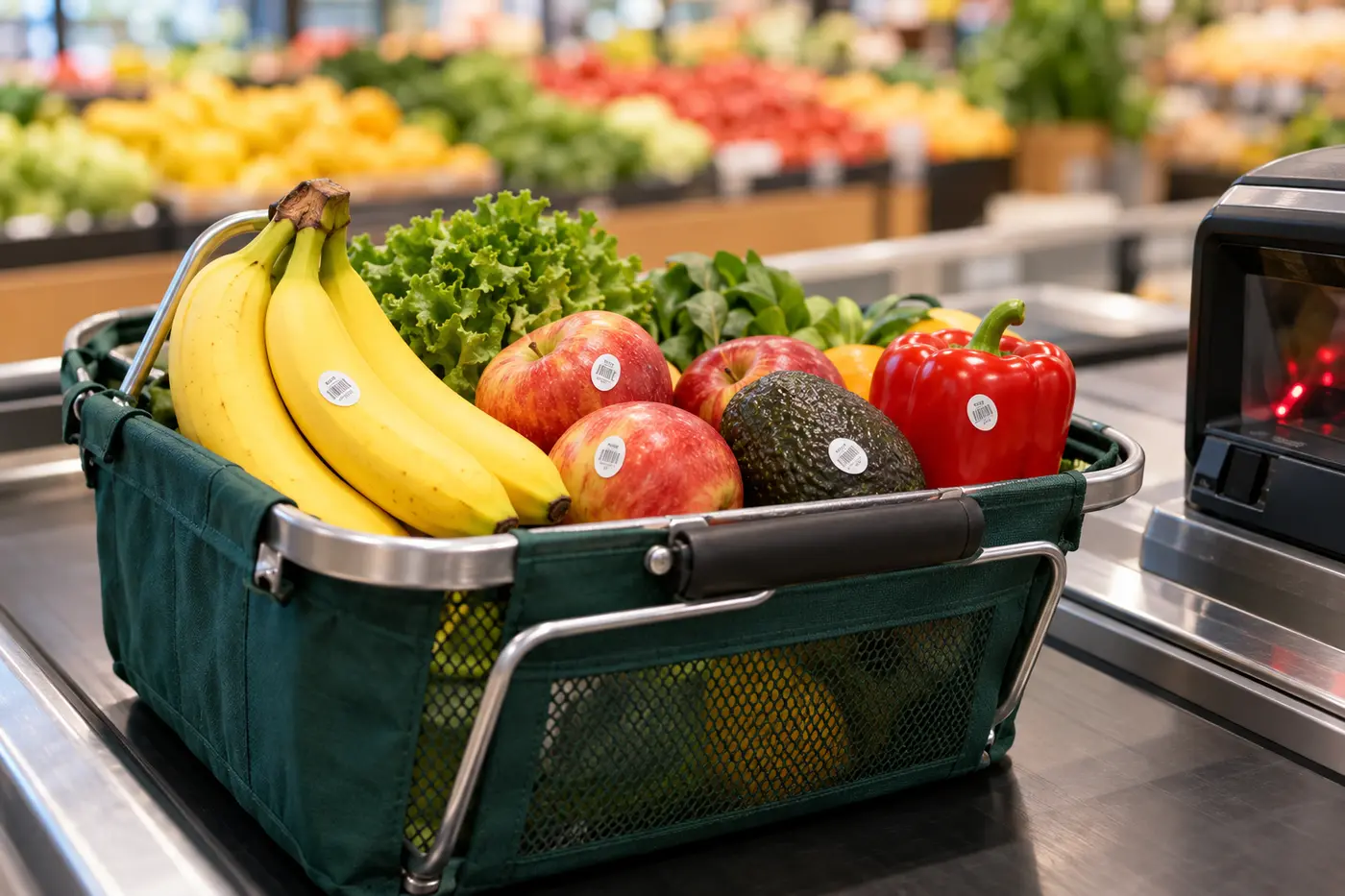
That tiny number on a banana is a checkout shortcut, not a miniature dossier. Here is what four digits, the organic 9 prefix and the old 8-means-GMO claim actually mean.
That tiny numbered sticker on a banana can look like a secret identity card. It is not a miniature report on nutrition, freshness or everything that happened on the farm. Its main job is much plainer: help the store identify loose produce and charge the right price.
Price Look-Up codes, usually called PLUs, have been used by supermarkets since 1990. The International Federation for Produce Standards says they support checkout and inventory control for bulk produce and related items such as herbs and nuts. A code can distinguish the commodity, variety, size group and growing method when those details affect how an item is sold.
Here is the first myth to peel away: the ordinary four digits are not a sentence waiting to be decoded one character at a time. IFPS assigns codes within reserved number ranges, and says there is no built-in intelligence in the position of each digit. A cashier or checkout system looks up the whole code in a database. The familiar 4011 for a standard yellow banana works as one complete identifier; the 4, 0, 1 and 1 do not each whisper a separate banana fact.
One prefix does carry a standard meaning. A four-digit PLU identifies conventionally grown produce in the IFPS system. For the corresponding organic item, a 9 is placed in front. That makes the standard yellow banana example 4011 for conventional and 94011 for organic. The organic versions do not need separate entries in the public database because the 9 is added to the conventional code.
Now for the internet's durable produce-sticker legend: an 8 does not reliably mean genetically modified. The May 2025 IFPS FAQ explains that the 8 prefix was once reserved for GMO produce but was never used at retail. That designation was dropped so the 83000 and 84000 ranges could eventually provide more codes as new varieties enter the market. Unlike 9, a leading 8 will not carry a special consumer message.
The system is also voluntary. IFPS says no government body requires every loose fruit or vegetable to carry a PLU sticker. Retailers commonly expect the codes because they make point-of-sale identification easier, but some produce is identified on signs, bands or store systems instead. A missing sticker therefore does not prove how the food was grown.
What else is not hiding in those digits? A PLU is not a freshness date, nutrition score, pesticide-residue reading, country-of-origin certificate or complete traceability record. The Canadian Produce Marketing Association describes PLUs as human-readable identifiers at retail, while other standards handle cartons, pallets and supply-chain records. It also notes that newer two-dimensional barcodes can carry richer, more precise product data.
The useful shopper move is refreshingly small. Use the code to check that the screen matches the produce and growing method you intended to buy. If an organic item rings through as conventional, or a variety appears wrong, ask the cashier to check it. If curiosity strikes, the searchable IFPS database can show the commodity, variety and size associated with an official code.
So the sticker is helpful, just not mystical. Read the whole number as a checkout lookup, remember that 9 marks the organic counterpart, and retire the old 8-equals-GMO rule. Your apple is carrying a name tag for the register, not a tiny autobiography.
Sources
You may also like these