
Food Science
Spread the Word: The Tiny Fruit Web Behind Jam
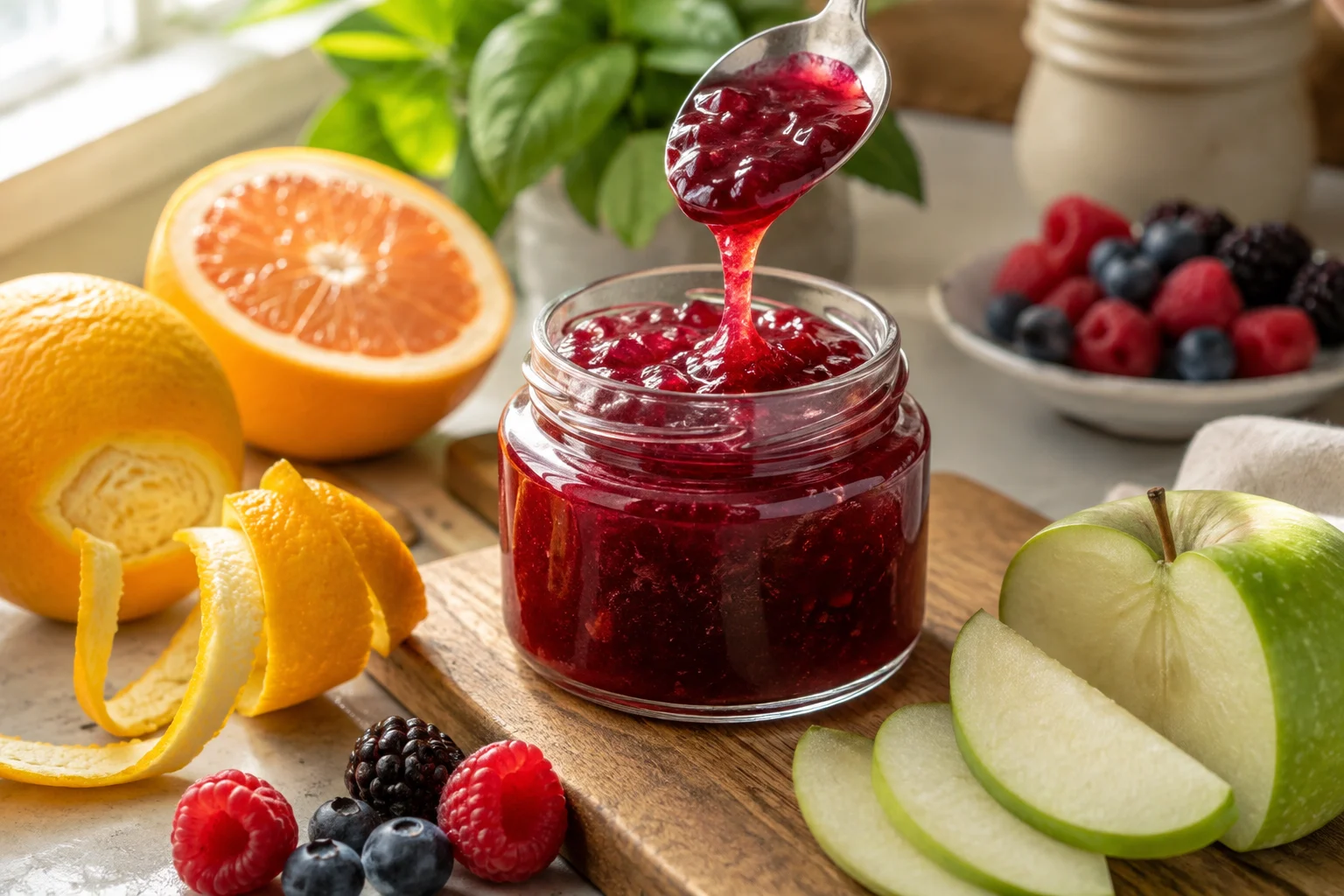
Jam does not thicken by fruity magic. Pectin builds a microscopic web, while acid and sugar help it hold together in one delicious kitchen chemistry project.
A spoonful of jam looks simple, but its wobble is a tidy bit of plant chemistry. The star is pectin, a carbohydrate that helps give structure to plant cell walls. When conditions are right, pectin molecules link into a mesh that traps liquid. That invisible web is what turns cooked fruit juice into something you can spread on toast instead of pour over it.
Fruit brings more than flavour and colour to the jar. It also supplies water, acid and at least some pectin. The amount varies by fruit and ripeness. Apples, crab apples, gooseberries, some plums and citrus peel are naturally pectin-rich, while strawberries, cherries and blueberries generally need help from a higher-pectin fruit or a commercial product. Slightly underripe fruit often contains more useful pectin than fully ripe fruit, which is why traditional jelly guidance may call for a mix of ripe and underripe pieces.
Pectin cannot do the whole job alone. In a traditional high-sugar jam, acid changes the conditions around the pectin so the molecules can approach and connect, while sugar ties up some of the available water. Together, the trio encourages a gel network instead of a loose fruit syrup. Too little acid can leave a soft set, while too much can make a gel release liquid. Overcooking can also break pectin down and spoil the set.
Commercial pectin is commonly made from citrus or apple processing material and comes in several formulations. Regular powdered pectin, liquid pectin and low-sugar pectin are not automatic substitutes for one another. Their recipes may use different ingredient ratios and even different mixing orders. For a reliable result, follow the directions written for the exact pectin in your cupboard.
There is modern tinkering in this old-fashioned spread, too. USDA Agricultural Research Service scientists reported a method that pre-treats fresh orange peel with high-pressure processing before extracting pectin. The resulting pectin showed useful gelling performance in low-sugar products, pointing to another possible use for citrus peel and another tool for food formulators.
The practical takeaway is pleasantly small: pectin, acid, sugar, fruit type and ripeness all matter. If you are making a refrigerator spread, that knowledge helps explain the texture. If you are canning for room-temperature storage, use a tested recipe from a trusted preservation source and keep its ingredient ratios and processing steps intact. A perfect gel is fun, but a properly preserved jar matters more.
So the next time jam clings to a spoon, picture a microscopic fruit-built net doing the heavy lifting. It may be invisible, but it has excellent toast manners.
Sources
- https://nchfp.uga.edu/how/make-jam-jelly/jams-jellies-general-information/general-information-on-canning-jams-jellies-and-marmalades/
- https://extension.umn.edu/preserve-your-own-food/fruit-spreads
- https://www.ars.usda.gov/news-events/news/research-news/2024/a-high-quality-pectin-that-gels-with-low-sugar-products/