
Food Science
Pineapple Bites Back: The Tiny Science Behind the Tingle
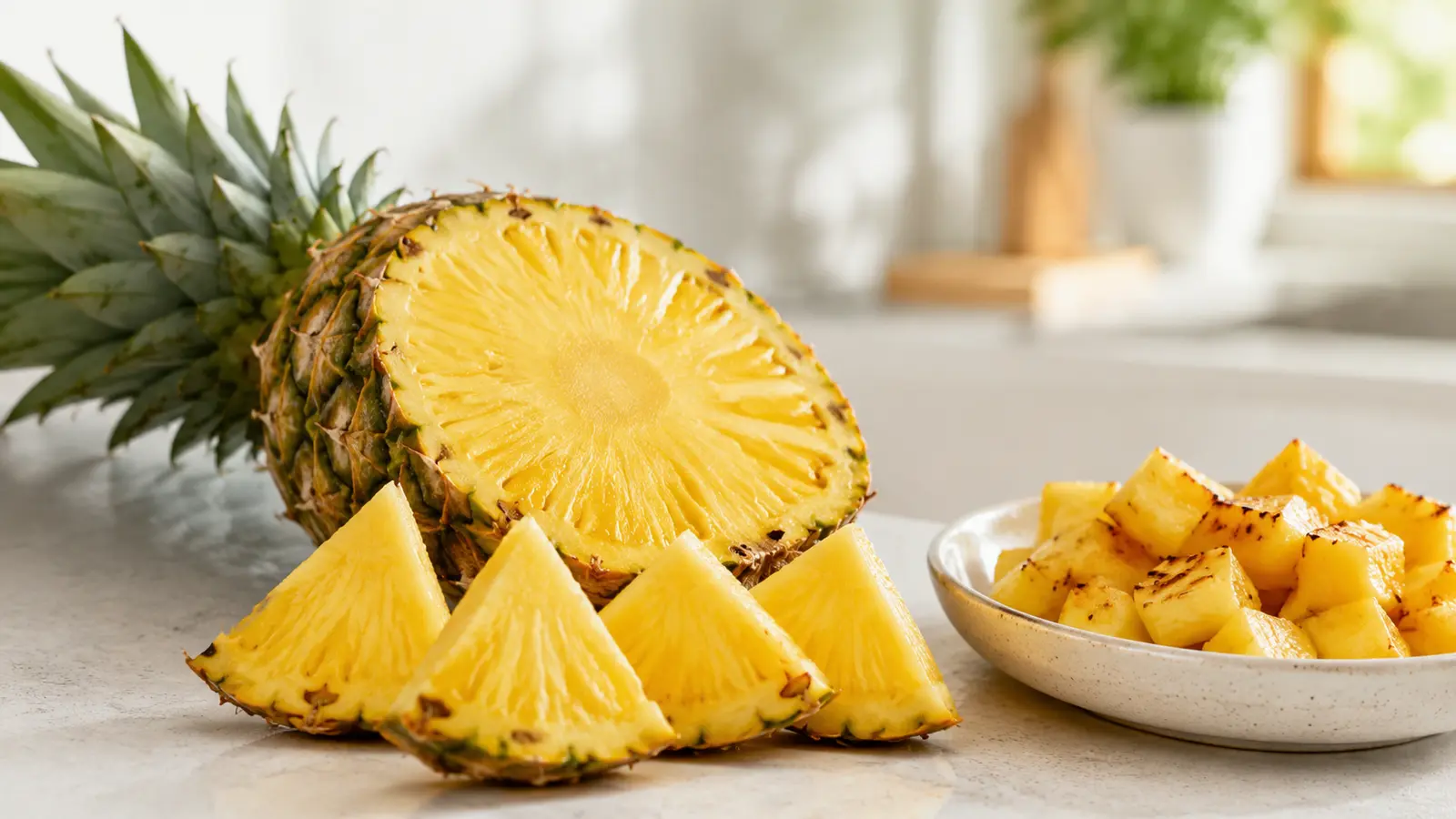
Fresh pineapple can leave your tongue feeling prickly. The explanation involves protein-cutting enzymes, fruit acidity and a surprisingly useful kitchen trick.
Fresh pineapple is sweet, sunny and occasionally a little feisty. After a few juicy pieces, your tongue may start to feel prickly or slightly raw. People often joke that pineapple is “eating you back,” but the real explanation is more interesting and a little less dramatic.
Pineapple contains bromelain, the name for a group of enzymes that break down proteins. The U.S. National Center for Complementary and Integrative Health confirms that these enzymes occur in both the fruit and stem of the pineapple plant. In the kitchen, that protein-cutting ability is what makes bromelain such an unusual ingredient.
Bromelain is probably not acting alone. McGill University’s Office for Science and Society explains that pineapple is also acidic and contains microscopic needle-like crystals called raphides. Researchers have proposed that the enzymes, acidity and tiny crystals may work together to create that familiar tingle. In other words, there may not be one single culprit.
Heat provides a useful clue. Enzymes are proteins themselves, and enough heat changes their structure and reduces their activity. That is why cooked or canned pineapple is often gentler on the mouth than fresh pineapple. Freezing is different: frozen pineapple can retain enough enzyme activity to behave much like fresh fruit.
This chemistry also explains a classic dessert surprise. Fresh pineapple can stop a traditional protein-based gel from setting because bromelain keeps cutting up the protein network as it tries to form. University of Illinois Extension recommends cooked or canned pineapple for those recipes because heat deactivates the enzyme.
For everyday eating, the simplest takeaway is wonderfully practical. If fresh pineapple feels too lively, try it grilled, roasted or canned. Heating brings out deeper caramel notes while quieting much of the enzyme activity. If you want the bright snap of raw fruit, serve a smaller amount alongside other foods instead of working through half a pineapple in one enthusiastic sitting.
So yes, pineapple has a tiny culinary side hustle: it is both fruit and active food chemistry. The next time your tongue notices, you will know that breakfast has briefly turned into a science experiment.
Sources
- https://www.nccih.nih.gov/health/bromelain
- https://www.mcgill.ca/oss/article/student-contributors-health-and-nutrition-did-you-know-general-science/why-does-pineapple-make-your-mouth-tickle
- https://extension.illinois.edu/blogs/simply-nutritious-quick-and-delicious/2014-12-04-theres-always-room-gelatin-salad
- https://pmc.ncbi.nlm.nih.gov/articles/PMC8534447/