Ingredient Guide
Split Decision: Which Lentil Goes Where?
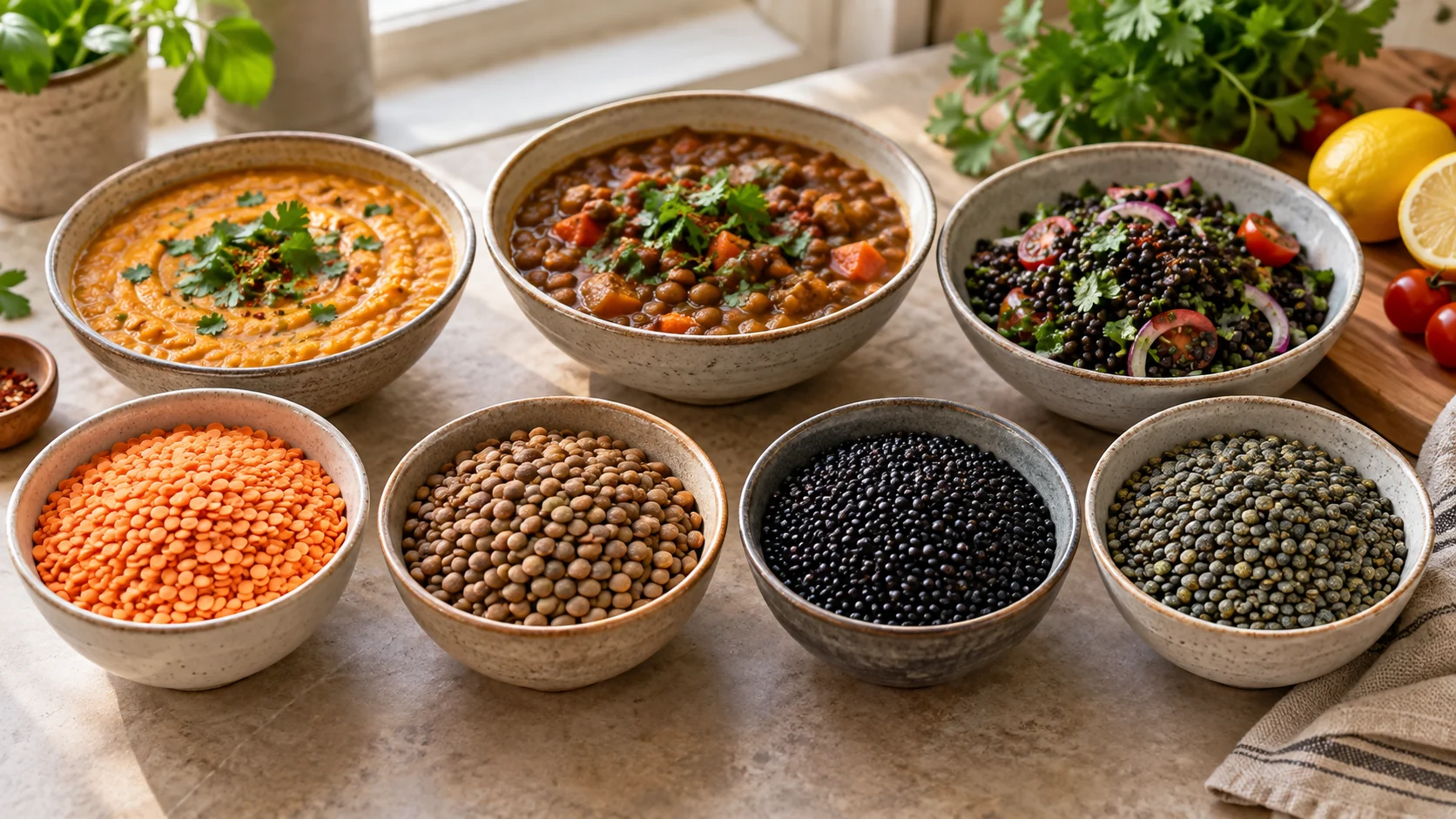
Red, brown, green and black lentils may share a shelf, but their shape is the best clue to whether dinner turns creamy, hearty or neatly textured.
The lentil shelf can look like a paint chart: red, yellow, brown, green and black. For dinner, the most useful first question is not colour. It is whether the lentil is split and hulled or still whole.
Lentils are pulses, the dry edible seeds of legume plants. Unlike most dry beans, they usually do not need soaking. Give them a rinse, look for the occasional bit of field debris, and follow the package time as your starting point.
Split red and yellow lentils have had their seed coats removed and are often split into two halves. Water reaches the exposed interior quickly, so the pieces soften and lose their outlines readily. That is exactly what you want for dal, blended soup, a thick sauce or any dish where the lentil should become part of the base rather than sit on top of it.
Whole brown and everyday green lentils keep their seed coats. They generally stay more defined as they simmer, though they will still become tender and can break down if cooked longer. Reach for them when you want a hearty stew, a grain bowl, a shepherd's pie filling or a soup with visible lentils.
Small black lentils and French-style green lentils are useful when neat shape matters most. Their firmer texture suits salads, composed sides and dishes that will be cooked, cooled and dressed. Start checking early: a lentil that is perfect for salad has a shorter useful window than one headed for soup.
Colour is a clue, not a contract. Variety, size, age and processing all affect cooking time, and names are not perfectly consistent between brands. A bag labelled green may behave quite differently from a small French-style green lentil. The package description and the lentil's shape are better guides than colour alone.
Use a simple three-lane decision. Want creamy and spoonable? Choose split red or yellow. Want tender but visible in a stew or bowl? Choose whole brown or green. Want tidy little lentils for a salad or plated side? Choose black or French-style green.
If you only have one kind, dinner is not cancelled. Most lentils can stand in for one another when you are willing to change the expected texture and watch the pot. A split lentil will thicken the liquid; a firm whole lentil will keep more bite. Adjust water and cooking time rather than expecting an exact swap.
The calm shopping rule is to buy for the finish you want. Split or whole predicts the job better than a rainbow of shelf labels, and one glance at the shape can steer a pot toward creamy, hearty or neatly textured.
Sources
You may also like these