
Ingredient Guide
Kelp Wanted: A Calm Guide to the Seaweed Shelf
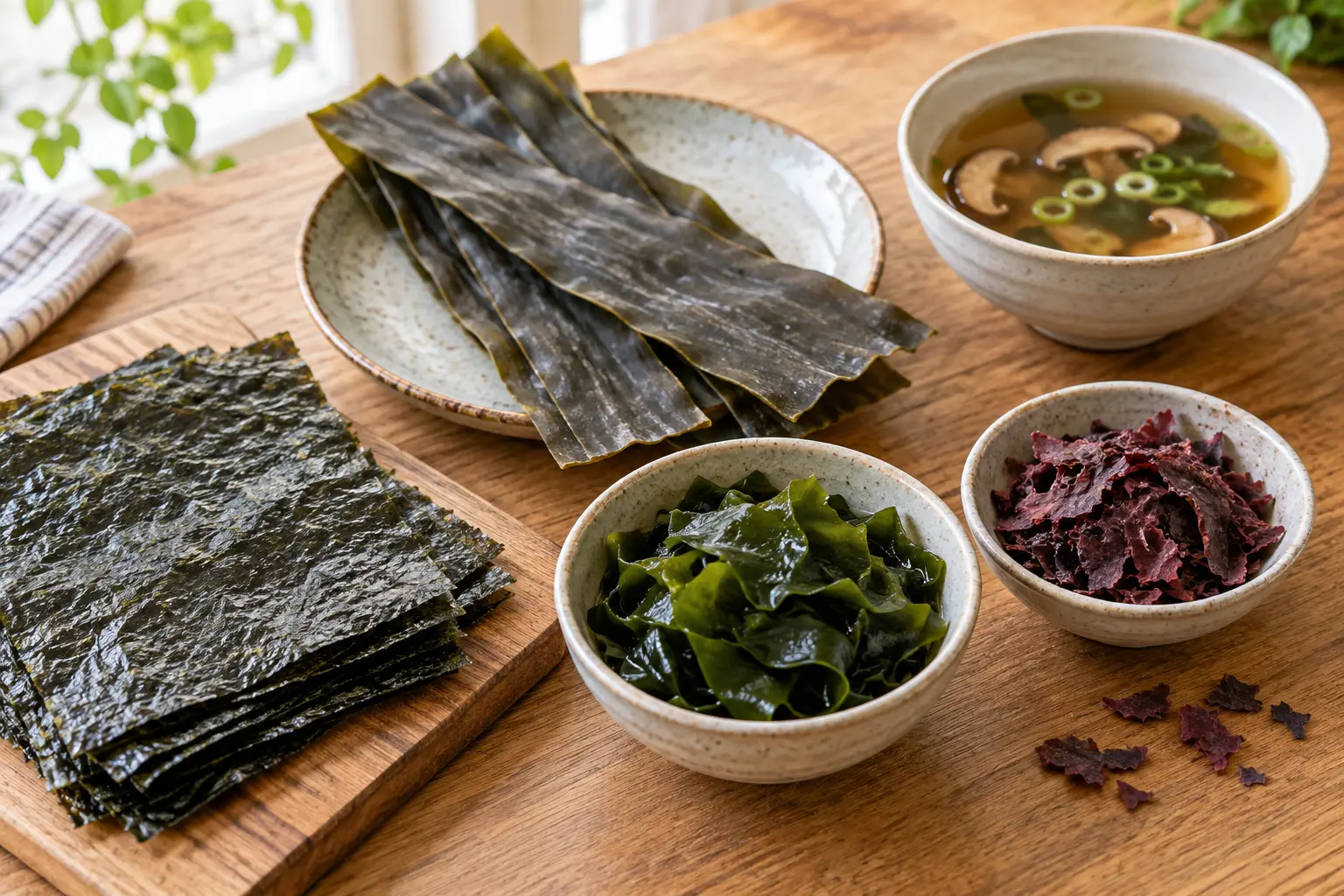
Nori, wakame, kombu and dulse may share one grocery shelf, but they bring different textures, kitchen jobs and wildly variable amounts of iodine. Here is how to choose without turning dinner into marine biology homework.
A recipe asks for seaweed, and the shop offers a miniature underwater library: shiny black sheets, broad leathery ribbons, green flakes and burgundy fronds. They are all edible marine algae, but they are not interchangeable seasoning confetti. The name on the bag points toward a particular texture, flavour and kitchen job.
Nori is the crisp, paper-thin option familiar from sushi rolls and snack packs. It is made from red algae that are chopped, formed into sheets and dried. Use it dry for wrapping rice, cut it into ribbons over noodles or crumble it onto popcorn. Once opened, close the package tightly because nori quickly trades its snap for chew when it absorbs moisture from the air.
Wakame is usually sold as small dried green-black pieces that expand dramatically after a short soak. Rehydrated wakame is tender and slightly slippery rather than crisp, which suits brothy soups, cucumber salads and sesame-dressed vegetables. Start with less than you think you need, soak according to the package, drain well and slice any large pieces before serving.
Kombu is the heavyweight of the group: thick, broad strips of brown kelp used to infuse water for dashi-style broth, beans, soups and braises. It contributes savoury depth without needing to remain in the finished bowl. A common kitchen approach is to warm a measured piece gently in water and remove it before a hard boil, following the recipe and package directions rather than free-pouring shredded kelp.
Dulse, a red seaweed, arrives as soft dried fronds or flakes with a briny, pleasantly savoury flavour. Whole pieces can be briefly toasted until crisp, while flakes work as a finishing accent on potatoes, beans or creamy soups. If the package says ‘seaweed flakes’ without naming the species, look for the ingredient list before assuming it will behave like dulse.
The biggest nutritional reason to notice those names is iodine. The body needs iodine to make thyroid hormones, and the U.S. National Institutes of Health lists seaweed as a rich food source. It also notes that adults generally need 150 micrograms a day and sets an adult upper limit of 1,100 micrograms from all sources. Those figures are reference points, not a reason to treat seaweed like a self-measured supplement.
Seaweed iodine is unusually variable. A scientific review reports that species, growing location, season and even the part of the seaweed can change the amount; brown kelps generally contain more than red or green seaweeds. Cooking and soaking can change the amount that reaches the plate too. That means a spoonful of one product cannot reliably stand in for the same spoonful of another.
Labels do not always solve the puzzle. NIH notes that naturally occurring iodine is often absent from Nutrition Facts panels, while the USDA, FDA and NIH iodine database publishes averages, ranges and sample sizes precisely because foods vary. If a brand provides iodine per serving, follow its serving size. If it does not, use seaweed as the recipe specifies and avoid using kelp powders or large kombu portions as casual daily seasoning.
People with thyroid conditions, those taking thyroid medication, and anyone following a medically prescribed low-iodine diet should get individual guidance rather than experimenting with kelp products. Pregnancy and breastfeeding also change iodine needs, so those are good moments to ask a qualified health professional about reliable sources and amounts.
The easy shelf rule is culinary first, quantity second. Choose nori for crisp sheets, wakame for tender greens, kombu for a measured broth infusion and dulse for a briny finish. Read the species and serving directions, keep the packet dry, and let the right sea vegetable do one clear job. The ocean aisle becomes much calmer once every bag has a role.
Sources
- https://ods.od.nih.gov/factsheets/Iodine-Consumer/
- https://pmc.ncbi.nlm.nih.gov/articles/PMC8077470/
- https://www.ars.usda.gov/northeast-area/beltsville-md-bhnrc/beltsville-human-nutrition-research-center/methods-and-application-of-food-composition-laboratory/mafcl-site-pages/iodine/
- https://www.fao.org/4/y4765e/y4765e00.htm