
Kitchen Technique
Pesto Change-o: Three Ways to Keep Herb Sauce Green
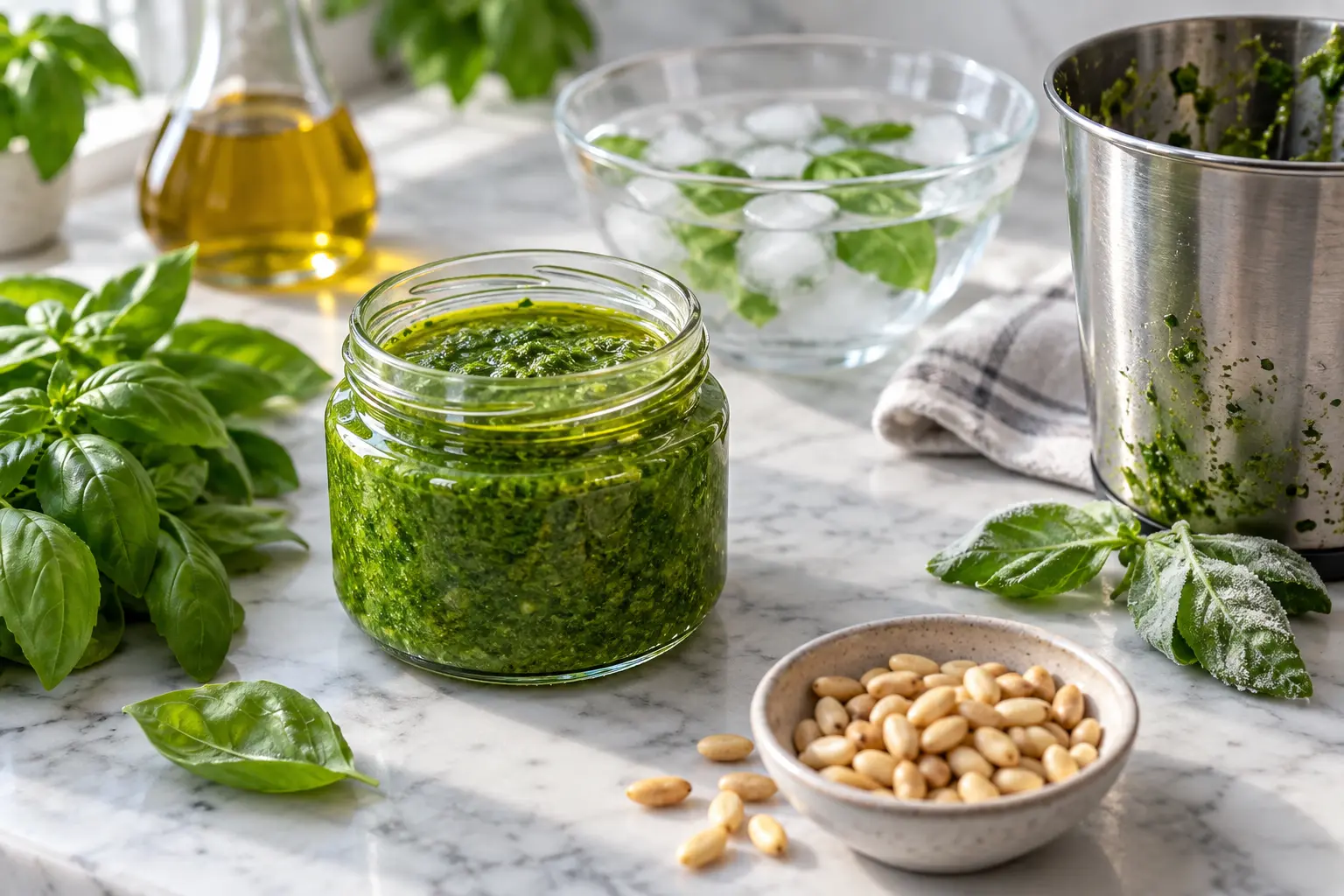
Basil sauce darkens when crushing brings plant enzymes, natural compounds and oxygen together. Heat, cold and oil can each slow the fade, but they make different trades with flavour and texture.
A bowl of basil sauce can begin emerald-bright and look noticeably duller before the pasta water boils. Nothing mysterious has invaded dinner. Grinding the leaves simply starts a fast reaction that the intact plant had kept neatly separated.
Inside basil cells are phenolic compounds and enzymes including polyphenol oxidase. Chopping or blending breaks the cell structure, while the spinning blades also pull in air. Once the enzyme, plant compounds and oxygen meet, oxidation can build brown pigments. The same broad family of reactions appears in many cut fruits and vegetables, although every plant has its own chemistry and pace.
The most decisive colour fix is a very brief blanch. Dip the basil into boiling water for roughly 10 to 15 seconds, move it immediately to ice water, then squeeze and blot it thoroughly dry before blending. Heat changes the browning enzymes so they can no longer work normally. Food-preservation guidance uses the same principle when blanching vegetables before freezing: correctly timed heat slows or stops enzymes that would otherwise affect colour, flavour and texture.
Blanching earns points for dependable colour, but it is not free. Heat softens the leaves and can mute some of basil's bright, fresh aroma. That trade can be perfectly sensible for a make-ahead sauce, a soup garnish or a spread with garlic and toasted nuts. If the lively fragrance of just-picked basil is the whole point, a colder method may suit the bowl better.
Cold preparation slows the reaction rather than switching it off. Chill the blender bowl and the other ingredients, and work with very cold or briefly frozen basil. A controlled kitchen comparison published by Serious Eats in June 2026 found that frozen basil and chilled ingredients kept the mixture vivid while avoiding the flavour change caused by blanching. The protection is temporary, so blend quickly and refrigerate the finished sauce promptly.
An ice cube can cool a blender, but melted ice also thins the sauce. A less watery route is to dry the basil well, chill the solid ingredients and briefly freeze the leaves in a single layer. That keeps the cold where it helps without turning pesto into green soup.
Oxygen control offers a third lever. Blending the leaves with oil early coats many of the freshly cut surfaces, and transferring the sauce to a small airtight container reduces the air left above it. A thin oil layer on the surface can further limit contact with oxygen. This delays browning; it does not make the sauce shelf-stable. Refrigerate it promptly, use sound food-storage guidance and freeze portions when longer storage is needed.
Lemon juice is sometimes suggested as a fourth trick. Lowering the pH can slow enzyme activity, but the protection is incomplete and the acid changes the flavour. It can be a delicious choice when lemon belongs in the recipe, not a compulsory tax paid to the colour green.
For a vegan basil sauce, the colour strategy stays the same whether the body comes from pine nuts, walnuts, sunflower seeds or white beans. Nutritional yeast can add savoury depth, but the practical priorities are still simple: damage the leaves as little as possible before blending, keep the mixture cool, limit air and choose blanching only when its longer-lasting colour matters more than peak fresh-basil aroma.
The best method therefore depends on the job. Blanch for a make-ahead sauce with steady colour. Use chilled or frozen leaves for the freshest aroma at tonight's table. Add oil early and store with little headspace whenever the sauce must wait. Green is not one magic trick; it is a small negotiation among heat, time, oxygen and taste.