Food Processing
Olive It or Not: Why Some Black Olives Start Green
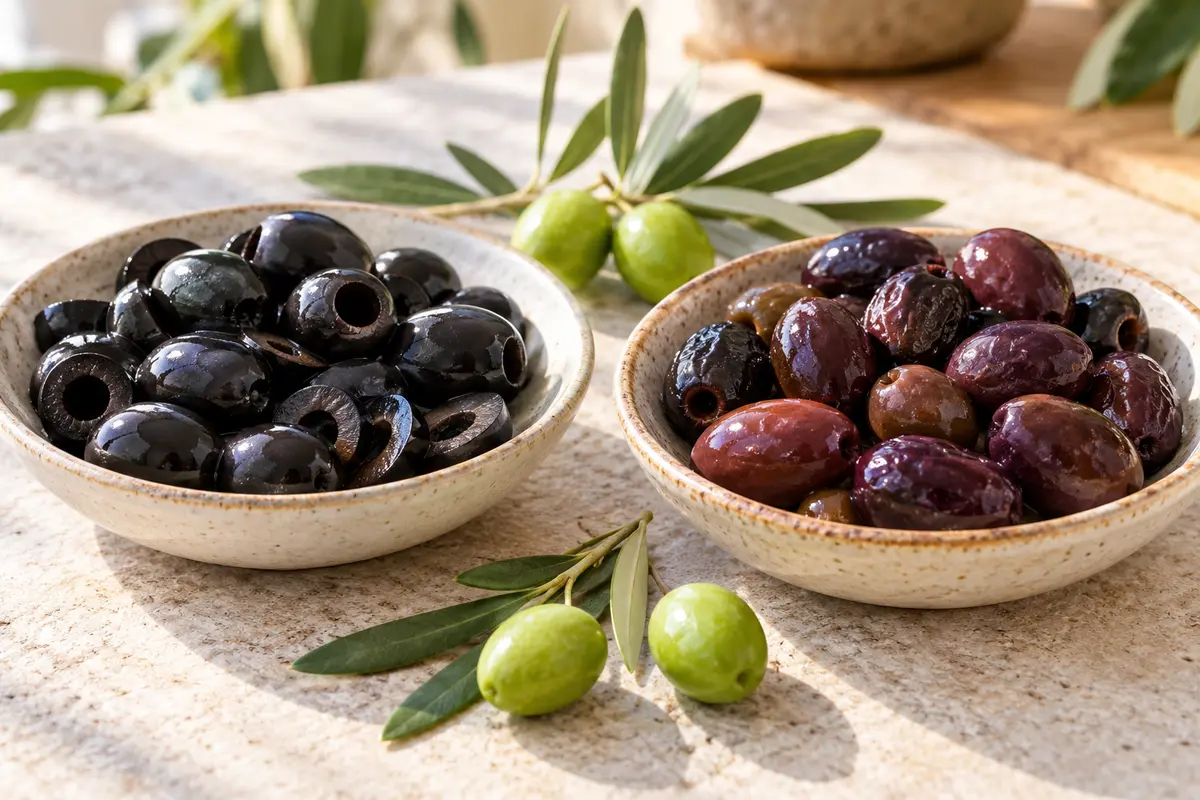
Those glossy black olive rings may not have ripened to that colour on the tree. Air, curing and a little iron chemistry can help create their famously even finish.
Open a can of glossy black olive rings and it is easy to imagine fruit that simply stayed on the tree until it turned midnight-dark. Sometimes that is the story. Often, though, the familiar smooth black olive reached its colour through a carefully controlled curing process that may have started with green or colour-turning fruit.
First, an important baseline: fresh olives are not snack-ready straight from the branch. They contain oleuropein and other intensely bitter compounds, so table olives need curing. Producers can use brine, water, dry salt or alkaline treatments, and the method shapes the olive’s flavour, colour and texture.
The International Olive Council separates naturally dark olives from olives darkened by oxidation. Naturally black styles are harvested near full ripeness, then commonly cured in brine. Their colours can range from purple and burgundy to brown-black, depending on the variety, ripeness and method. A Kalamata-style olive and a uniformly black canned ring may therefore share a fruit family without sharing the same route to the bowl.
For the California-style black-ripe method, processors can begin with olives that are green or just starting to change colour. The fruit is treated with diluted lye to remove bitterness, then washed. During later steps, air is introduced. That contact with oxygen encourages natural phenolic compounds in the olive to oxidize and join into larger dark-coloured compounds.
The last colour trick is really colour insurance. A small amount of ferrous gluconate or ferrous lactate may be used to help stabilize the deep, even black created during processing. Food scientists describe the colour as the result of oxidation and polymerization, with the iron salt helping to fix it. In other words, the ingredient is not a pot of black dye being poured over the fruit.
There is a useful label clue hiding in plain sight. If a package lists ferrous gluconate or ferrous lactate, you are probably looking at an oxidation-darkened style. A naturally dark brined olive may have a shorter ingredient list, although recipes and preservation methods vary by producer. The front-of-pack word black tells you colour; the ingredient list can tell you more about the journey.
Processing also helps explain the eating experience. Oxidation-darkened canned olives are usually mild, smooth and remarkably uniform, which makes them easy to slice and scatter. Naturally dark brined olives tend to show more variation in colour, shape and flavour. Neither route is automatically better. They are different products designed for different textures, tastes and uses.
In practice, the mild uniform kind is handy when you want tidy rings on pizza, pasta or nachos. A more assertive naturally dark olive can carry a tapenade, grain salad or mezze plate. That is a culinary inference rather than a rule, so taste still gets the final vote.
The next time a black olive rolls across your cutting board, remember that colour is not a simple ripeness certificate. Sometimes it grew dark on the tree. Sometimes air, curing and a tiny bit of iron chemistry helped it dress for dinner.
Sources
You may also like these