Food Processing
Grounds for Removal: How Decaf Loses Its Caffeine
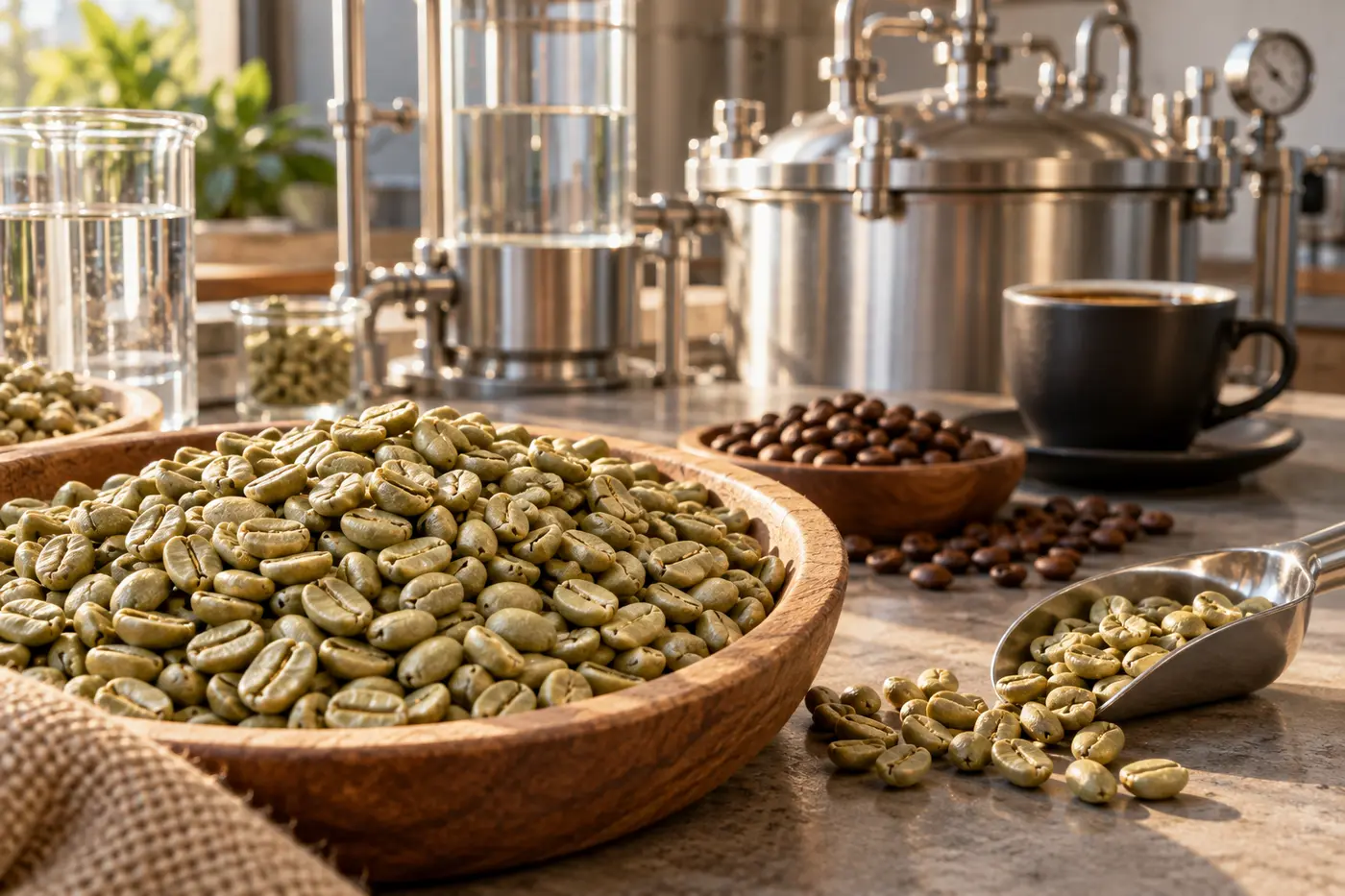
Decaf is not regular coffee with the buzz switched off at the last minute. Its caffeine takes a carefully engineered exit while the beans are still green.
A decaf order sounds simple, but the bean has already taken a remarkable detour before it reaches the grinder. Caffeine is normally removed while coffee beans are still green, before roasting creates the dark colour and toasty aromas we recognize in a finished cup.
Why work on green beans? Coffee roasting drives a complicated set of flavour-building reactions, so processors start earlier, when the beans can be moistened and caffeine can be drawn out without first having to navigate a finished roast. Harvard's Nutrition Source describes the common starting point as steamed or soaked beans that are later dried.
From there, the routes split. In solvent-based processing, methylene chloride or ethyl acetate is used to bind with caffeine. The beans are then rinsed and dried, allowing the solvent and captured caffeine to be removed before roasting. The name may sound dramatic, but the useful question is not whether chemistry is involved. It is which carefully controlled separation process was used.
Another route uses carbon dioxide on steamed or soaked beans. In this process, the gas acts as an extraction medium that carries caffeine away. The beans are then dried and continue to the roaster. The equipment and sequence may look different from a solvent route, but both methods are designed to separate caffeine before the heat of roasting builds the coffee's familiar aroma and colour.
Each method is solving the same selective-removal puzzle: caffeine is only one of many soluble compounds inside a coffee bean. Pull out too broad a mixture and some aroma precursors can leave with it. That is why decaffeination is best understood as separation rather than erasure. The goal is to remove most of one molecule while keeping enough of the bean's other character for roasting and brewing to do their jobs.
Decaf also does not mean caffeine-free. The U.S. Food and Drug Administration says an 8-fluid-ounce cup of decaf typically contains 2 to 15 milligrams of caffeine. Canadian food regulations set composition limits for products sold as decaffeinated: no more than 0.1 per cent caffeine for decaffeinated raw or roasted coffee, and no more than 0.3 per cent for decaffeinated instant coffee.
Those numbers describe the caffeine reduction, not the taste in your mug. Origin, roast, freshness, grind and brewing still shape the cup after decaffeination. If a package names its process, that tells you how the caffeine left, but it is not a complete flavour scorecard.
So the next time a decaf tastes lively, nutty or fruit-forward, give the green bean some credit. It went through an extra extraction step, returned to the familiar roasting path and arrived with its coffee character still very much on the clock, even if most of the caffeine has clocked out.
Sources
You may also like these