Kitchen Comparison
Material Witness: Why Your Baking Pan Changes the Bake
Metal, glass and ceramic do not pass oven heat to food at the same pace. The pan you choose can change browning, edge texture and when a bake is truly done.
Two batches can start with the same batter, share the same oven and still emerge with different edges. The quiet variable may be the pan. Metal, glass and ceramic move and hold heat differently, so a pan is not just a container; it is part of the baking method.
Begin with shape. A wider or shallower pan spreads batter into a thinner layer, which changes baking time even before material enters the picture. Match the recipe's internal pan dimensions and depth whenever possible. Once size is controlled, surface colour and material become easier to read.
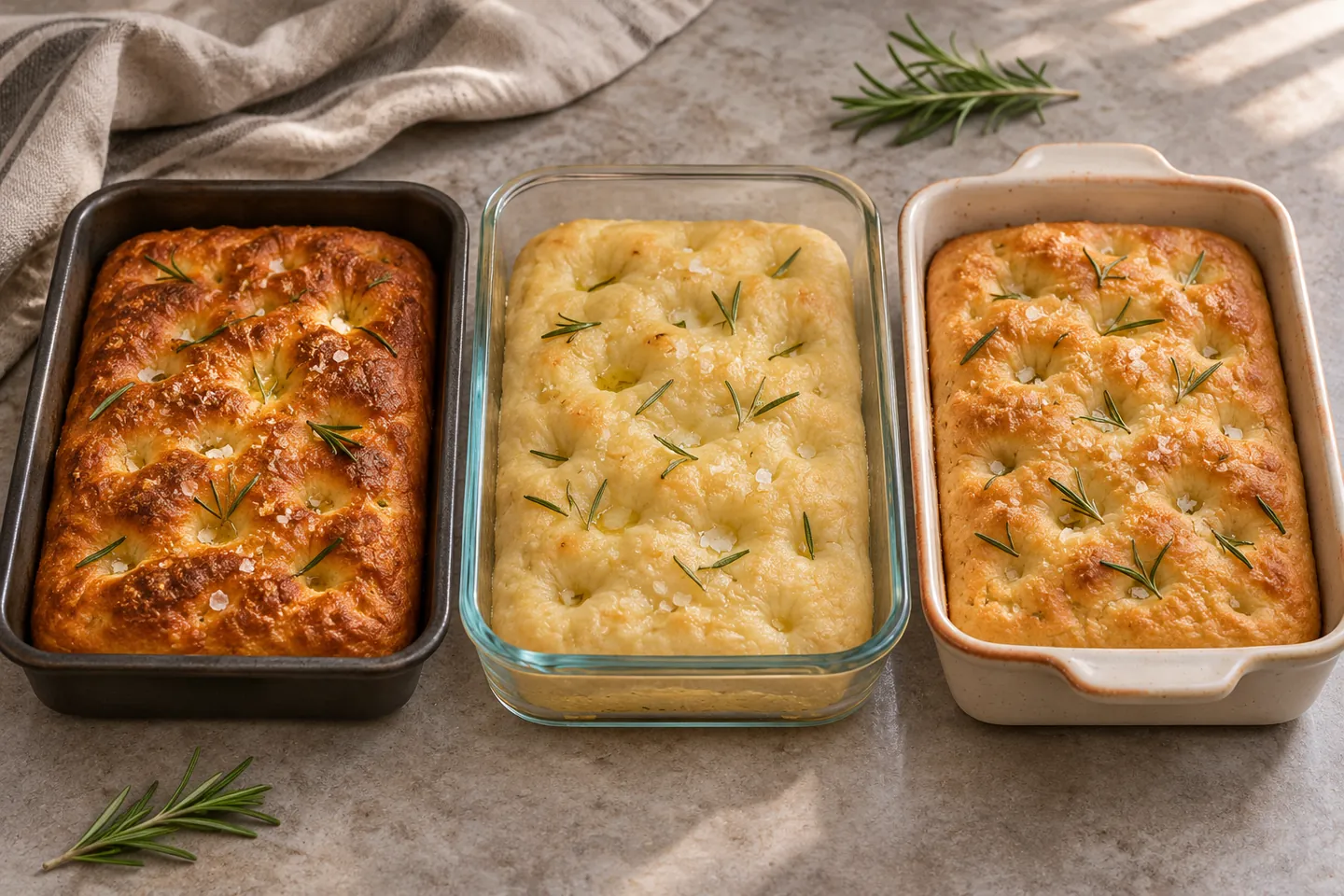
Metal responds quickly to oven heat. Light, shiny metal reflects more radiant heat and generally produces gentler, lighter browning. Dark metal absorbs more of that energy, so crusts and edges can colour sooner. That can be useful for crisp focaccia or deeply browned bars, but it also means the clock is only a starting point.
Glass is a slower heat conductor than metal, yet it retains heat well after it becomes hot. A bake can therefore spend longer waiting for the centre to set while its edges and bottom continue cooking. Clear glass has one practical advantage: you can see the underside and sides brown. Purdue University and University of Illinois Extension both advise that, when glass or dark bakeware replaces shiny metal, lowering the oven by about 25°F may help prevent excess browning. Follow the recipe and pan manufacturer's directions first.
Ceramic and stoneware are less predictable as a single category because thickness, clay body and glaze vary. They usually respond more slowly than metal and then hold heat. That makes them comfortable choices for forgiving dishes such as fruit crisps, baked puddings and casseroles, but precision bakes may need extra attention to visual doneness cues.
A 2025 King Arthur Baking focaccia comparison makes the trade-offs visible. In that particular test, black aluminum produced the crispiest bottom while keeping a moist interior; a steel-and-aluminum pan followed closely. Glass yielded a paler, softer crust, and a shiny disposable aluminum pan browned least. One recipe cannot rank every pan, but the test illustrates why both composition and surface colour matter.
When swapping pans, ask four questions: Is the inside size the same? Was the recipe tested in light metal, dark metal, glass or ceramic? Do you want a crisp, dark crust or a softer, lighter one? What doneness signal can you use besides time? Depending on the bake, that signal might be colour, a set centre, a clean tester or an internal temperature named by the recipe.
The useful takeaway is simple: treat pan choice as an ingredient. Match the tested pan when consistency matters. If you substitute, adjust cautiously, begin checking early and let the food's doneness cues overrule the timer. Your oven supplies the heat, but the pan decides how that heat arrives.
Sources
You may also like these