
Cooking science
Lime After Lime: The Chemistry That Makes Masa Behave
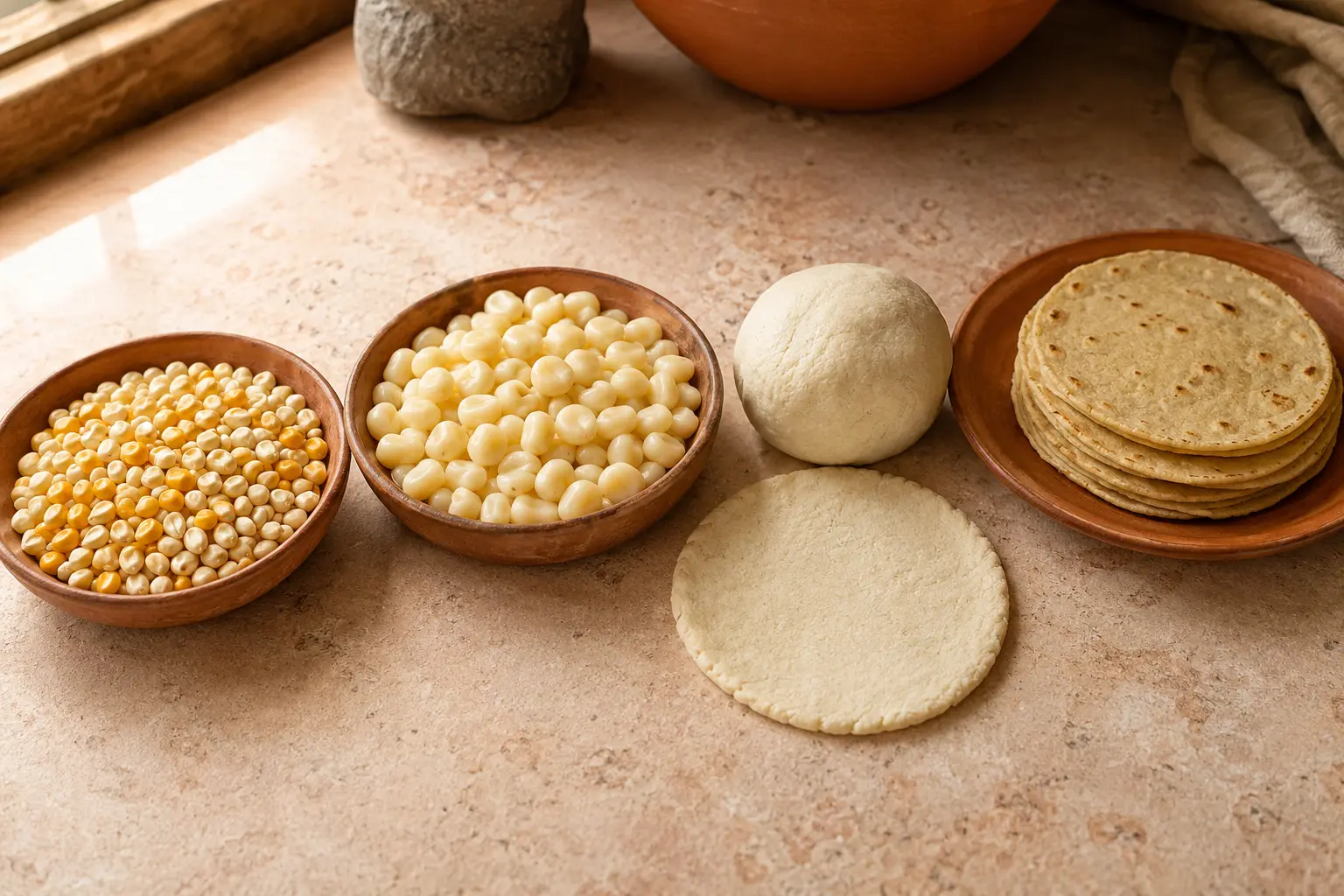
Food-grade lime is not citrus—it is the alkaline helper that turns dried maize into fragrant, pliable masa and gives tortillas their distinctive character.
The lime in this tortilla story is not the little green fruit. It is food-grade calcium hydroxide, sometimes called pickling lime. When dried maize is cooked and soaked in a dilute alkaline solution, the process is called nixtamalization. The result is nixtamal: softened kernels that can be washed and ground into masa.
A traditional method described by the Food and Agriculture Organization uses roughly one part maize to two parts water with about 1 percent lime. The corn is heated, left to steep, rinsed and then ground. Exact times vary with the maize, but the pause is doing real work: the kernel continues taking up water and calcium after the heat is turned off.
Inside the pot, alkaline conditions weaken the kernel’s cell walls and help loosen the tough outer pericarp. Microscopy summarized by the FAO also shows swelling and partial disruption of starch granules, plus changes to protein structures. That is why nixtamalization is more than simply boiling corn until it is soft.
Calcium does not appear everywhere at once. In a controlled study of traditional nixtamalization, researchers found that calcium moved first into the pericarp, then gradually into the endosperm and germ during steeping. Broken kernels absorbed it faster, a useful clue that kernel condition and soaking time can change the final flour.
The dough effect is equally interesting. Research on masa made with different calcium sources found that alkaline treatment changed starch gelatinization and the viscoelastic behaviour of the dough. Calcium-starch interactions help explain why properly nixtamalized maize can become cohesive masa that presses, bends and cooks into a tender tortilla instead of behaving like loose wet cornmeal.
That gives shoppers a practical shortcut: masa harina and ordinary cornmeal are not interchangeable. Masa harina has already been nixtamalized, dried and milled. If a tortilla recipe asks for it, look for packaging that says masa harina or nixtamalized corn flour; plain cornmeal usually will not form the same smooth, flexible dough.
Nixtamalization also changes nutrition, but it is not a magic upgrade button. Calcium hydroxide can substantially raise the calcium content, while washing and heating can reduce some other nutrients. The size of those changes depends on the corn, lime concentration, cooking, steeping and rinsing conditions. The fairest takeaway is that the process reshapes both culinary performance and composition.
For curious home cooks, commercially prepared masa harina is the easy doorway: mix it with water according to the package, rest the dough, press and cook. Home nixtamalization is possible, but only food-grade calcium hydroxide belongs in food. Garden, masonry and industrial lime are not substitutes. A humble tortilla, it turns out, is a very tidy piece of food chemistry.