
Baking Science
Peak Chickpea: How Bean Water Learns to Hold a Peak
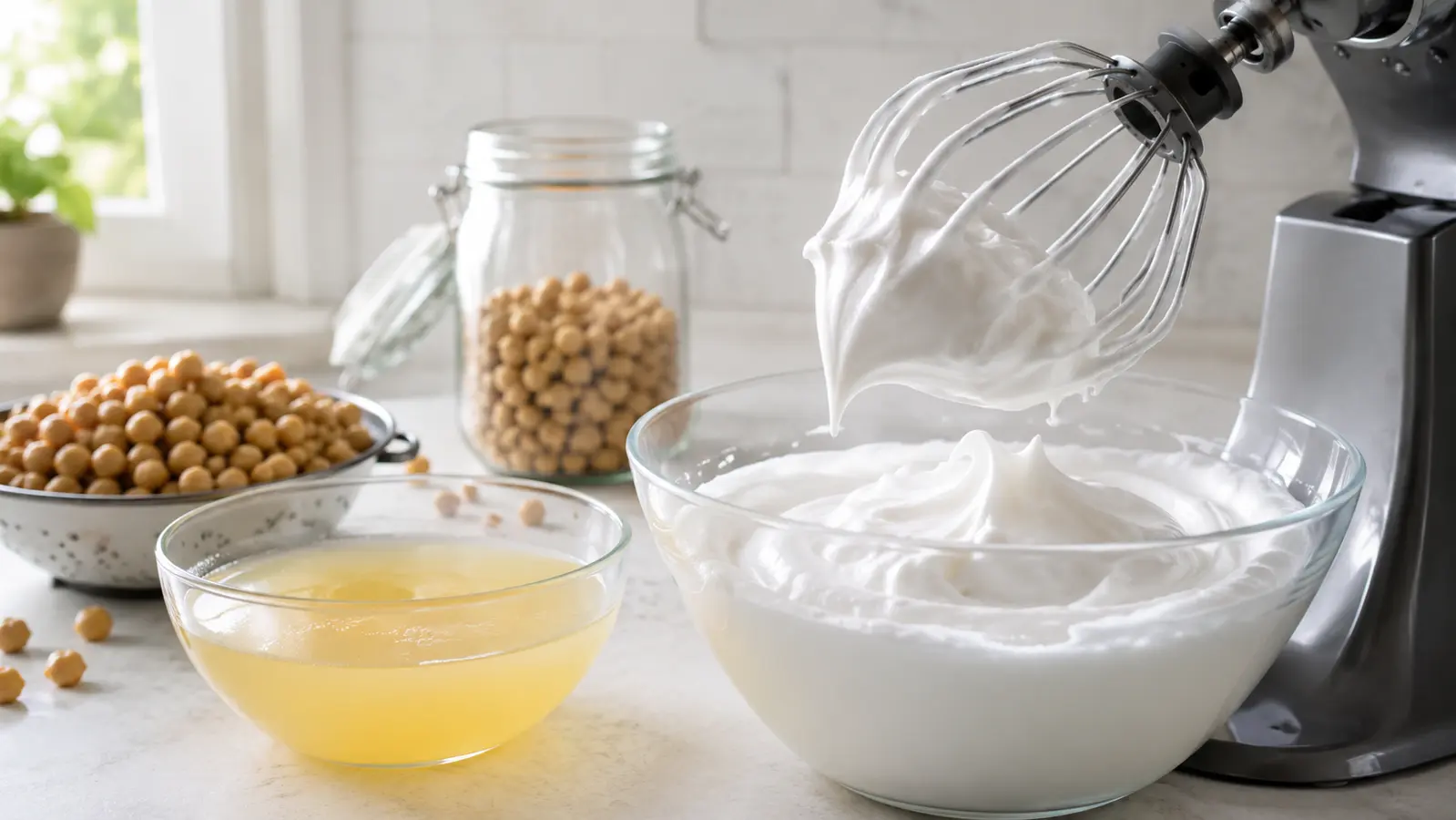
That pale liquid around canned chickpeas can climb a whisk into glossy peaks. Its secret is a small team of proteins, carbohydrates and natural surfactants working around millions of tiny air bubbles.
The liquid in a can of chickpeas looks like something destined for the drain. Give it a clean bowl and a vigorous whisk, though, and it can become a cloud of glossy foam. This useful liquid is aquafaba, a name commonly used for the cooking water left after chickpeas or other pulses are cooked.
Aquafaba works because chickpeas share more than flavour with their cooking water. During cooking, soluble proteins, carbohydrates and compounds called saponins move into the liquid. Researchers have found that these components act together; there is no single magic molecule doing the entire job.
Whisking folds air into the liquid and breaks it into many tiny bubbles. Proteins and saponins help form films around the air-water boundary, while dissolved carbohydrates and pectins make the surrounding liquid more viscous. That added thickness slows drainage between bubbles, helping the foam keep its shape instead of quickly collapsing.
Not every jar of aquafaba performs exactly alike. Studies of commercial chickpea products have measured meaningful differences in foam volume and stability, and controlled experiments show that cooking time, the ratio of chickpeas to water and the final concentration all matter. That explains why one can may whip briskly while another takes a little patience.
For a practical consistency check, aquafaba should usually pour like lightly thickened broth. If it seems very watery, gently simmering it to reduce the volume and then cooling it completely can concentrate the foam-forming solids. If it is almost syrupy, a splash of water may help. These adjustments are a kitchen inference from research showing that concentration affects foaming behaviour.
A small amount of acid, such as cream of tartar or lemon juice, can also help in some preparations. Research on aquafaba meringues found that acidification improved foam structure, although the result still depends on the particular aquafaba, mixing conditions and recipe. A spotless, grease-free bowl is equally sensible because fats can interfere with stable foams.
Once whipped, aquafaba can lighten mousses, support meringues and cakes, or lend body to vegan mayonnaise and other emulsions. It is not chemically identical to egg white and will not behave exactly the same way in every recipe, but its collaborative little chemistry team makes a surprisingly capable ingredient out of what might otherwise be kitchen runoff.