Baking Science
Flax to the Future: Why Ground Seeds Turn Into a Gel
Add water to ground flaxseed and it develops a slippery little superpower that can help bind muffins, pancakes and other baked favourites.
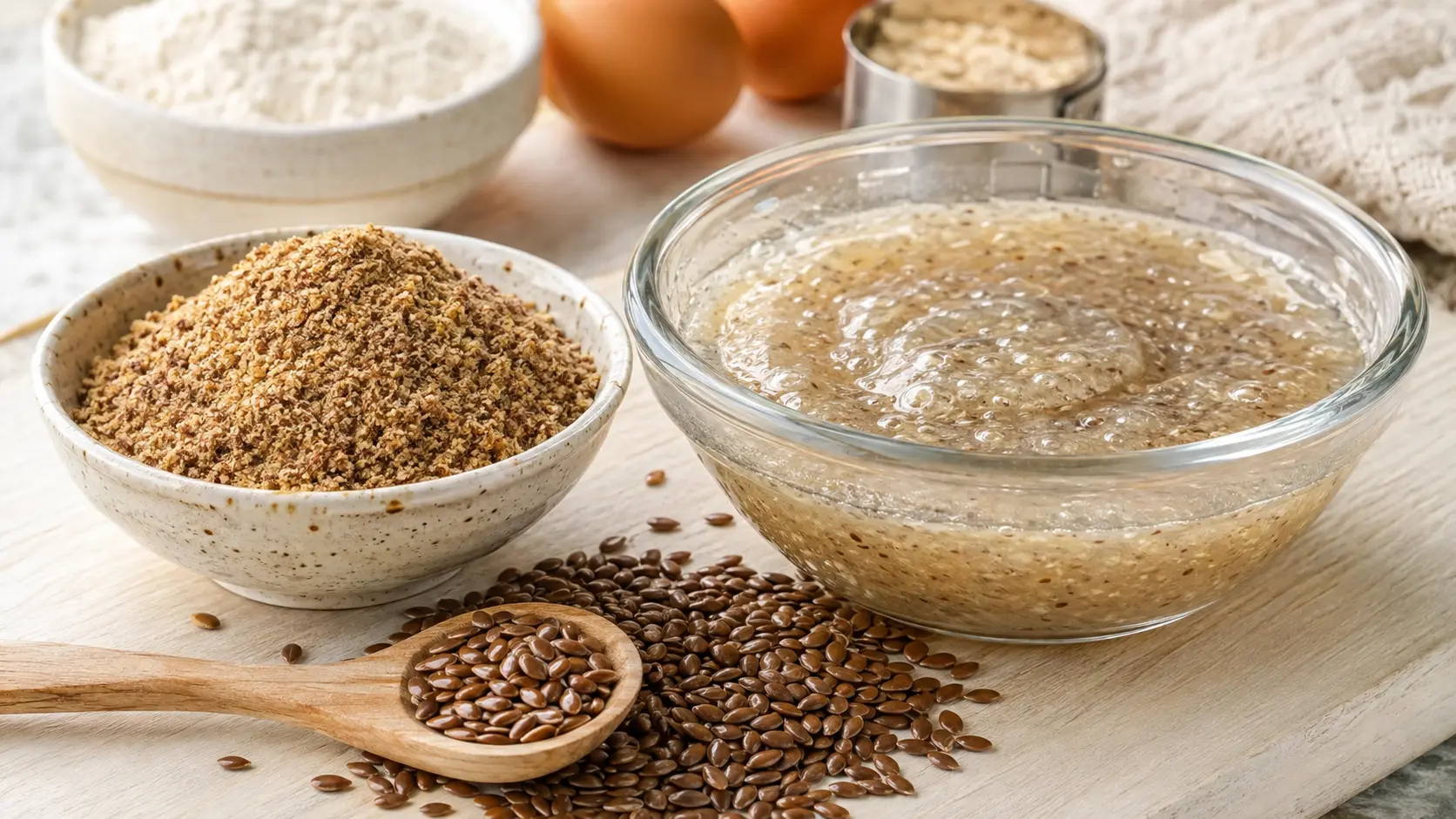
A spoonful of ground flaxseed does not look like a piece of kitchen equipment. Add water and wait a few minutes, though, and it becomes a thick, spoonable mixture that bakers often call a flax egg.
The change comes largely from mucilage, a group of water-loving polysaccharides found around the seed. When water reaches these long carbohydrate molecules, they hydrate and form a viscous network. In plain language, the mixture gets delightfully gloopy.
Grinding matters because it exposes more of the seed to water. Whole flaxseeds can develop a slippery coating, but ground flaxseed disperses more evenly through a batter and is easier to use as a binder.
That gel can help hold ingredients together and retain moisture. It works especially well in pancakes, muffins, quick breads and cookies where eggs are not expected to create a very airy structure. It is less convincing in recipes that depend on whipped egg whites or a delicate custard set.
A common kitchen starting point is one tablespoon of ground flaxseed mixed with about three tablespoons of water. Let it stand for five to ten minutes, then use the thickened mixture in place of one egg in a forgiving baking recipe. Results still vary with the grind, water temperature and the rest of the formula.
Store whole flaxseed cool and grind what you need, or keep ground flaxseed tightly sealed in the refrigerator or freezer. Then the next time a batter needs help sticking together, you can tell it to relax. Flax has it handled.
Sources
You may also like these