
Baking Science
Rise to the Occasion: Baking Soda and Baking Powder Are Not Twins
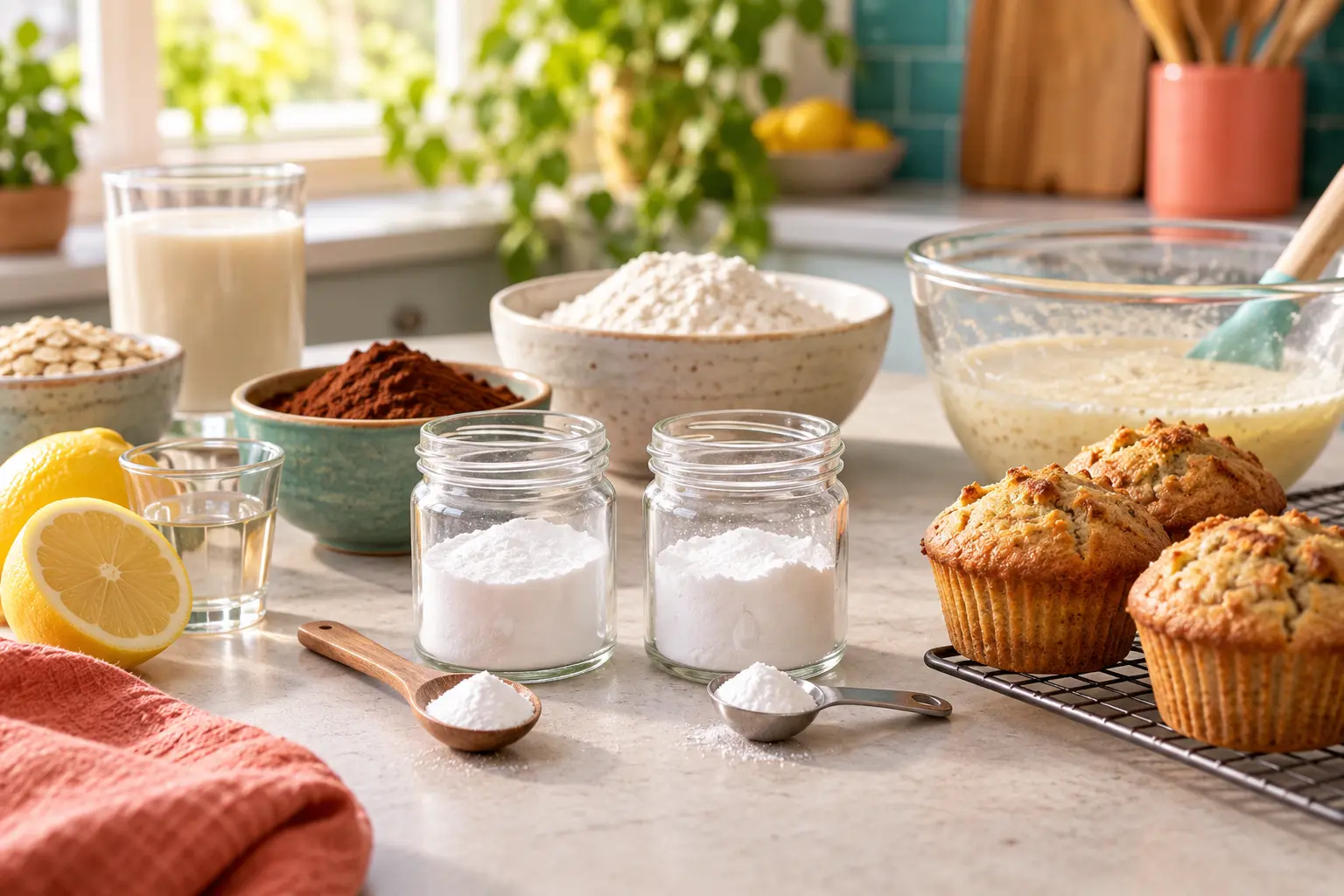
Both white powders make bubbles, but one waits for the recipe’s acid while the other brings its own. Knowing which jar does what is a small fix for flat vegan muffins.
Baking soda and baking powder are the pantry’s most convincing look-alikes. Both are fine white powders. Both can lift a cake. Both can also turn a promising batch of muffins into squat little paperweights when they are swapped casually. Their shared talent is making carbon dioxide, but they arrive at that gas by different routes.
Baking soda is sodium bicarbonate, a base. It needs an acid and moisture to produce carbon dioxide bubbles in ordinary baking. A vegan batter might supply that acid through lemon juice, vinegar, natural cocoa or an acidic plant-based yogurt. Once wet acid meets soda, the reaction starts quickly, so the batter should not spend a leisurely afternoon on the counter before reaching the oven.
The bubbles are only useful if the batter can hold them. Flour proteins, starches and other structure-building ingredients surround the gas as the bake heats and sets. Chemical leaveners do not build the finished crumb alone; they inflate a system that must become firm enough to keep its new shape.
Baking powder is a prepared team. It contains sodium bicarbonate plus dry leavening acids and usually a starch that helps keep the ingredients separate in storage. Most grocery-store baking powder is double-acting. One part of its reaction begins when the powder gets wet, while another portion releases gas as the batter heats. That staged timing gives cakes and muffins a longer window to rise.
The exact powder formula matters more than the label suggests. A 2023 controlled study varied baking-powder levels and two types of sodium acid pyrophosphate in pound-cake batter. The combinations changed pH, porosity, gas release and cake shape. Increasing the powder helped only up to a point; the researchers found that the highest tested levels did not keep improving batter volume. That was one particular cake system, not a universal recipe ratio, but it neatly demonstrates why ‘more lift’ does not mean ‘add more powder.’
Why do some recipes call for both jars? Baking powder can provide the planned rise while a smaller amount of soda reacts with an acidic ingredient and changes the batter’s overall pH. That can influence flavour, colour and spread as well as height. It is a coordinated formula, not evidence that the recipe writer could not choose a side.
This is also why soda and powder are poor one-for-one substitutes. Replacing powder with the same spoonful of soda supplies far more bicarbonate without bringing along the powder’s balanced acids. Excess unreacted soda can leave an alkaline or bitter taste. Replacing soda with powder may leave the recipe’s acid unbalanced and may not deliver the intended browning or texture. A tested substitution has to rebalance acid, base and sometimes liquid, not merely rename the teaspoon.
For easier vegan baking, let the recipe make the decision. If it specifies baking soda, look for the acidic partner before changing plant yogurt, cocoa or citrus. If it specifies baking powder, use the stated type and amount. When it asks for both, keep both. Whisk the leavener evenly through the dry ingredients, preheat the oven before mixing wet and dry, and bake the finished batter promptly.
The jars also prefer a quiet, dry life. Heat and humidity can start unwanted reactions or weaken performance, so store them tightly closed away from the stove. Kansas State University Extension suggests checking baking powder with warm water and baking soda with vinegar: an active product should fizz. Use clean, dry measuring spoons so moisture does not sneak into the container.
Plain baking soda and baking powder fit easily into plant-based baking, but they do not decide whether the entire recipe is vegan. The surrounding milk, yogurt, chocolate and other ingredients still need their own label check. When adapting a familiar recipe, choose replacements that preserve both moisture and acidity rather than treating every plant-based swap as chemically identical.
The short version is simple. Soda waits for acid. Powder brings acid with it. Both make carbon dioxide, neither rewards enthusiastic guesswork, and the recipe has already assigned their parts. Keep the right jar in the scene and your muffins have a much better chance of rising to the occasion.