Food Safety Know-How
Flour Play: Vegan Cookie Dough Still Needs a Safety Check
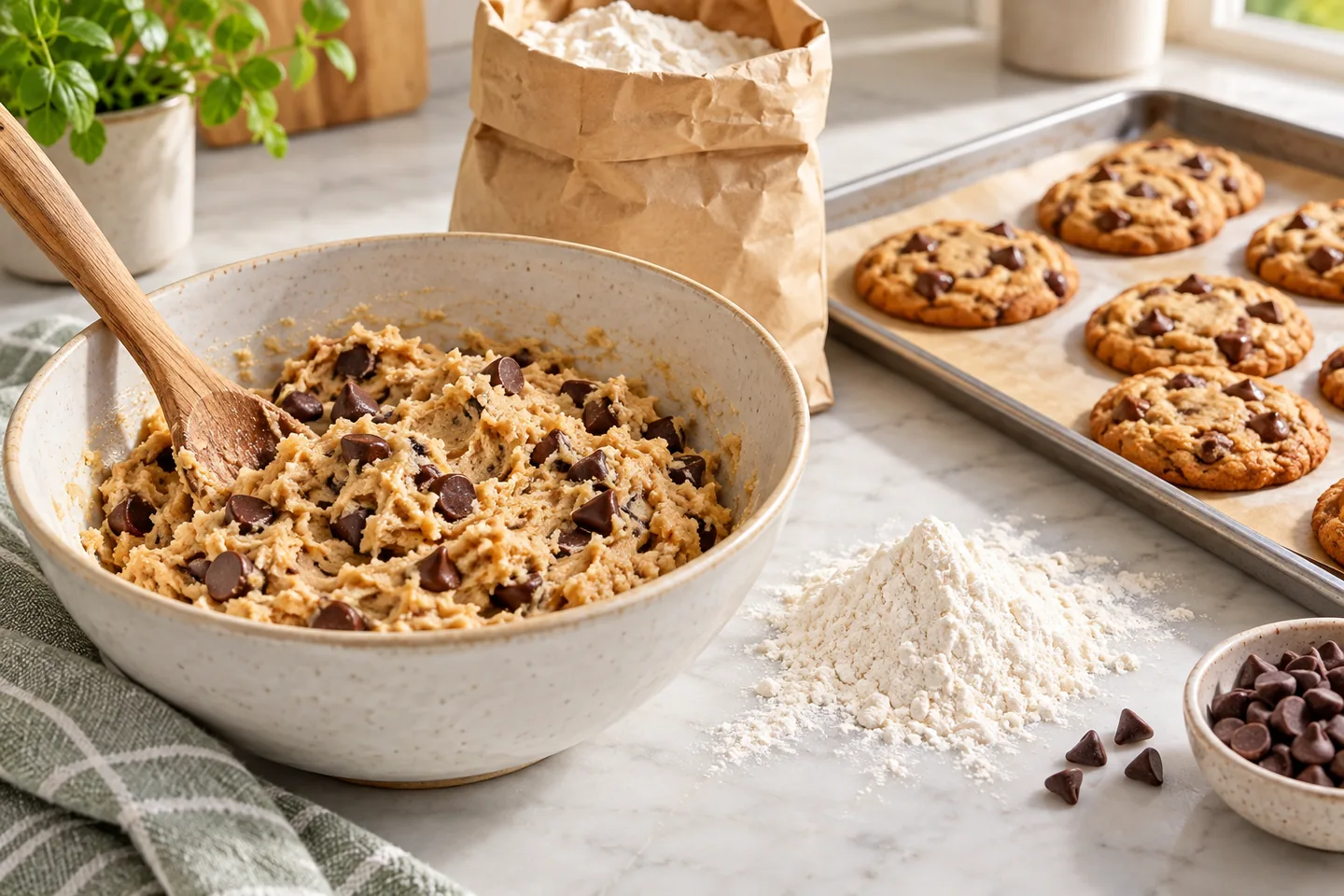
Skipping eggs removes one familiar raw-dough concern, but ordinary flour is still a raw agricultural product. Here is the calm, practical way to handle it.
Egg-free cookie dough can look ready for a spoon the moment the chocolate chips go in. One familiar concern has disappeared, but the safety story is not finished: ordinary flour is a raw agricultural product, not a ready-to-eat ingredient. Vegan dough still needs the flour question answered before anyone tastes it.
Wheat is grown outdoors, harvested and milled. Those steps turn grain into flour, but routine milling does not include a guaranteed kill step for harmful bacteria. Contamination is uncommon, yet germs such as Shiga toxin-producing E. coli or Salmonella can occasionally be present. Flour’s soft colour and dry feel do not provide a warning because contaminated flour can look, smell and taste normal.
Canadian testing makes the risk easier to understand without inflating it. In a Canadian Food Inspection Agency survey of 347 prepackaged wheat-flour samples collected at retail in 2018 and 2019, Salmonella and E. coli O157 were not detected. Non-O157 Shiga toxin-producing E. coli were isolated from six samples, or 1.7 percent. That does not mean most flour is dangerous; it shows why a low-frequency hazard still deserves a dependable cooking step.
Outbreak records add the real-world piece. The U.S. Centers for Disease Control and Prevention says it investigated outbreaks linked to raw flour or cake mix in 2016, 2019, 2021 and 2023, with some investigations leading to recalls. A long pantry life does not make flour sterile, and a recall can matter well after a bag was purchased. When an outbreak is active, follow the product and lot details from the relevant food-safety agency rather than guessing from the brand name alone.
The simple control is heat. Health Canada advises baking or cooking foods made with raw dough or batter before eating them and specifically warns against tasting even a small amount. The same guidance says not to add raw flour to foods that will not be cooked, including milkshakes and ice-cream mixes. That applies just as clearly to egg-free dough, no-bake bites and a spoonful of cake mix stirred into frosting.
What about recipes labelled edible cookie dough? Check that the recipe or product uses flour treated for ready-to-eat use and follow its directions. Commercial heat-treated flour is produced under a validated process. A casual home microwave treatment is not automatically equivalent: uneven heating, batch size and the appliance can all change the result. Unless a reliable, validated method gives precise instructions for your flour and equipment, the calmer choice is to use a product intended for uncooked use or choose a no-flour recipe.
Flour also travels. A puff on the counter can land on fruit, utensils or finished cookies, so treat the work area as you would after handling any raw ingredient. Keep flour and raw dough away from ready-to-eat food. Wash hands with soap and warm water, and wash bowls, measuring tools and work surfaces with hot, soapy water after mixing. Do not let children use homemade raw-flour dough as play clay, where hands tend to visit mouths.
None of this requires fear of baking. It requires one small label change in the mind: raw flour belongs on the raw side of the kitchen until a cooking step makes the finished food ready to eat. Follow the recipe’s baking instructions, avoid tasting on the way in, and wait for the cookies on the way out.
Vegan baking already asks thoughtful questions about ingredients. Add one more that is easy to answer: is this flour meant to be eaten without cooking? If the answer is no or unclear, let the oven have the first bite.
Sources
- https://www.canada.ca/en/health-canada/services/general-food-safety-tips/safe-handling-flour.html
- https://inspection.canada.ca/en/food-safety-industry/food-chemistry-and-microbiology/testing-reports-and-journal-articles?wbdisable=true
- https://www.cdc.gov/food-safety/foods/no-raw-dough.html
- https://www.fda.gov/food/buy-store-serve-safe-food/handling-flour-safely-what-you-need-know
You may also like these