Food Safety Know-How
Cool Story, Broth: Why Soup Needs a Shallow Container
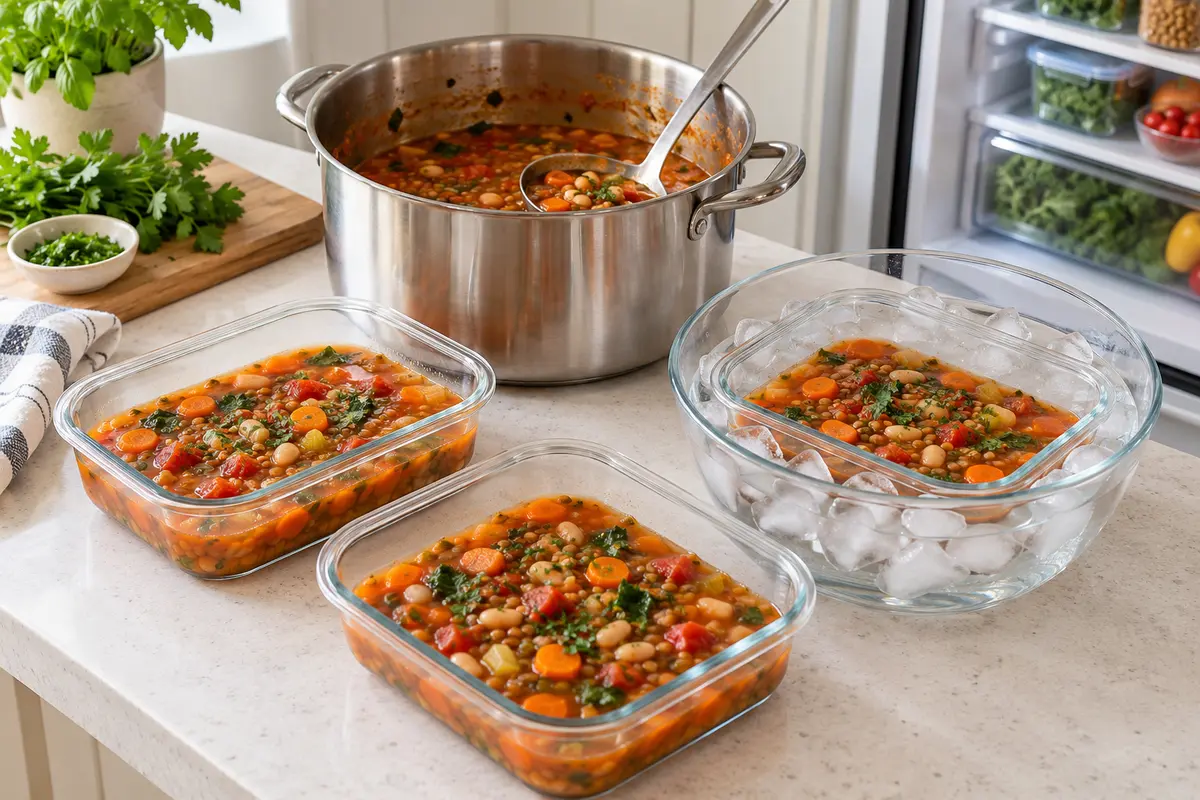
A deep pot of soup can stay warm in the middle long after dinner. Dividing it into shallow containers shortens heat's trip out and helps the fridge cool leftovers more quickly.
A generous pot of soup is excellent dinner planning. It is less excellent as a single giant refrigerator container. Long after the outside feels cooler, the centre of a deep pot can still be holding on to heat. The safer move is surprisingly simple: give the soup more containers and less depth.
Cooling is a heat-travel problem. In a deep pot, warmth at the centre has a long journey through the food before it can reach cooler air. A shallow container shortens that distance and exposes more surface area. Dividing one large batch also creates smaller portions, so the refrigerator has less heat to pull from each container.
That speed matters because bacteria grow most readily when food sits in a warm middle range. Health Canada identifies the temperature danger zone as 4°C to 60°C. Its home guidance says to refrigerate or freeze leftovers as soon as possible and within two hours. Very hot food can stand briefly until it stops steaming, but the two-hour mark is a limit, not a suggested counter-cooling period.
For a home batch, set out several clean, wide containers before dinner ends. Ladle the soup into a shallow layer rather than filling one tall tub to the top. Once heavy steaming has stopped, place the containers in the refrigerator uncovered or with their lids resting loosely on top. Cover them fully after the soup has cooled to refrigerator temperature.
If the batch is especially large, an ice-water bath can help. Set the pot or a smaller heat-safe container in a sink or bowl of ice water, keeping water out of the food, and stir the soup with a clean utensil. The cool water carries heat away from the sides while stirring brings warmer soup from the centre toward those cooler surfaces. Then portion and refrigerate promptly.
The refrigerator needs breathing room too. Crowding hot containers tightly together or packing the shelves can block cold-air circulation. Leave a little space around each container while it cools. A refrigerator thermometer is useful for confirming that the appliance stays at 4°C or colder.
Professional kitchens use an even more exact version of the same idea. The FDA Food Code calls for cooked food to cool from 57°C to 21°C within two hours, then to 5°C or colder within a total of six hours. Home cooks do not need to turn every pot into a laboratory exercise, but the rule explains why shallow pans, smaller portions, stirring and ice baths appear so often in official cooling advice.
Once chilled, label the containers so yesterday's soup does not become next week's mystery. Health Canada's storage chart lists soups for two to three days in a refrigerator at 4°C, or about four months in a freezer at -18°C. Reheat the portion you plan to eat to 74°C, and avoid reheating the same leftovers more than once.
The useful picture is not 'hot food versus the fridge.' It is a race between stored heat and time. A few shallow containers give heat several short exits instead of one long escape route. That is a cool story worth repeating, especially when broth is involved.
Sources
- https://www.canada.ca/en/health-canada/services/general-food-safety-tips/food-safety-tips-leftovers.html
- https://www.canada.ca/en/health-canada/services/general-food-safety-tips/safe-food-storage.html
- https://www.canada.ca/en/services/health/publications/food-nutrition/infographic-leftovers.html
- https://www.fda.gov/media/181882/download
- https://www.fsis.usda.gov/food-safety/safe-food-handling-and-preparation/food-safety-basics/leftovers-and-food-safety
You may also like these