Food Research
Culture Club: Quinoa Checks Into the Yogurt Lab
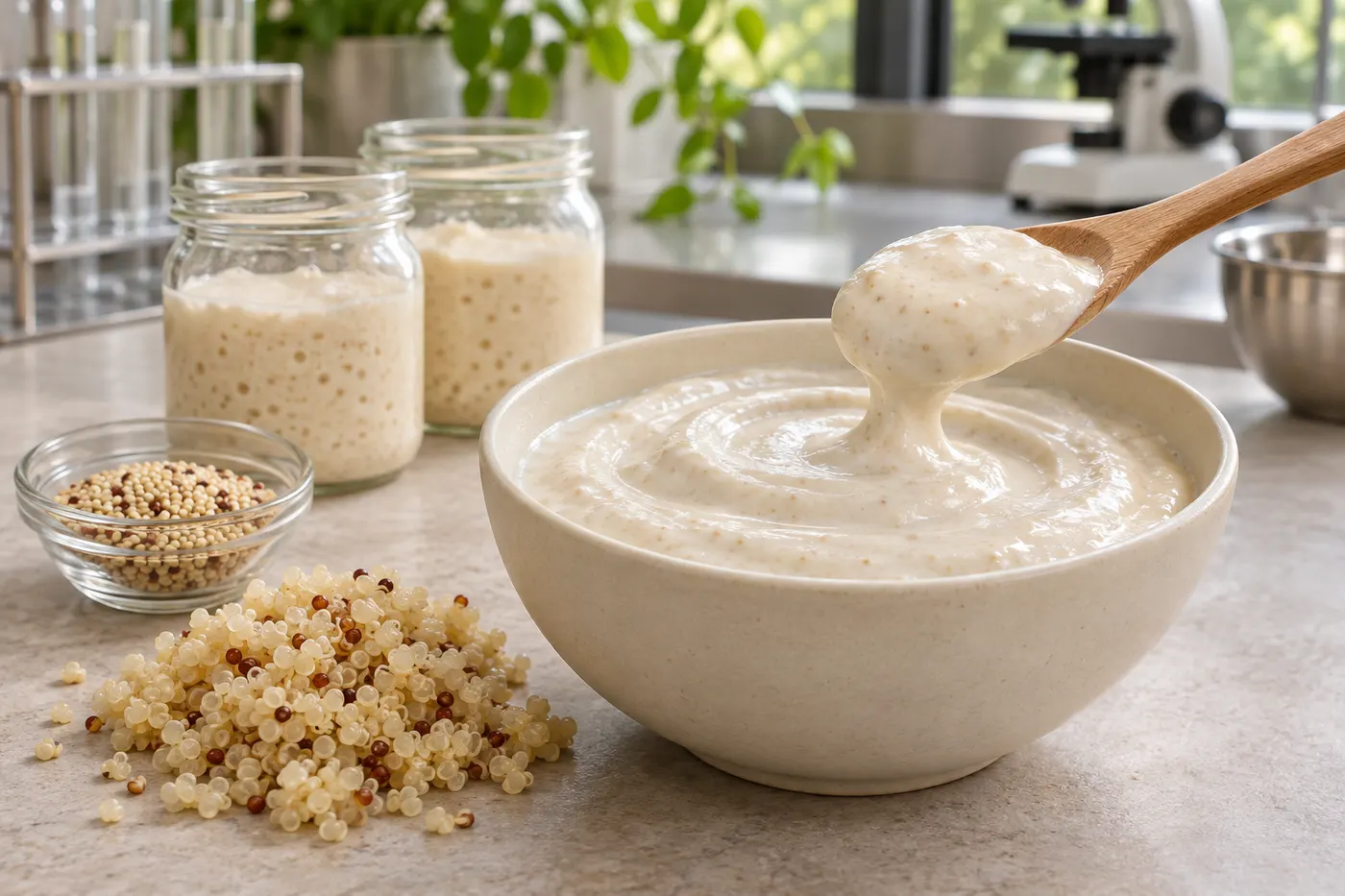
A new study cultured quinoa into four spoonable vegan yogurt alternatives, then asked microbes, instruments and human tasters how the experiment turned out.
Quinoa’s newest audition is not a grain bowl. In a study published November 5, 2026, researchers at Başkent University in Türkiye turned the Andean seed into four fermented, spoonable vegan yogurt alternatives and tested what happened to their acidity, microbes, composition and appeal.
The process began more like careful product development than casual breakfast prep. The team soaked quinoa overnight, boiled it for 30 minutes with seven times its volume of water and 7% sugar, then blended it smooth. Four batches received different commercial vegan starter cultures, with two starters first activated in almond milk. The sealed samples fermented at 45°C for 24 hours before chilling at 4°C.
All four formulations acidified: their final pH ranged from 4.24 to 4.52. Viable lactic acid bacteria measured between 6.9 and 8.2 log colony-forming units per gram during 21 days of refrigerated storage. That shows the cultures grew and remained detectable under the study conditions. It does not, by itself, prove a probiotic health effect; that would require evidence about specific strains, doses and outcomes.
Then came the spoon test. Twelve trained assessors scored appearance, taste, colour, aroma, texture and other attributes, while 80 university students provided consumer ratings. No single formulation swept every category. One led on appearance, another on consistency, and the two versions made with activated starters generally earned stronger flavour and overall-liking scores. The useful lesson is less ‘one perfect pot’ than ‘starter choice changes the result.’
The laboratory numbers added another wrinkle. The quinoa formulations contained 2.0–2.2 grams of protein per 100 grams, compared with 0.7 grams in the one commercial rice-based yogurt used as a reference. They also contained more fat. Those figures describe these recipes and that single comparator, not every quinoa or rice yogurt on a supermarket shelf.
The researchers also measured phenolic content and antioxidant capacity in the food itself. Those assays help compare formulations in a lab, but they are not the same as showing a benefit in people. In other words, a colourful test-tube result should not be promoted to a health promise without human evidence.
There are practical limits. Sensory testing happened only on day one, even though acidity, texture and aroma can shift in the fridge. The consumer panel came from one university, the reference group was one rice-based product, and the work did not test factory-scale production or retail shelf life. The authors specifically call for more work on storage, texture, broader consumer acceptance and commercialization.
For shoppers, the study is a reminder that the plant named on the front of a tub can meaningfully affect protein, texture and flavour—but the nutrition panel and ingredient list still tell the product-specific story. For curious cooks, this is not a validated home-fermentation recipe: the researchers used controlled cultures, temperatures and sanitation. Quinoa has not conquered the yogurt aisle, but it has completed a surprisingly credible lab audition.
Sources
You may also like these