Kitchen science
Cry Me an Onion: The Tiny Chemistry Behind the Tears
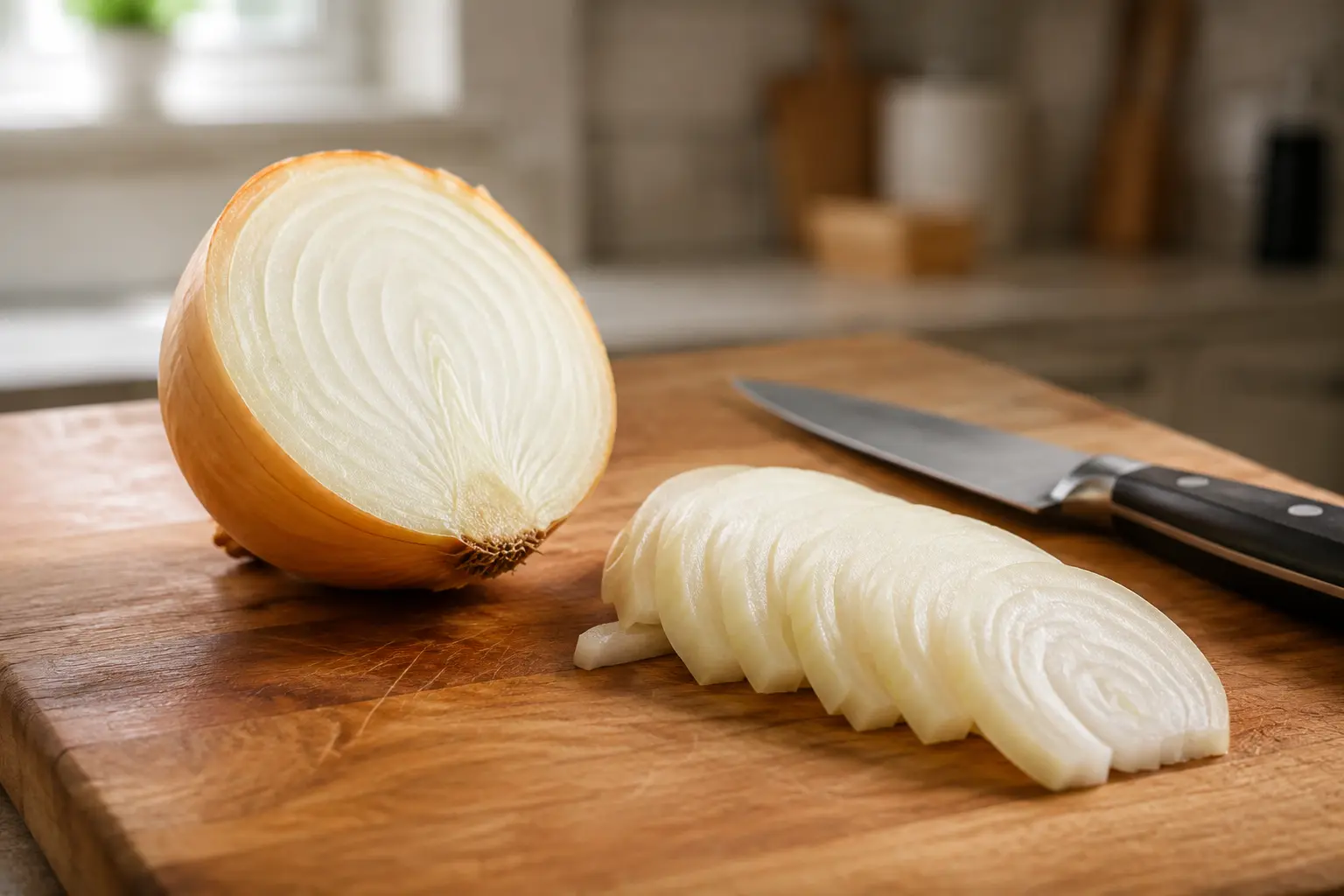
Onions do not make you emotional. They run a tiny chemical reaction the moment your knife breaks their cells. Here is what floats toward your eyes and what can actually help.
Slice an onion and a perfectly ordinary dinner can suddenly look like a dramatic farewell scene. The onion is not storing a ready-made tear gas. The reaction begins only after cutting breaks open its cells and brings previously separated compounds and enzymes together.
Onion tissues contain sulfur-based flavour precursors. When the cells are damaged, enzymes begin transforming those precursors. A specialized enzyme called lachrymatory factor synthase helps form syn-propanethial-S-oxide, the volatile compound responsible for the familiar eye irritation. Researchers have mapped the enzyme's structure and described this chemistry as part of the onion's wound-response system.
Because the compound is volatile, it can travel through the air above the cutting board. When it reaches the moist surface of your eyes, sensory nerves register irritation and the tear glands respond by making tears. That is a protective rinse, not an allergy in the usual sense.
A sharp knife is a sensible first move because it crushes fewer cells than a dull blade. Chilling the onion can also slow the reactions and reduce how quickly volatile compounds reach the air, although it will not switch the chemistry off completely. Good ventilation helps carry the airborne irritant away from your face.
Cutting position matters too. Keep the freshly cut surfaces a little farther from your eyes, and avoid leaning directly over the board. Leaving the root end until late may reduce unnecessary cell damage while you make the first cuts, but the chemistry exists throughout the bulb, so it is not a magical tear-free zone.
Running the onion under water can keep some irritant from reaching the air, but it also makes the cutting board and knife slippery and can wash flavour from the surface. Kitchen safety wins here: use a stable dry board, a sharp knife and airflow instead of juggling an onion under the tap.
The next time an onion makes you cry, give it credit for compact chemistry. A few calm tears, a sharp knife and an open vent later, dinner gets all that savoury onion flavour without the melodrama lasting very long.
Sources
You may also like these